Turkish Coffee 101: One of the World’s Oldest Brewing Methods and a UNESCO Heritage
The cezve (ibrik), an ultra-fine grind, foam and the clear top, and even coffee fortune-telling
Simmered grounds and all in a small copper pot, then sipped off the top — Turkish coffee is one of the oldest brewing methods still in living use. The ultra-fine grind, the foam (köpük), sugar levels, the water and lokum served alongside, and the culture of reading fortunes in the cup. We explain the method and etiquette of a cup listed as UNESCO Intangible Cultural Heritage, in a way newcomers can follow.
Contents · 14
- What Turkish coffee is
- What you need
- Brewing — the basic steps
- Step 1: Grind the beans ultra-fine
- Step 2: Add water, coffee and sugar to the cezve
- Step 3: Heat slowly over low heat
- Step 4: When foam rises, pull off the heat and share the foam
- Step 5: Bring it up once more, pour, and let the grounds settle
- How to drink it, and etiquette
- Sugar levels — decide when ordering
- Coffee fortune-telling (tasseography)
- Ties to Greece, the Arab world and the Balkans
- Which beans to choose
- Frequently asked questions
No filter, no espresso machine. The ground coffee is simmered with water in a small copper pot and the clear top is sipped slowly — Turkish coffee is one of the oldest brewing methods still passed down in living use. Simple yet deep, the method itself was listed as UNESCO Intangible Cultural Heritage in 2013 as a piece of culture. We explain the tools, the ultra-fine grind, the foam, the sugar and the etiquette so even a first-timer can follow.
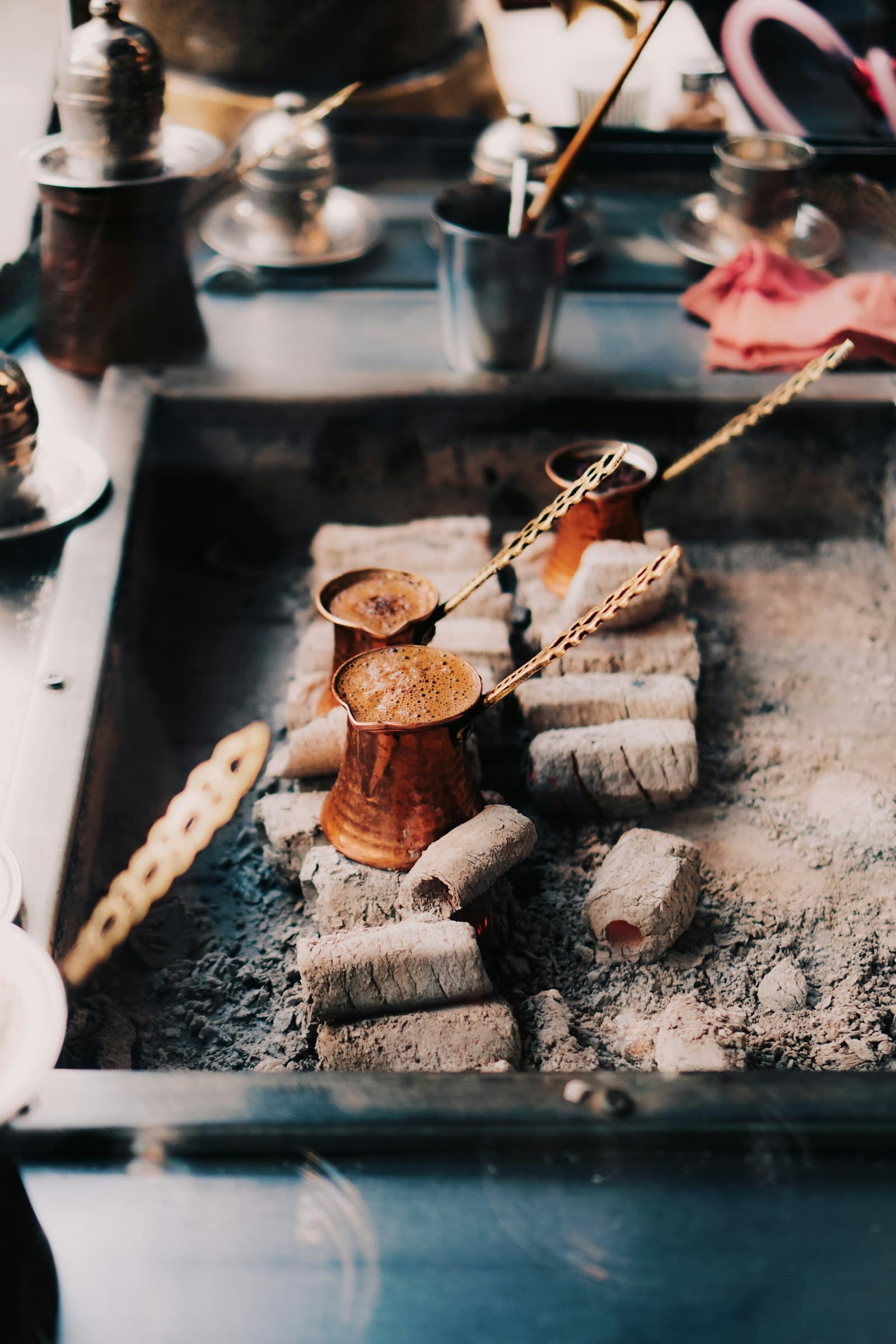
What Turkish coffee is
- One of the oldest methods: a process going back to the 16th century, still in use in homes and cafés
- Grounds and all, unfiltered: brewed with the grounds in the liquid and poured into the cup
- Ultra-fine grind: powder-like, as fine as flour. This is the prerequisite of Turkish coffee
- Simmered in a cezve: a small copper pot called a “cezve” or “ibrik”
- UNESCO Intangible Cultural Heritage: listed in 2013 as “Turkish coffee culture and tradition”
The same method spread across regions — “Greek coffee” in Greece, and under other names in Bosnia and the Arab world. In Turkey there is even a custom of the bride brewing coffee before a marriage; the very act of brewing is tied to socializing and ritual.
What you need
- Cezve (ibrik): a small copper or brass pot with a pouring lip and a long handle, in one- to several-cup sizes
- Ultra-fine grounds: finer than espresso, flour-like. Use a dedicated grinder or have it ground to order
- Water: measuring it by the cup you will drink from (a demitasse) makes the ratio easy
- Sugar: if using, add it before brewing. The custom is to simmer it in from the start, not stir it in later
- Optional: a little cardamom gives a fragrant, Arab-style aroma
Brewing — the basic steps
It looks tricky, but the knack is just two things: “slow over low heat” and “don’t lose the foam.” Work from a guide of one serving (one demitasse of water + one to two heaped teaspoons of grounds).
Step 1: Grind the beans ultra-fine
The grind is the soul of Turkish coffee. Grind to a flour-like powder. Typical home grinders struggle to get there, so the sure path is a dedicated grinder or having the shop grind it “for Turkish coffee.”
Step 2: Add water, coffee and sugar to the cezve
Measure cold water by the cup into the cezve. Add one to two heaped teaspoons of grounds per cup, and if sweetening, add the sugar at this stage. Give it a light stir before heating to wet the grounds.
Step 3: Heat slowly over low heat
Put it over low heat and warm it slowly, without rushing. Stir once at the start, then the knack is not to stir too much. Before long, a fine foam (köpük) rises to the surface. That foam is the highlight of Turkish coffee and proof of a well-made cup.
Step 4: When foam rises, pull off the heat and share the foam
When the foam swells and is about to boil over, whip it off the heat before it spills. Spooning the risen foam into each cup first makes the result look beautiful.
Step 5: Bring it up once more, pour, and let the grounds settle
Return it to low heat, warm it until the foam rises once more, then pour into the cup (traditionally this may be repeated two or three times). After pouring, wait one to two minutes for the grounds to settle to the bottom before you start drinking.
Let it boil hard and the prized foam vanishes and the flavor turns harsh. “Don’t boil it; raise the foam” is the rule. Take it slow over low heat and pull it off as soon as the foam rises — keep to that and you won’t fail.

How to drink it, and etiquette
After pouring, grounds settle at the bottom of the cup. You don’t drink those — you sip only the clear top, slowly. Stopping just before the last mouthful is considered refined. It is usually served with water to reset the palate and a sweet such as lokum (Turkish delight). A rich, sweet treat and bitter coffee pair beautifully.
Sugar levels — decide when ordering
Because Turkish coffee is sugared before brewing, you state the sweetness “when ordering.” Knowing the Turkish terms is handy while traveling.
- sade: no sugar
- az şekerli: lightly sweet
- orta: medium sweet
- şekerli: sweet
Coffee fortune-telling (tasseography)
A treat after drinking is the coffee reading. You cover the cup with the saucer and let the leftover grounds cool, then read fortunes from the shapes formed inside the cup — a playful custom. Whether or not it comes true, it lives on as a social prop for sharing the moment after a cup.
Ties to Greece, the Arab world and the Balkans
This “simmer with the grounds” method spread through the Ottoman Empire and took root in Greece, the Balkans and the Arab world. The basic method is the same, but names and customs differ a little by region. In Arab countries a cardamom-laced, fragrant style is often preferred. Turkish coffee is a drink with the history of a wide region dissolved into a single cup.
Which beans to choose
Traditionally, medium-dark to darker beans are used, finishing with a rich flavor of nuts and spice. More important than roast is the “grind” — being able to grind to an ultra-fine powder is the prerequisite. Using a store-bought “for Turkish coffee” powder is an easy way to start.
Frequently asked questions
How is it different from espresso?
Espresso forces hot water through under high pressure all at once and leaves no grounds. Turkish coffee uses no pressure; it simmers grounds and all and you drink the clear top. Both are intense, but Turkish coffee’s signatures are the slightly gritty mouthfeel of being unfiltered and the distinctive depth from simmering.
Can I grind it in a regular grinder?
Many home grinders can’t reach “ultra-fine (powder),” often topping out at espresso fineness. For Turkish coffee, a dedicated grinder, grounds ground at a shop, or store-bought ultra-fine powder are the realistic options. Too coarse and the grounds won’t settle and the grit gets worse.
Turkish coffee is a drink where, despite minimal tools and steps, the brewer’s hand and culture become the taste itself. Raise the foam, sip the clear top, and gaze at the patterns in the cup at the end — that whole experience is why it became world heritage. Get one cezve and try one of the world’s oldest cups at home.
Was this article helpful?
Choose & compare
Related links
More articles
A Cultural History of the Kissaten — From Ueno’s “Kahi Chakan” to the World’s “KISSATEN”
CultureThe Complete Guide to Coffee Certification Labels: Fairtrade, Organic and Rainforest Alliance
CultureWhat "Specialty" Means, and the Cupping Score
CultureHow to Cut Caffeine: The Timeline Until It Leaves Your Body