Grind Size Decides the Taste: The Best Grind by Brewer
Same bean, same water — just change the particle size and it turns sour or bitter
Much of the trouble brewing good coffee comes down to "grind size." Coarseness is the biggest variable deciding extraction speed = strength of taste. A single sheet of guides by brewer, plus how to fix sour and bitter.
Contents · 8
The beans, the gear and the recipe are all the same, yet the taste will not settle ── the culprit is usually the grind size. The grind is the most powerful knob deciding the balance of acidity and bitterness. Understand it and your extraction stabilizes at a stroke.
Why the grind changes the taste
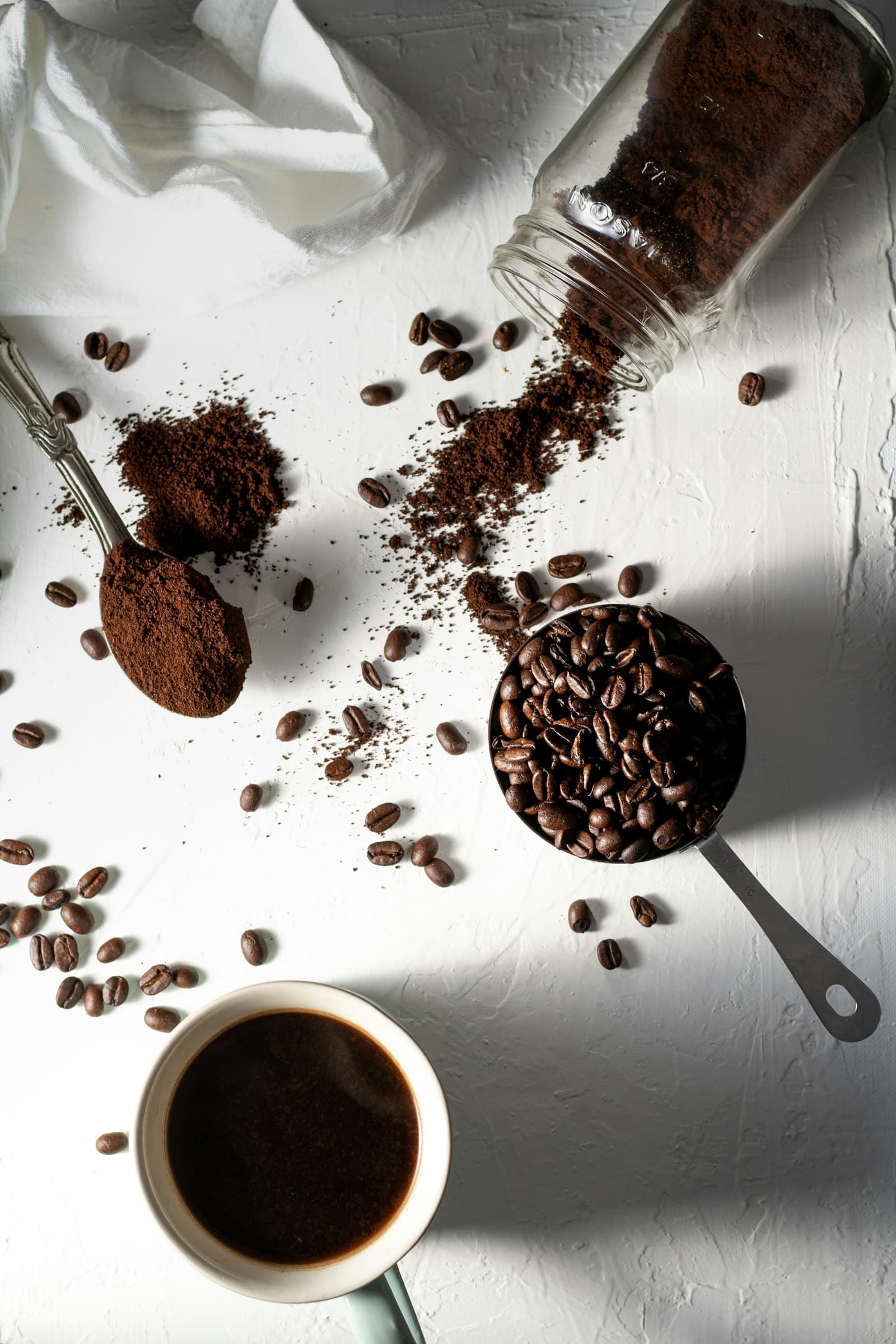
The finer you grind the beans, the more surface area touches the water, so compounds dissolve out faster and in greater amount. Too fine and too much comes out, "bitter and astringent (over-extraction)"; too coarse and not enough comes out, "sour and watery (under-extraction)." Think of grind size as the device that adjusts this extraction speed.
A map of coarseness
- Extra-coarse: cold brew (water-drip). About the size of coarse sugar
- Coarse: French press. Like coarse sand
- Medium: Kalita, Clever, nel drip. A little coarser than granulated sugar
- Medium-fine: HARIO V60, Kono. About granulated sugar
- Fine: espresso, moka pot. Between caster sugar and flour
- Extra-fine: ibrik (Turkish). Powder-like
A starting point by brewer
- V60 / paper drip: medium-fine. If it drains too fast, a little finer; if it clogs, coarser
- French press: coarse. With many fines it turns muddy, so coarser is safe
- AeroPress: medium-fine to fine (a wide range depending on the recipe)
- Espresso: fine. On the premise of fine-tuning each shot
- Cold brew: extra-coarse. Steeped for a long time, so without coarseness too much comes out
Fixing sour and bitter
- Sour and watery (under-extraction) → grind a little finer
- Bitter and astringent (over-extraction) → grind a little coarser
- The taste is blurry → possibly many fines. Reconsider the grinder
Adjust "only the grind," one step at a time. Change it together with water temperature or dose and you cannot tell what worked.
For a grinder, "uniformity" is everything
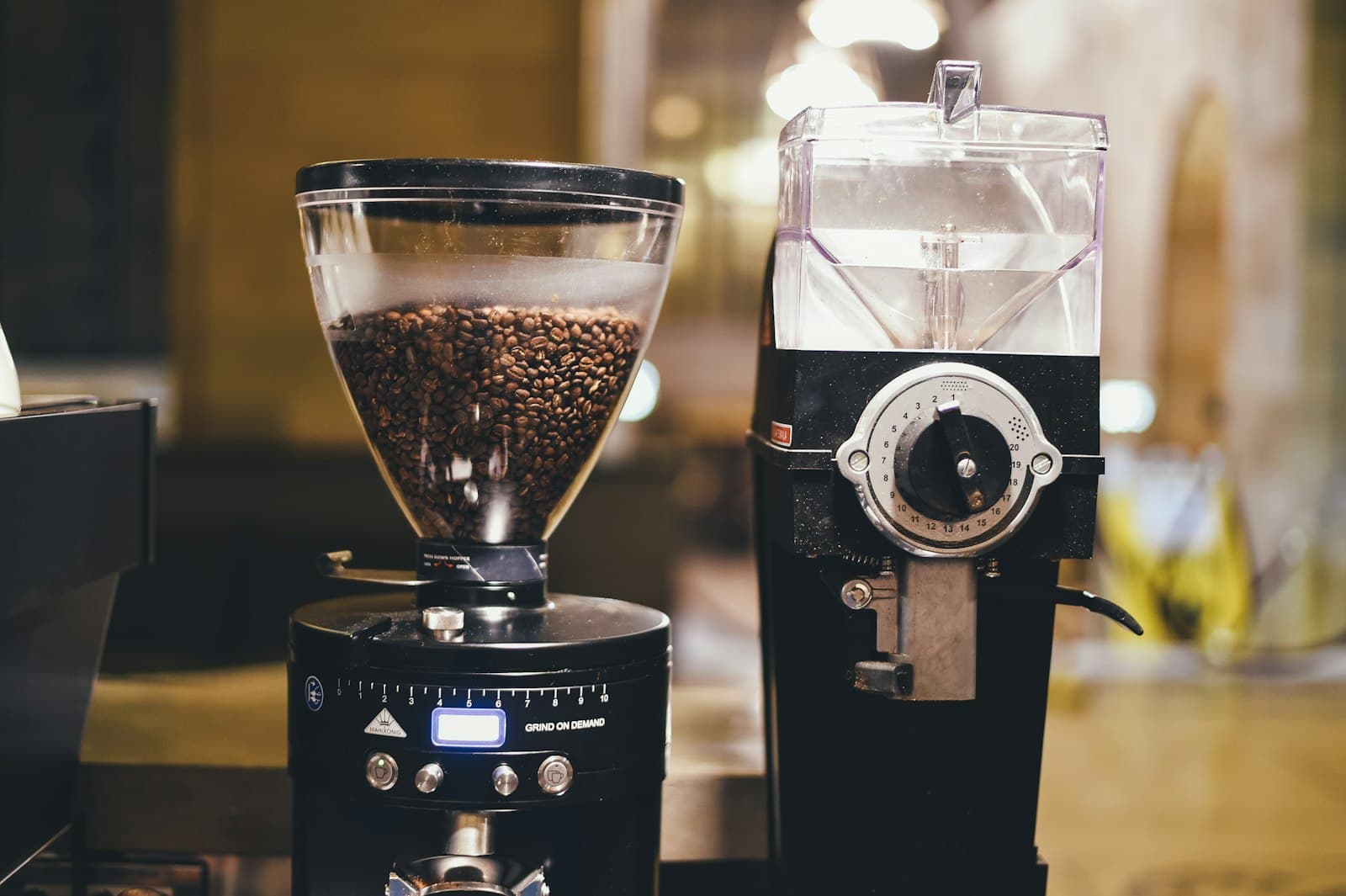
For taste stability, how evenly the particle sizes line up (uniformity) is decisive. A propeller (blade) grinder scatters the particles, mixing fines and coarse bits so that over- and under-extraction happen at the same time. With a burr (flat/conical) grinder, the particles line up and you can reproduce the taste you aim for. Before investing in beans or a dripper, getting a burr grinder first is the shortest route to taste.
How to get along with "fines"
With any grinder, grinding produces a certain amount of ultra-small particles called "fines." Fines have a vastly larger surface area and give up their compounds first the moment you pour, so in large amounts they cause astringency, harshness and cloudiness. Burr grinders produce fewer fines; propeller types more. If you care about a clean taste, just lightly sifting out the fines with a fine tea strainer right before brewing transforms the same beans into a strikingly clearer cup.
Grounds scattering and clinging to the inside of the container in winter is caused by static. The "RDT (Ross Droplet Technique)" — adding 1–2 drops of water to the beans before grinding — slashes it. The amount is so small it does not affect the taste.
How to read your grinder's "scale"
Many hand grinders (the TIMEMORE Chestnut, COMANDANTE and the like) are click-based, letting you record the particle size by "how many clicks open from fully closed (the zero point)." Electric grinders for espresso are mostly stepless, letting you dial in more finely. What matters is noting "your grinder's number." With the same beans and the same gear, just reproducing that number returns you to the same taste every time. As a guide, the closer to the zero point the finer (the espresso zone), and the more open the coarser (the French-press zone), with the V60 around the middle ── but the optimal click count differs from grinder to grinder, so finding your own baseline first and noting it down is the shortcut.
FAQ
Can I get by with a propeller (blade) grinder?
Splitting it into a few short bursts and grinding while shaking the unit helps somewhat. But the structural limit of uneven particle size does not go away. If you want taste stability, we recommend switching to a burr grinder eventually.
How long does pre-ground coffee keep?
Grounds have a vastly larger surface area than beans, so aroma volatilization and oxidation race ahead. Ideally, right before brewing. If you must pre-grind, seal it, avoid light and heat, and use it within 2–3 days. See also roast date and the drinking window on freshness.
Can one grinder cover both drip and espresso?
Many hand and general-purpose electric grinders are good in the drip range and can cover French press through V60 with one unit. Espresso's ultra-fine, stepless precision, however, often needs a dedicated grinder, and sharing involves compromise.
Why does "medium-fine" taste different from the café's?
"Medium-fine" is a ballpark word, and the actual particle size varies quite a bit by grinder. Even with the same phrase, a café's commercial grinder and a home grinder differ in particle size and uniformity, so the taste differs as a matter of course. What matters is managing by "your grinder's setting number," not the words. Adjust one step at a time while watching the result (sour/bitter) and find your own baseline.
Can I check coarseness by the brew time too?
Yes — brew time is a "check answer" for the grind. For one cup (15g of beans) on a V60, 2.5–3 minutes to fully drain is the guide. Extremely fast (under 2 minutes) is a sign it is too coarse; slow (over 3.5 minutes), too fine. When taste alone is hard to judge, timing the brew with a clock and moving the grind one step to land in the target range makes it easier to isolate the cause.
Changing the grind changes the strength too. What do I do?
Because grind affects both the "direction (sour/bitter)" and the "strength" of the taste, when you want to move only one, compensate with another variable. For example, if it is bitter and strong, grind coarser while slightly increasing the dose, and you remove only the astringency while keeping the strength. Splitting the roles — strength mainly by the grounds-to-water ratio, direction by the grind — makes adjustment clear.
Grind size is not a "right answer" but "matching with your own gear." With the same recipe, move only the grind one step at a time and find the position where the best cup comes out. Once you find it, your morning repeatability rises at a stroke.
Was this article helpful?
Origins in this article
Choose & compare
More articles
Panama Coffee Deep Dive — The Volcanic Highlands That Bore Geisha, and the Story of the World’s Highest Price
BeansThe Coffee Variety Family Tree — Reading the “Genealogy” That Begins with Typica and Bourbon
BeansThe Coffee Belt and Terroir — Why Coffee Grows Only in the “Equatorial Band,” and Why Each Origin Tastes Different
BeansThe Science of Coffee Acidity — What Fruitiness Really Is, and How It Differs from “Sour”