Brewing with a Moka Pot (Macchinetta): A Blueprint for a Rich Cup
Mastering Italy's classic stovetop espresso maker
The moka pot makes rich coffee just by putting it on the stove. It tends to be shunned as "bitter and burnt," but nail the heat and the grind and it brews astonishingly sweet. From the mechanism to fail-proof tips and applying it to lattes.
Contents · 8
Put the silver octagonal pot on the stove and, before long, it gurgles and rich coffee spouts up — the moka pot (macchinetta), loved in Italian homes for about 90 years. Created in 1933 by Alfonso Bialetti, this tool is a fine invention that lets you make a rich cup at home without an espresso machine. The misconception "bitter and burnt-smelling" is common, but the cause is usually the heat and the grind. Understand the mechanism and anyone can brew it deliciously and consistently.
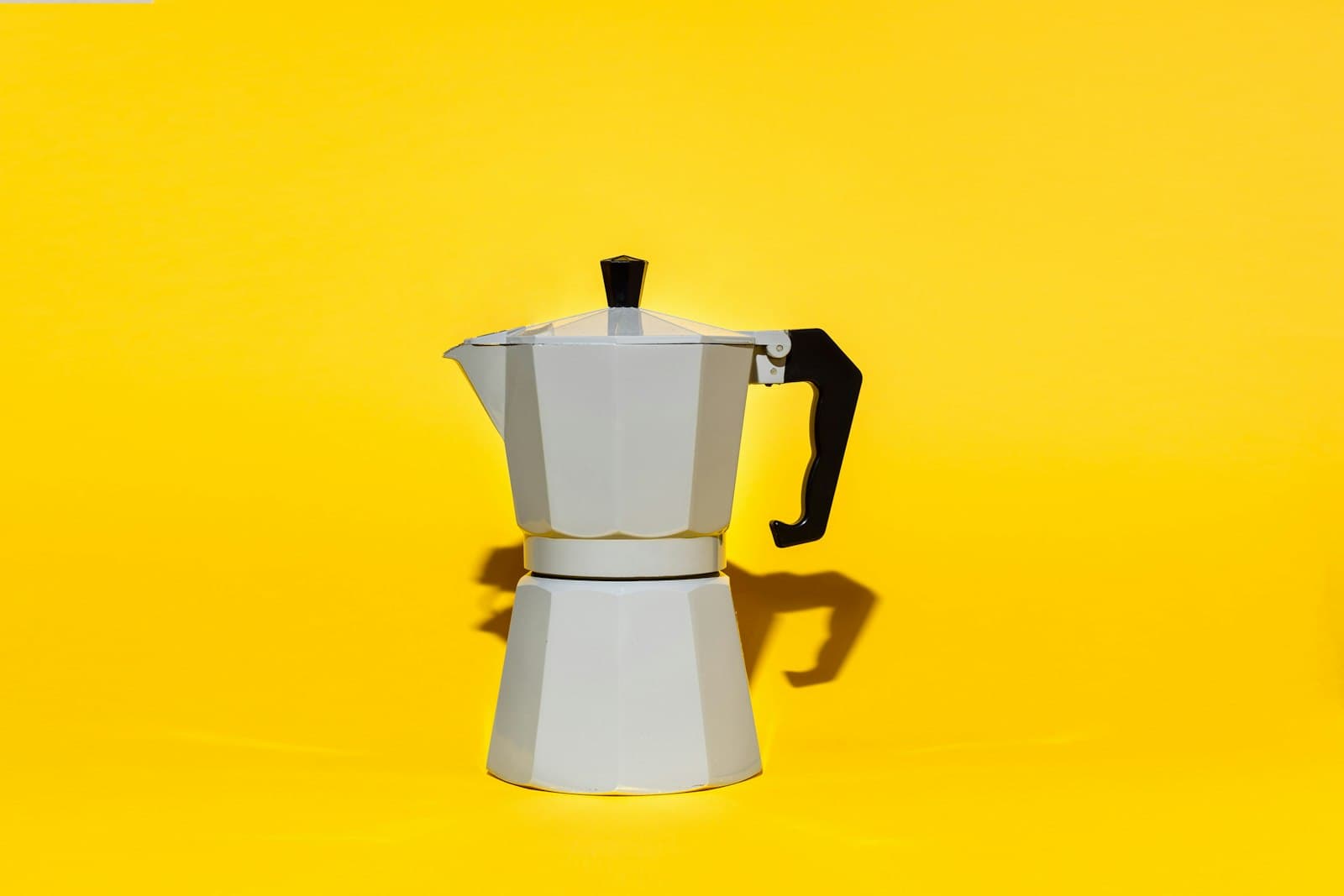
How the moka pot works
The moka pot is made of three chambers. Water goes in the lower boiler, coffee grounds in the central basket, and the extracted coffee collects in the top. When heated, steam in the boiler raises the pressure, pushing the water up through the central grounds, and rich coffee rises to the top.
The moka pot's pressure is about 1–2 atmospheres. It does not reach an espresso machine's (about 9), so strictly speaking it is not "espresso." But it is far richer than drip, and combined with milk it makes a café-latte-style cup.
What you need
- The moka pot itself (1-cup, 3-cup, etc. The stated cup count is a guide in demitasse cups)
- Coffee beans: medium-dark to dark roast pairs well
- Grind: medium-fine (coarser than espresso, finer than drip)
- Heat source: gas / IH (IH-compatible ones are stainless, or you need a converter plate for aluminum)
Brewing steps
- 1. Pour "hot water" into the boiler (up to below the safety valve). Using hot water from the start is the biggest tip
- 2. Put grounds in the basket and level them off. Do not compress (no tamping)
- 3. Assemble the pot and put it on medium-low heat with the lid open
- 4. When the coffee starts to rise, watch it. When the color turns a pale "straw color" and the gurgling sound changes, cut the heat
- 5. Cool the bottom of the boiler with a wet cloth or running water to stop the extraction
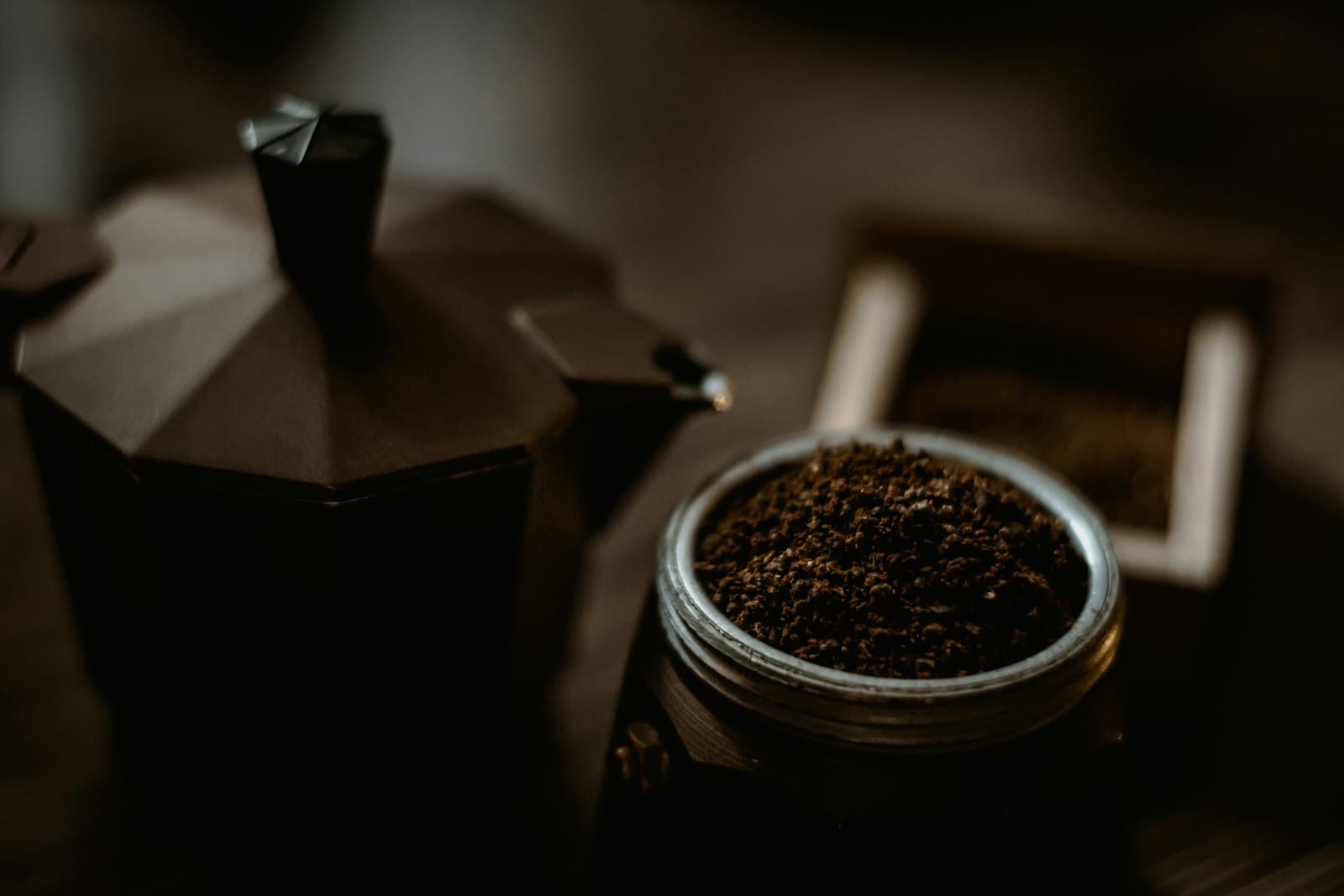
Starting with "hot water" rather than "water" shortens the heating time and prevents off-flavors from the grounds stewing under prolonged heat. Take it off the heat before the final gurgle (the sign that only steam is spouting) and cool the bottom to hold back excess bitterness.
Five tips for not failing
- Hot-water start: shorten the boiler heating time to prevent over-extraction
- Medium-low heat: high heat causes scorching and boil-over. Raise it slowly
- Do not compress: tamping raises the pressure too much, clogging it and turning it bitter
- Stop early: cut the heat just before the rich liquid breaks and turns to whitish foam and sound
- Cool the bottom: stop the residual-heat extraction and cut the bitterness
How to choose beans and grind
Since it brews strong, medium-dark to dark chocolate and nutty types go well. Heavy Indonesia or Brazil and dark-roast blends are sure bets. The grind is medium-fine as a baseline; too fine and it clogs and turns bitter, too coarse and it goes watery.
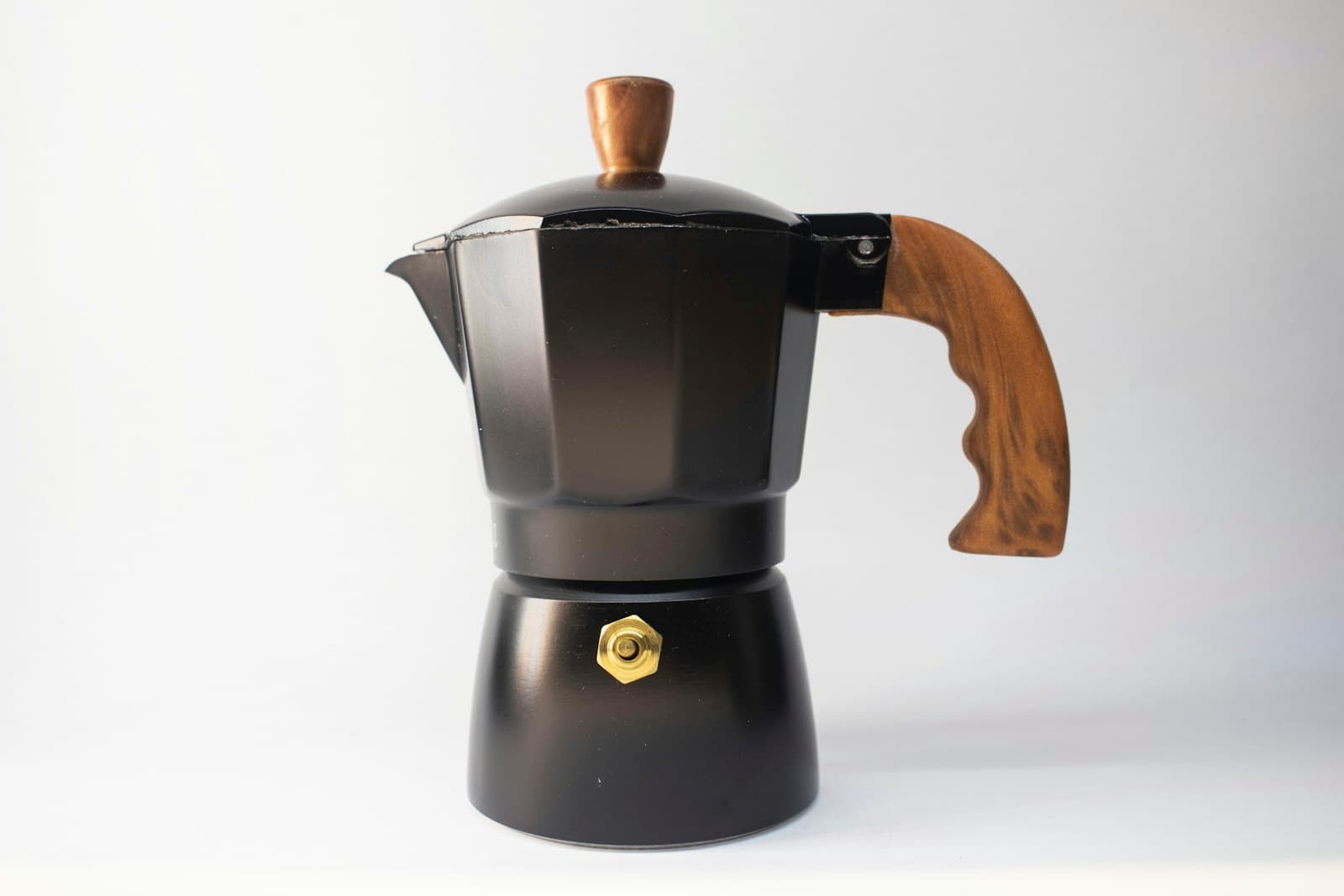
A twist: home café latte
Pour warmed, frothed milk into the moka pot's strong coffee and you have an easy home café latte / cortado-style cup. Even without a milk frother, just shaking warmed milk in a jar makes a passable foam. Going well with sugar is another of the moka pot's charms.
Common stumbles
- Bitter, burnt-smelling → heat too high / grind too fine / stopped too late
- Watery, thin → grind too coarse / too little coffee
- Metallic taste → oil residue from insufficient cleaning. Break in a new aluminum pot with a few "throwaway brews"
- No response on IH → aluminum is incompatible. Use a stainless one or a dedicated converter plate
- How to wash → for aluminum, no detergent, just hot water and a cloth. The rubber gasket is a consumable, so replace it periodically
FAQ
Can a moka pot replace an espresso machine?
At about 1–2 bar of pressure it can’t match a 9-bar machine, so you won’t get true crema. But it’s far richer than drip and pairs well with milk. If you treat it as “rich coffee, made simply,” it’s very satisfying — something between espresso and drip.
What cup size should I choose?
The stated cup count is based on demitasse servings (about 30–40ml). If you usually drink from a mug, pick a size up or dilute the brew with hot water for an Americano style. Making far less than the rated capacity is hard to keep consistent, so choose a size that matches how much you actually drink.
Can I use a paper filter?
A small dedicated paper laid in the basket cuts oils and fines for a cleaner cup and easier cleanup. Worth trying if a metallic taste bothers you or you prefer a crisp finish.
What beans and grind suit it?
Medium-dark to dark is the classic. The moka pot's strong, powerful extraction goes well with dark-roast flavors like chocolate and nuts. For grind, aim for medium-fine — "a bit coarser than espresso, finer than drip." Too fine clogs and turns bitter; too coarse goes watery. Start with a medium-dark, medium-fine grind and adjust one step at a time by taste — that is the way not to fail.
How should I manage the heat?
Low to medium heat is the basis. Heating hard on high pushes extraction along too fast and brings out scorching and bitterness. The ideal is for the coffee to rise slowly while making a light gurgling sound. When a pale golden liquid starts to appear at the top and the sound changes to a sputter, cut the heat and cool the base with a damp cloth to stop extraction — this yields a clean cup with few off-flavors.
The moka pot, as long as you nail the three of "heat, grind and when to stop," is a fine tool that makes a rich cup — cheap, sturdy and needing no electricity. Before buying an espresso machine, first step into the world of milk drinks with this one.
Was this article helpful?
Choose & compare
Related links
More articles
Hand-Drip Basics: The Minimal Kit of Gear, Beans and Water
BeansCoffee and Climate Change — The “2050 Problem” and the Science of Our Cup’s Future
CultureThe Economics of Coffee — From the C-Market to the Price of a Cup: The Story of “Why This Price?”
CultureA World History of Coffee — From an Ethiopian Legend to the Cup That Moves the World