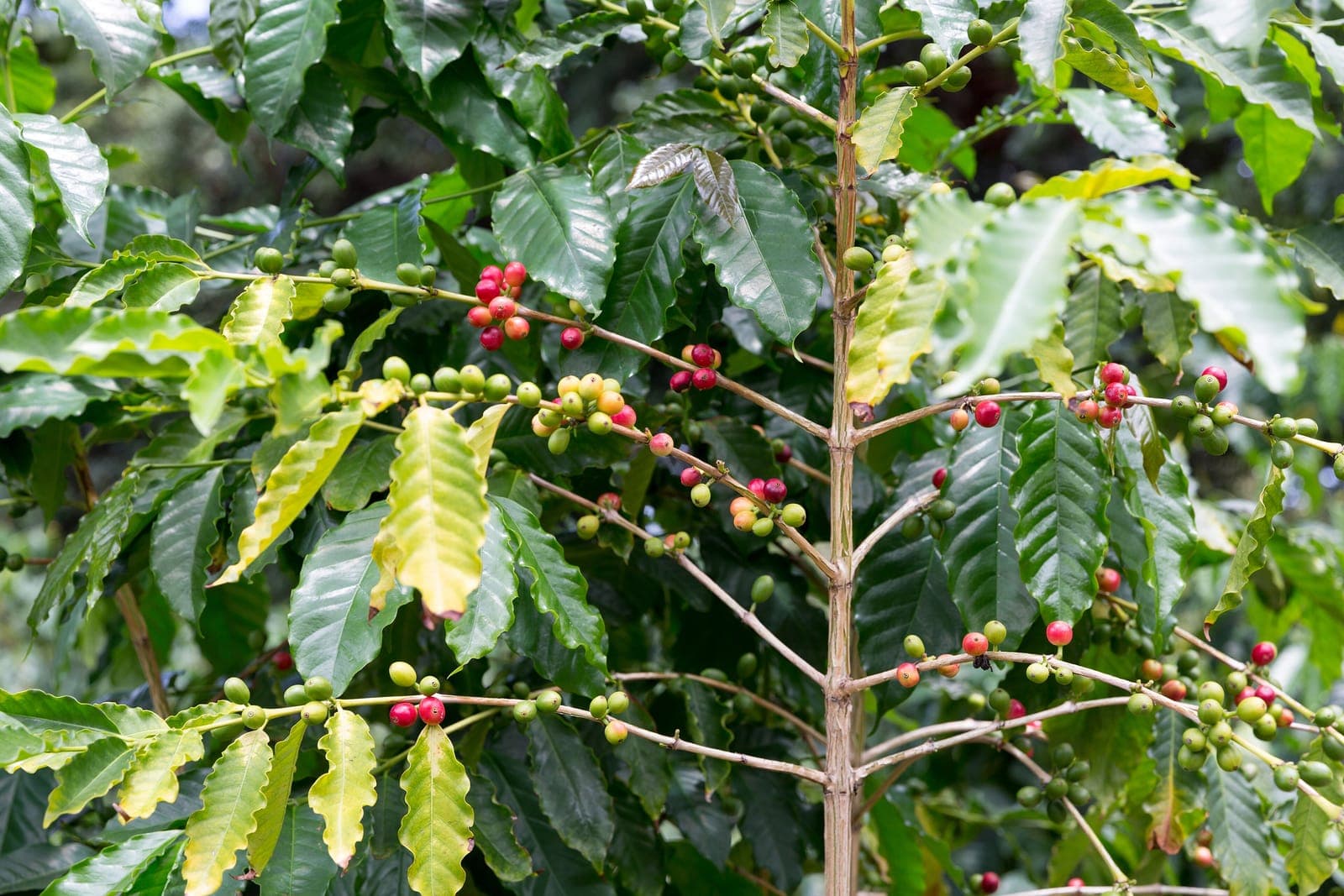
i.Volcanoes and “free shade”
The elevation is modest, but clouds rising in the afternoon shield the trees from direct sun (free shade) and encourage slow ripening. Combined with the volcanic soil, the result is a velvet-smooth cup.
Loading…
Kona spreads over the slopes of Hualalai and Mauna Loa on the western side of the Island of Hawaii.
Kona spreads over the slopes of Hualalai and Mauna Loa on the western side of the Island of Hawaii.
Volcanic soil and a distinctive climate of afternoon cloud cover (natural shade) nurture a smooth, mild coffee with nutty sweetness and moderate brightness.State law sets strict standards for the “Kona” label.
The elevation is modest, but clouds rising in the afternoon shield the trees from direct sun (free shade) and encourage slow ripening. Combined with the volcanic soil, the result is a velvet-smooth cup.
Claiming “100% Kona” requires meeting origin and blending standards. With small production and high labor costs, it trades as a luxury coffee.
Kona’s farms concentrate in the “Kona coffee belt,” a strip running some 30km north–south along the western slopes of Hualalai and Mauna Loa and only around 3km wide. Mineral-rich volcanic soil, clear mornings, afternoon cloud (the free shade) and gentle evening rain — everything coffee needs cycles through this narrow band on almost the same rhythm daily.
Coffee reached Hawaii in the early 19th century; Typica brought from Guatemala in 1892 took hold and is still grown today as Kona Typica. Through the 20th century, family farms of Japanese immigrants carried much of Kona’s production — an origin with deep ties to Japan.
In early spring the trees whiten with blossom — the “Kona snow” — and each autumn harvest the district throws the Kona Coffee Cultural Festival, one of Hawaii’s oldest food festivals at more than half a century running, where farm tours and cuppings let you taste the culture itself.
One labeling rule is worth knowing before you buy. Under Hawaii state law, a bag marked “Kona Blend” need contain only 10% Kona-grown beans; the other 90% may come from anywhere. “Kona Blend” and “100% Kona Coffee” are different things — to taste what Kona actually is, always choose the 100% label.
True Kona is scarce and hand-picked at U.S. labor costs, hence expensive, but its smoothness and clear sweetness are hard to substitute. Beans grade by size and defects into Extra Fancy, Fancy, No. 1 and more, with the large-bean Extra Fancy at the top.
Smoothness without edges is the charm, so take a medium roast and brew it honestly on paper drip. Enjoy the nutty, brown-sugar sweetness and silky mouthfeel without pushing the strength. A staple Hawaii souvenir, too — check for the “100% Kona” label and the roast date, and you won’t go wrong.
Searches each shop for “Hawaii (USA) Kona”. Links marked “PR” are ads (affiliate links →); this site may earn a referral fee from sellers. Prices and stock on each site take precedence.