Milk Steaming Basics: Make a Café Latte at Home
The logic of steaming and how to make smooth microfoam
When a latte will not come out right at home, the cause is more often the "milk" than the espresso. Nail the three points — temperature, how you add air, and how you pour — and you have the base for glossy microfoam and latte art.
Contents · 8
You can pull espresso well, but when you make a latte the result is disappointing — much of that cause is in the milk. A café latte is smooth and sweet because they make "microfoam" with finely incorporated air. Once you understand the logic, you can reproduce it well enough at home.
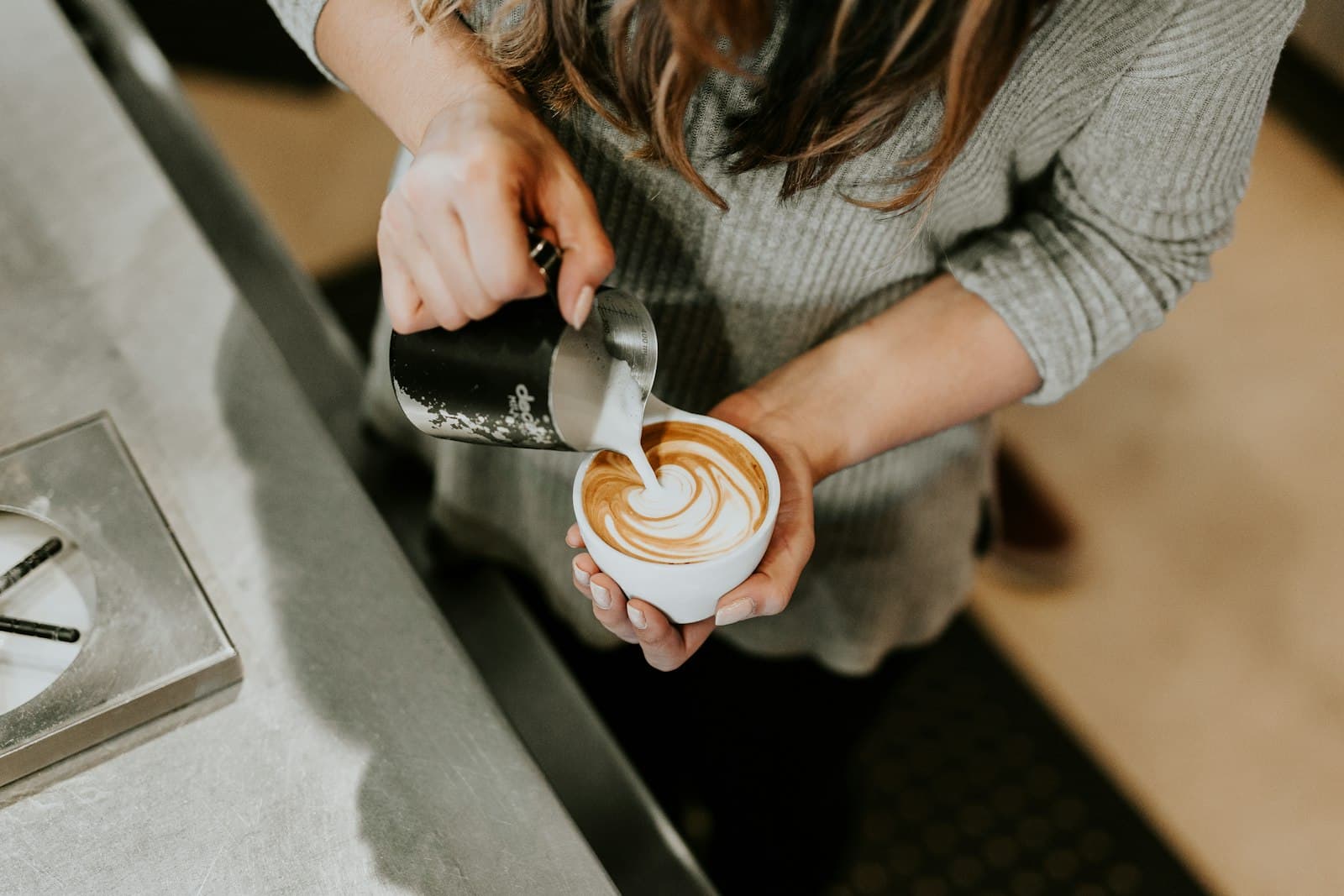
A good latte is decided by "foam quality"
What you aim for is glossy, liquid foam. Not the "fluffy" kind you can scoop with a spoon, but a texture like freshly applied paint, unified with the milk. With large (coarse) bubbles floating on top, the mouthfeel is rough and you cannot draw latte art. The fineness of the foam becomes the deliciousness directly.
Choosing milk: start with whole, non-adjusted milk
What governs foaming and sweetness are milk protein and milk fat. Protein supports the foam's film; fat gives smoothness and richness.
- Whole non-adjusted milk: foams most reliably and brings out sweetness. Start with this
- Low-fat milk: the foam is fine-textured, but the richness and sweetness are restrained
- Plant-based milk: oat milk (barista spec) foams the most easily. Soy milk separates readily
The two phases of steaming
Steaming is two stages: "add air" → "mix." Reverse the order and it fails.
- Phase 1 (add air): hold the nozzle tip right at the surface and incorporate air for just a few seconds while making a light "tch-tch-tch" sound
- Phase 2 (mix): sink the nozzle a little and create a whirlpool (rolling) in the pitcher to fold the whole foam in evenly
- When to stop: when the bottom of the pitcher is "hot but bearable for 3 seconds" to the touch (about 55–65°C)
Above 65°C the lactose-derived sweetness drops sharply, the protein denatures, and a "boiled milk" smell appears. Without a thermometer, stopping by the feel of the hand touching the pitcher is the sure way.
The science of temperature: why around 60°C
The warmer milk gets, the sweeter it feels, because the dissolution of lactose and how you perceive it change with temperature. But above 65°C the protein denatures, and instead of sweetness a flavor like "scorched milk" appears. The narrow window of 55–65°C is where the peak of sweetness and the stability of the foam coexist.
If you have no steamer
- Electric milk frother: the easiest. Warming + foaming done in one unit
- French press: pour in warmed milk and pump the plunger up and down 30–40 times
- Sealed jar + microwave: put milk in a jar and shake, remove the lid and heat for 20–30 seconds to stabilize the foam
How to pour: the first step of latte art
Just before pouring, swirl the pitcher lightly to unify the heavy milk settled at the bottom with the foam on the surface. At first pour thin from a high position to mix with the espresso, and once the cup is half full, bring the pitcher close to the surface and pour in one flow. The white foam then floats up, and crossing through it at the end makes a heart.
First "texture" over "picture." Once you can pour glossy milk, the art naturally follows later.
Common failures
- Large bubbles form → too much air in Phase 1. "Tch-tch-tch" for a few seconds is enough
- Milk and foam separate → not enough swing before pouring. Swirl lightly, then pour
- Lukewarm result → too long adding air at the surface, so the temperature did not rise fully
FAQ
Can I do latte art with oat milk or soy milk?
Yes. Among plant-based options, "barista spec" oat milk foams the most easily and stays stable. Soy milk separates readily with acid and heat, so choose an adjusted or barista-spec one to be safe. Plant-based milks tend to foam a touch coarser than dairy overall, so the trick is to keep the air-adding phase short.
Can I make a latte without an espresso machine?
You can. Pair a strong moka pot or a dense dark-roast drip with milk frothed in a frother and you get a passable "latte style." There is no crema, but the mouthfeel gets close. See also espresso vs drip on the difference in strength.
Why does my home foam come out with large bubbles?
The main cause is adding air at the surface for too long. Stop the "tch-tch-tch" sound after 2–3 seconds, then sink the nozzle and mix with a whirlpool. On a home machine with weak steam pressure, making a small amount (around 150ml) makes the whirlpool easier and the texture finer. For the ratios of each drink, see the complete guide to espresso drinks.
What are the differences between a latte, cappuccino and flat white?
Even with the same espresso + milk, the amount of foam and the milk ratio differ. A café latte is more steamed milk plus a thin foam, mellow. A cappuccino is roughly equal parts espresso, steamed milk and foam — thick and fluffy foam. A flat white has less milk and a very thin microfoam, so the coffee comes through strongest. The complete guide to espresso drinks lays out the ratios.
Can I reheat and reuse the milk?
Not recommended. Once steamed, the milk has taken in air and its protein structure has changed, so reheating will not make clean microfoam again. The foam turns coarse, and overheating tends to drive off the sweetness. The rule is to pour "only what you use" into the pitcher. Once you can make small batches, you can brew with fresh foam every time and no waste.
I just cannot draw latte art. What do I fix first?
First give up on the "picture" and focus on "milk quality." With large bubbles mixed in, no amount of pouring produces a pattern. Whether you can make glossy, liquid microfoam, and whether you swirl the pitcher before pouring to unite foam and milk, come first. Once the quality is right, the pattern starts to appear naturally through the pour-height moves of "mix low, then place close to the surface."
For making lattes, polishing your "milk skill" before your espresso skill improves you fast. First, aim for a glossy cup with non-adjusted milk and a frother.
Was this article helpful?
Choose & compare
Related links
More articles