A Five-Minute Morning Routine for a Better Cup Every Day
A repeatable recipe for busy weekdays
Learning path · Beginner/Chapter 3
One of the 7 chapters in this level. Tap the button on the right when you finish reading to log your progress.
Carving out just five minutes in the morning changes your daily coffee. How to build a routine by fixing your gear, your doses and your sequence — plus the roast levels that suit mornings, brewing for two, and common questions.
Contents · 7
Good coffee is decided not by time but by repeatability. Brew differently every day and you cannot compare the taste, so you never improve. Keep making the same fixed cup every morning, on the other hand, and the differences between beans come into sharp focus. It is precisely on busy weekdays that fixing your method pays off most.
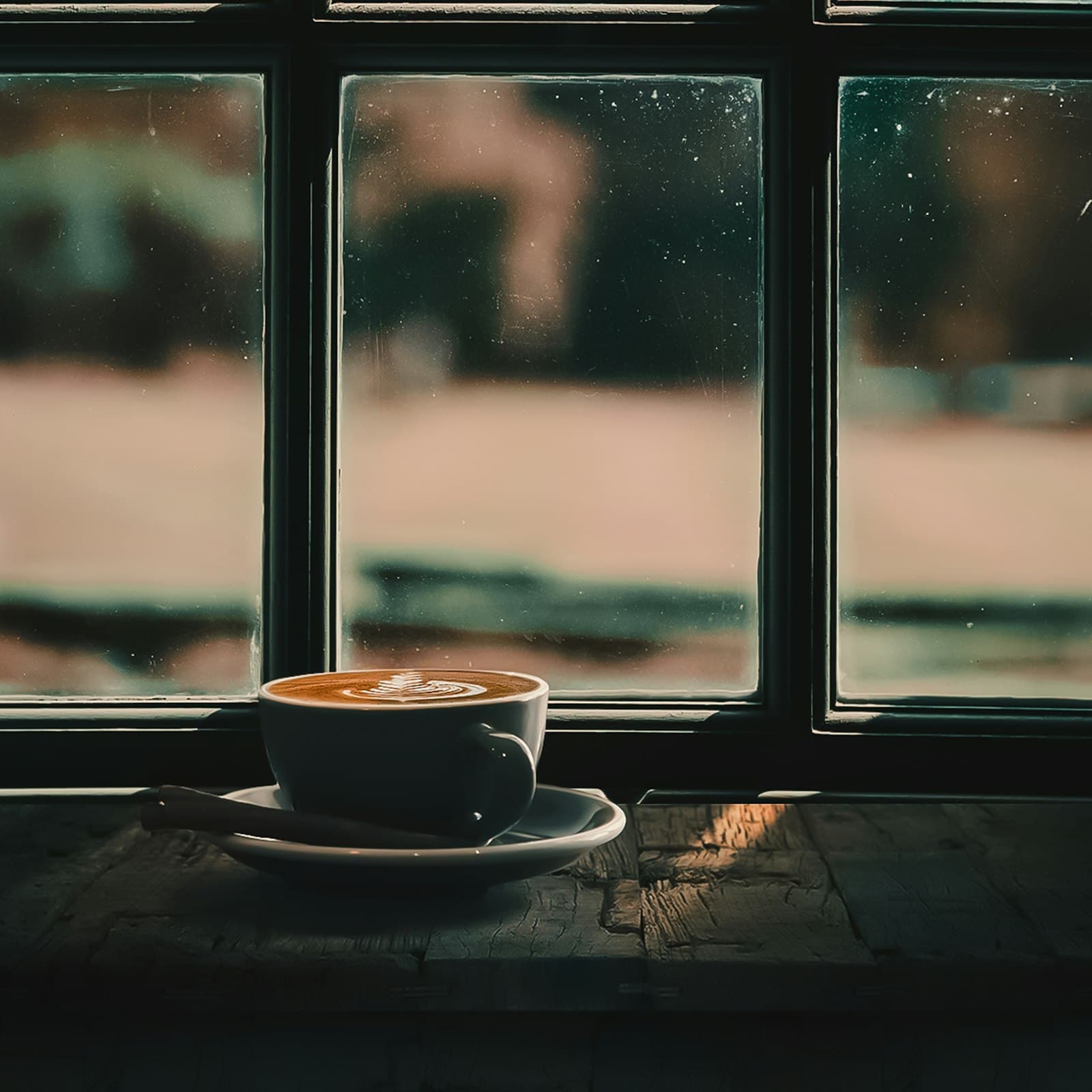
The night before (1 minute)
- Fill the kettle with water
- Weigh out the beans (15g recommended)
- Set the paper in the dripper
The morning sequence (4 minutes)
- 0:00 — start heating the water (aim for 90–93°C)
- 0:45 — grind the beans (medium-fine)
- 1:30 — rinse the paper with hot water
- 2:00 — bloom (30g, 30 seconds)
- 2:30 — second pour (120g total)
- 3:30 — third pour (240g total)
- 4:30 — done once it has drained through
15g of beans + 240g of water (1:16) is the standard in countless recipes worldwide. Use it as your baseline and tune from there.
Daily baseline recipe (1:16)
Beans 15g / Water 240g
Minimal gear is fine
You do not need elaborate equipment. The bare minimum for a repeatable cup is just these three. With them alone you can hit the same taste every morning.
- Dripper + paper (one model, such as a V60 or Kalita)
- Scale (no need for 0.1g precision; 1g steps are plenty)
- A grinder that can do medium-fine (an electric one makes mornings overwhelmingly easier)
No thermometer? After the water boils, open the kettle lid and wait 30–40 seconds and you are roughly at 90–93°C. That is plenty until you get a feel for it.
How to adjust the taste
- Too sour → grind finer, or raise the water temperature
- Too bitter → grind coarser, or lower the water temperature
- Too weak → add 1g of beans
- Too strong → take away 1g of beans
Beans and roast levels that suit mornings
If you want a stable morning routine, "repeatability first" is the right call for bean choice too. A medium to medium-dark roast — neither too dark nor too light — is forgiving when your water temperature or grind drifts a little, so it is the roast least likely to fail on a half-asleep morning (roast levels explained). Reach for a light roast on days you want bright acidity to wake you up, a medium-dark when pairing with milk — switch by mood.
- Medium to medium-dark — a wide brewing margin, ideal for stable daily repeatability (start here if unsure)
- Light — bright acidity that wakes you up; a slightly higher temperature (92–94°C) is easier to dial in
- Medium-dark to dark — body and bitterness; great with milk or café au lait. Use a lower temperature (88–90°C)
Shortcuts for mornings with no time
- Grind the night before (freshness drops a little, but on the day you oversleep it is plenty good)
- On the weekend, weigh out a week's worth and bag it in single portions
- On days when it is truly impossible, keep a café-au-lait base or cold brew on hand
FAQ
Is it OK to grind the night before?
Ideally you grind right before brewing, but on a morning you overslept, grinding the night before is a far better choice than not brewing at all. Keep the grounds in an airtight container at room temperature and use them up by the next morning, and the flavor loss is minimal. "Just one day's worth, the night before" strikes a better balance with freshness than grinding a whole week at once. See the grind size guide for how grind and freshness relate.
How do I brew two cups, or for the family?
The basics: double everything while keeping the ratio (1:16). For two cups, aim for 30g of beans and 480g of water. But more water lengthens the dwell time in the dripper and tends to over-extract, so grind a touch coarser or add one more pour to even it out. For three cups or more, a French press is more stable than drip.
Do I have to measure the water temperature every time?
No need to measure every morning. With the same kettle and the same steps the temperature is largely reproducible, so fixing "wait N seconds after boiling" is enough. Lining up the weight of beans and water every time matters more for a stable taste than the temperature does.
Is instant or an automatic machine OK?
On a busy morning the top priority is "being able to keep it up." If hand-drip becomes a source of pressure, an automatic coffee maker, a capsule machine or a good instant is plenty. What matters is drinking the same thing every morning to build a "baseline taste." Once you have room to spare, a gradual shift — hand-drip only on weekends, say — is realistic. Prioritize the cup you keep making over the perfect cup.
Is coffee best right after waking up?
There is a view that waiting 1–2 hours after waking is better than drinking right away. Just after you wake, cortisol (an alerting hormone) is naturally high, and piling caffeine on top can make its effect harder to feel and may build tolerance faster. A cup after breakfast and a little activity tends to let you feel the caffeine "kick in" more. It is not a strict rule, so in the end, prioritize your own rhythm.
Is prepping cold brew the night before a good idea?
It is a very sensible option. Put grounds and water in a bottle the night before and leave it in the fridge, and in the morning you just pour. No flame, a stable taste, and no panic on the day you oversleep. Use a coarse grind, roughly 1:10–1:15 grounds to water, and 8–12 hours as a guide. Drip on days you want it hot, cold brew on days with no time — splitting them makes morning coffee far easier.
How do I brew just one cup well?
Small-batch drip has the drawback that the water cools quickly and the taste is hard to stabilize. For one cup, using 10–12g of beans, keeping the ratio around 1:15, and preheating the dripper and cup before brewing reduces failures. If it still tastes thin, brewing a little strong and diluting with hot water — a "bypass" — is one trick. Rather than trying to brew a full mug exactly, adjusting freely is easier in the morning and more stable in taste.
Try keeping this routine for a month. Once the taste feels less variable, move on to the next step — adding a thermometer, logging your brews, or trying a different bean. Only once you have repeatability can you tell "how the taste changed as a result of what you changed."
Learning path · Beginner Chapter 3 — Up next
Chapter 4 · How to Store Coffee Beans: 7 Tips to Keep Them FreshWas this article helpful?
Choose & compare
Related links
More articles