Paper Filters Change the Taste: Bleached, Unbleached and by Material
With the V60 and Kalita as givens, refining your filter choice changes this much
Even with the same beans, the same dripper and the same recipe, changing the paper filter changes the taste. Bleached or not, paper thickness, and material (bamboo, cotton-blend) differences, explained with real examples.
Contents · 8
- Bleached vs unbleached: the truth about papery smell
- Paper thickness and flow rate
- The concrete differences among V60 filters
- Quick reference by brand (bleaching, flow, taste)
- By dripper shape: choosing the filter that fits
- How to choose without going wrong
- The right way to rinse (a hot-water flush)
- Storage and FAQ
You replaced the dripper, but you have been using the same filter the whole time — surprisingly many people are like this. In fact, even with the same V60, the genuine white tabbed filter and another brand's cotton-blend taste so different you would think they were different beans.
Bleached vs unbleached: the truth about papery smell
It is widely thought that a white filter = bleached and brown = unbleached, but this is only half right. A white filter is "oxygen-bleached" (low environmental impact, almost no papery smell), while a brown filter is unbleached and retains a lignin-derived "paper smell." When this smell transfers to the coffee, the original flavor is dulled.
If you use a brown filter, always rinse it with hot water. Not lukewarm water but water at the same temperature as your brew, for 30 seconds or more. This removes 80% of the papery smell.
Paper thickness and flow rate
- Thin (HARIO genuine, etc.): drains fast, a clean and bright taste
- Thick (Cafec, Sibarist, etc.): drains slowly, stronger sweetness and body
- Cotton-blend (KONO Meimon): passes the oils moderately, a round mouthfeel
- Metal mesh: no filter paper, body maximized
The concrete differences among V60 filters
HARIO's genuine white tabbed filter is standard-speed by design. Cafec ABACA contains plant fiber for high permeability and enhanced aroma. Sibarist Fast is perforated for ultra-high speed, suiting ultra-light roasts. Brew these three in turn with the same beans and you can tell the body thickness changes clearly in three steps.
Quick reference by brand (bleaching, flow, taste)
A one-page guide to choosing when you are torn, using representative papers. With the same beans, the difference in flow rate becomes the difference in body thickness directly.
- HARIO V60 genuine (white, bleached): standard speed. Clean and bright — the one to set as your baseline first
- Cafec ABACA (white, bleached): banana fiber for higher permeability. Aroma opens up and stretches lightly
- Sibarist FAST (unbleached, perforated): ultra-fast. Resists clogging from fines, pairs well with ultra-light roasts
- KONO Meimon (white): slightly thick, leaning to sweetness and body. Drains slowly
- Metal mesh (no paper): passes the oils as-is, body maximized. More fines get through
By dripper shape: choosing the filter that fits
The basic rule is to choose the filter together with "the dripper's shape." If the shape does not fit, water takes a "shortcut" through the gap between paper and dripper, and you do not get the taste you aimed for.
- Cone (V60, KONO): a conical paper. Easy to control with your pour, a clear and bright taste
- Wave (Kalita Wave): a corrugated flat bottom. The water bed stays stable, so it is repeatable for anyone
- Trapezoid (Melitta, Kalita 102): a trapezoidal paper. Extraction is slower, bringing out sweetness and body
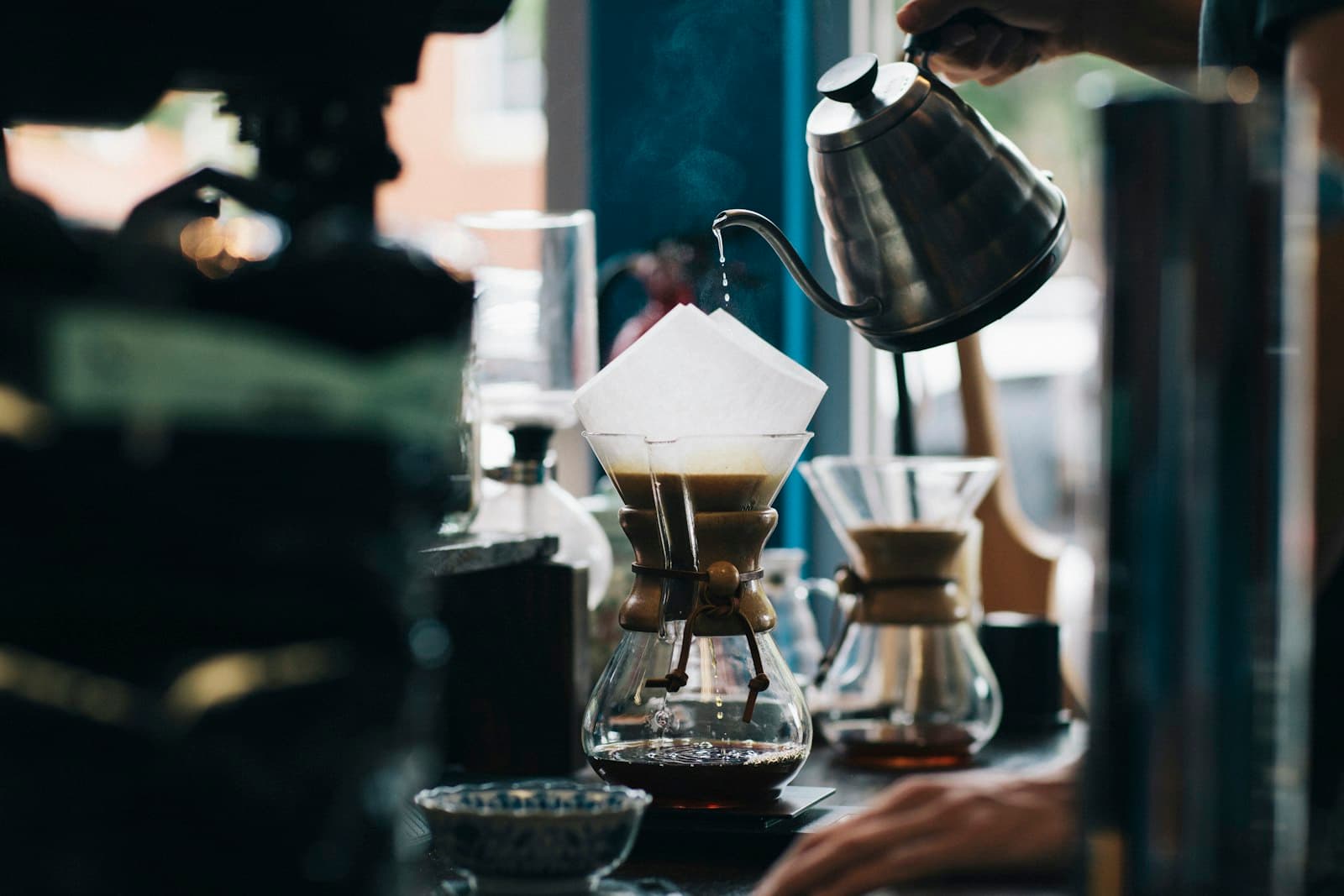
- Chemex: a dedicated thick paper. Filters oils and fines strongly for the cleanest possible cup
Do not force a mismatched shape — a trapezoid in a V60, a cone in a trapezoid. Water escapes through the gaps for a thin, uneven taste. Always use the dedicated paper matched to your dripper's shape.
How to choose without going wrong
Start with the genuine, bleached type. Use it to set your own standard. Then change just one thing and record what changed and how. Change the beans every time you change the filter and you cannot tell what caused the change. Only the habit of comparing under fixed conditions refines your recipe.
The right way to rinse (a hot-water flush)
Rinsing — to drive off the papery smell and preheat the dripper — is a humble move with a big payoff, and it is essential with unbleached filters in particular. The steps are simple and take 30 seconds once you are used to them. Build it into your routine right before brewing.
- 1. Set the paper in the dripper and have it ready over the server
- 2. Pour water at your brew temperature around it until the whole paper is thoroughly wet
- 3. Check that the paper clings to the dripper (preventing water from escaping through gaps)
- 4. Always discard the water collected in the server (washing the papery smell away with it)
- 5. Add the grounds to the warmed dripper and start brewing at once — the trick is to brew before it cools
Storage and FAQ
How should I store filters?
Paper absorbs smells easily, so keep it in a sealed container or bag, away from strong-smelling things (spices, detergent). Humidity is an enemy too. Old paper develops a papery smell, so use it up within six months to a year as a guide.
White (bleached) or brown (unbleached) — which is better in the end?
For taste alone, the bleached type with less papery smell is the safe choice. Brown (unbleached) is fine in practice if you rinse it, and suits anyone wanting lower environmental impact. Make rinsing a habit and the gap between them narrows. Note that bleaching is either chlorine- or oxygen-based, and most on the market use lower-impact oxygen bleaching — color alone does not decide quality or safety.
Is rinsing (a hot-water flush) essential?
Essential for unbleached, recommended even for bleached. It doubles as preheating the dripper. Wet the whole thing with water at your brew temperature, and always discard that water before adding the grounds.
How does it differ from cloth (nel) or steel filters?
Paper filters out oils and fines best, so they give the cleanest, clearest cup. Steel (metal) lets the oils through for more depth and body, and cloth (nel) sits in between, prized for a round, smooth mouthfeel. Ease of care runs paper > steel > cloth. Build your "clean baseline" with paper first and the difference is obvious when you move to the others. Cloth picks up odors as it dries, so it is kept submerged in water in the fridge, while steel clogs with oils and needs periodic boiling to clean.
Before you replace the dripper, try changing just one filter first — it is not rare for that alone to get you to a "notch tastier" cup. On your next brew, turn some attention to the paper, too.
Was this article helpful?
Choose & compare
Related links
More articles
The Science of Extraction — What, and How, Hot Water Draws Out of Coffee: Dissolution, Diffusion and Yield
BrewingComplete Guide to Nel Drip — The Kissaten’s “Velvety Cup” at Home
BrewingThe Complete Guide to Dialing In Espresso: The Science of Fixing Sour and Bitter Yourself
BrewingThe Coffee-to-Water Ratio: Set Your Flavor by the Numbers, From One Cup to a Crowd