Understanding Roast Levels: How to Choose Light, Medium and Dark
The same bean becomes a different drink. A map of how acidity, sweetness and body move with roast level
"Light is sour," "dark is bitter" — that is only half the picture. As the roast deepens, which elements of the taste increase and which disappear? From cracks and temperature to the confusion over names, a single map of roast levels.
Contents · 9
- Roast level is "how much heat goes in"
- The cracks are the milestones of taste
- How the taste moves across light, medium and dark
- Why the names get confusing
- Compatibility with brewing methods and how you drink it
- What is happening inside the bean
- So how do you choose?
- The "golden combinations" of origin and roast level
- FAQ
Even the same bean from the same farm becomes "a different coffee" at a different roast level. Before choosing an origin or variety, understanding the "vertical axis" of roast level brings you much closer to your own preference at a stroke.
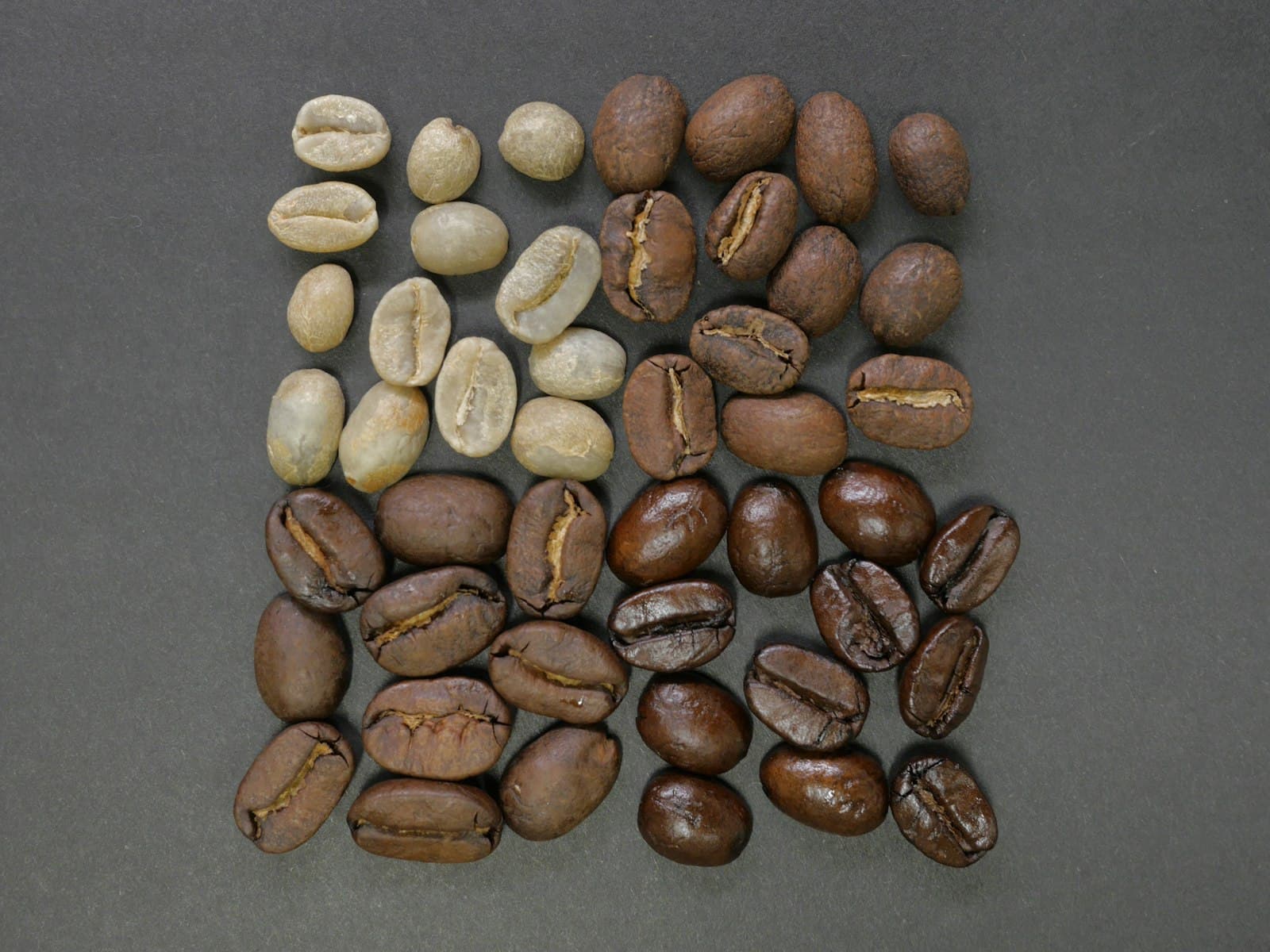
Roast level is "how much heat goes in"
Roasting is the process of heating green beans to advance the internal chemical reactions (the Maillard reaction and caramelization). With the time and temperature of heating, the bean's color shifts from light brown to dark brown to blackish-brown, and the taste moves greatly along with it. "Roast level" is a rough, staged expression of how much heat went in.
The cracks are the milestones of taste
During roasting, the beans "crackle" twice. These are the cracks. Just past first crack (around 196°C) is light to medium roast; entering second crack (around 224°C) is the medium-dark to dark zone. The cracks are a temperature guide, and the roaster decides when to cut the heat by listening to these sounds.
How the taste moves across light, medium and dark
- Light roast: acidity takes the lead. Bright flavors like flowers, fruit and black tea. The origin character shows most
- Medium roast: a balance of acidity and sweetness. Caramel, nut, honey. Suits everyone
- Medium-dark roast: a sweet-bitter richness. Chocolate, roasted aromas. The acidity settles down
- Dark roast: bitterness and body take the lead. Smoky, bitter. The acidity nearly vanishes and origin differences shrink
As a basic rule, remember "the deeper the roast, the lower the acidity, the higher the bitterness, the bigger the body." Note that "dark roast has more/less caffeine" is folklore — compared by the same weight, the difference is tiny.
Why the names get confusing
American, City, Full City, French, Italian… there are many names for roast levels, but there is no clear world standard, and the criteria differ subtly from shop to shop. Pros manage it with a color-measurement number called Agtron, but for consumers, grasping the four stages of "light, medium, medium-dark, dark" is plenty. If unsure at a shop, just asking "is this bean light or dark roast?" gets the message across.
Compatibility with brewing methods and how you drink it
- Light roast → higher water temperature (92–95°C) and a slightly finer grind to draw out the acidity and aroma
- Dark roast → lower water temperature (83–88°C) and a slightly coarser grind so as not to over-extract the bitterness
- Espresso → medium-dark to dark is standard (easy to drink even concentrated)
- Café au lait / milk drinks → a dark roast does not lose out to the milk
- Iced → medium-dark to dark, the taste does not blur even when chilled
What is happening inside the bean
Roasting is not merely a "scorching" process. First, around 100°C the bean's moisture leaves; over 150°C the Maillard reaction, in which amino acids and sugars bond, advances, producing toastiness and a brown color. From around 190°C caramelization occurs, creating sweet aromas and the compounds that become the source of bitterness. The bright acids that remain in a light roast, such as malic and citric acid, break down and decrease as the roast deepens, while bitter compounds increase in their place. "Light is sour, dark is bitter" is the inevitable result of this chain of chemical changes.
A dark roast's surface shines black because heat breaks the cell walls and the coffee oil inside seeps out. Oil oxidizes easily, so the darker the roast, the faster the freshness drops, and the iron rule is to finish it soon after opening. Conversely, light roasts keep relatively well.
So how do you choose?
When in doubt, starting from medium roast is the right answer. Use it as your reference point and, if you think "I want a more showy acidity," move toward light; if "I want a solid bitterness and body," move toward dark — one step at a time. Taste 2–3 stages side by side and you will surely find your own "just right."
Buy three bags of the same origin in "light, medium, dark" and taste them side by side to clearly feel the difference of roast level alone. We recommend this vertical tasting before comparing origins.
The "golden combinations" of origin and roast level
Roast level is not decided in isolation; the optimal point shifts in multiplication with the origin's character. Dark-roast an origin whose appeal is bright acidity and floral notes, and that precious aroma gets painted over by roast aromas. Conversely, an origin with inherently gentle acidity and body can taste green and grassy as a light roast. Roasters vary the roast level by origin precisely because they judge this compatibility.
- Suited to light–light-medium: Ethiopia (Yirgacheffe/Guji), Kenya, Panama Geisha ── maximizing delicate acidity and aromas like jasmine, bergamot and berry
- Suited to medium: Colombia, Guatemala, Costa Rica ── the "masters of the middle," where the balance of sweetness and acidity rides most richly
- Suited to medium-dark–dark: Brazil, Sumatra (Mandheling), India ── drawing out chocolate, spice and a solid body, holding up even to milk
Dark-roasting an expensive Geisha or natural Yirgacheffe is like diluting a fine perfume with alcohol. The more a bean's character stands out, the more the theory is to keep its "self" with a light-to-medium roast.
FAQ
Is dark roast easier on the stomach?
It cannot be said flatly, but a dark roast has less acidity, and chlorogenic acid, said to irritate the stomach, also decreases with roasting, so many people feel it "sits more lightly." On the other hand, the deeper the roast, the more bitter compounds increase, so testing on both the preference and constitution fronts is surest.
Does roasting reduce caffeine?
Compared by the same "weight," it barely changes. However, a dark roast loses moisture, swells and becomes lighter, so measured by volume as "how many spoonfuls," a dark roast comes out slightly less. Weigh the beans in grams and the difference is within the margin of error. Caffeine amount and how you feel it are also covered in coffee and sleep.
I really cannot stand acidity.
First choose medium-dark or above, lower the water temperature to around 85°C, and grind slightly coarser to soften the acidity. If it still bothers you, avoid light-roast beans themselves and enter from a dark-roast Brazil or Mandheling — that is the shortcut.
Was this article helpful?
Choose & compare
Related links
More articles
The Science of Coffee Aroma — The Story of the “800 Molecules” Rising From a Single Cup
BeansPanama Coffee Deep Dive — The Volcanic Highlands That Bore Geisha, and the Story of the World’s Highest Price
BeansThe Science of Bitterness — What Separates Unpleasant “Bitter” From Pleasant “Bitterness”
BeansCoffee and Climate Change — The “2050 Problem” and the Science of Our Cup’s Future