Water Changes the Taste: The Science of Coffee and Water
The strengths of hard water and soft water
Learning path · Intermediate/Chapter 1
One of the 7 chapters in this level. Tap the button on the right when you finish reading to log your progress.
Coffee is 98% water. Changing the water can shift the taste even more dramatically than changing the beans. Why Japanese tap water is good enough — and what to choose if you want to go further.
Contents · 9
About 98% of the coffee in your cup is water. And yet the conversation is almost always about which beans to choose, while the water is all but ignored. In fact, with the very same beans, just changing the water can make acidity bloom or bitterness vanish. Here we lay out, with numbers, how water quality changes the taste.
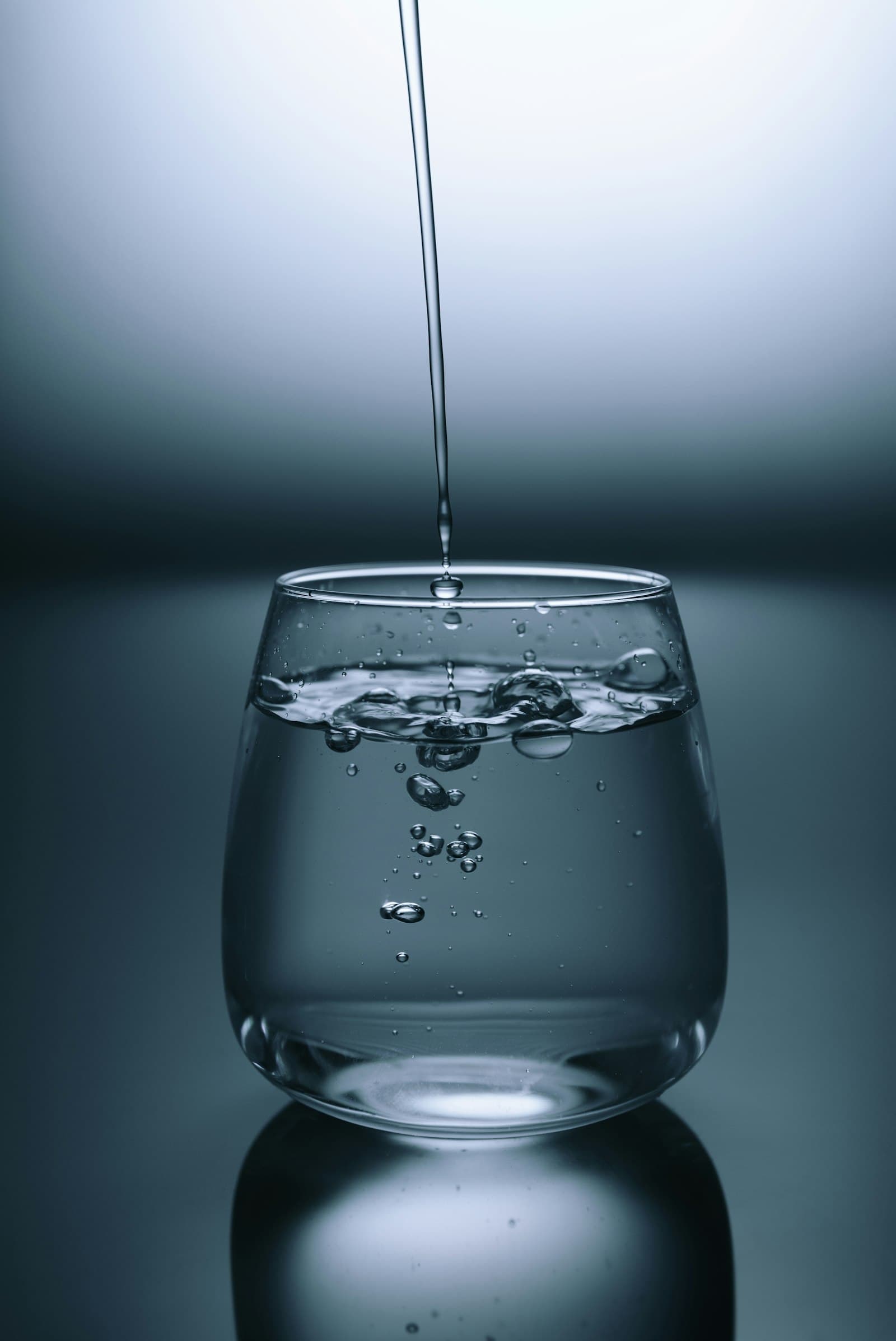
Why minerals decide the taste
Brew coffee with pure water (distilled or RO water) and it actually tastes poor. The magnesium and calcium dissolved in the water act as the "hands" that grab and draw out coffee's aromatic compounds. With too few minerals the taste is thin and flat; with too many, the water hoards the compounds and the cup turns muddy.
Hardness (GH) and alkalinity (KH) are different things
This is where many people get confused. Total hardness (GH) is the amount of calcium plus magnesium, and it sets the "strength of extraction." Alkalinity (KH, carbonate hardness), on the other hand, is the "power to neutralize acid — the buffer." When KH is too high, it cancels out the bright acidity you were after and the cup goes flat. To show off a fruity light roast, the ideal is moderate GH and low KH.
- Total hardness (GH) at or below 50 ppm (soft water): acidity and delicacy stand out; too low and the flavor turns thin
- Total hardness (GH) 50–150 ppm (medium-hard): well balanced — the SCA-recommended zone
- Total hardness (GH) above 150 ppm (hard water): thick body, but acidity is suppressed and bitterness tends to dominate
- High-alkalinity (KH) water: acid is neutralized and the coffee blurs (aim for KH around 40 ppm)
The SCA water standard (worth memorizing by the numbers)
The Specialty Coffee Association (SCA) has clear recommended targets for brewing water. Keep them in mind and you have a yardstick for choosing bottled water.
- TDS (total dissolved solids): target 150 mg/L (acceptable 75–250)
- Calcium hardness: target about 68 mg/L (as CaCO₃)
- Alkalinity: target around 40 mg/L
- pH: target 7.0 (acceptable 6.5–7.5)
- Sodium: about 10 mg/L; ideally zero chlorine and no off-odors
Is Japanese tap water good enough?
Tap water from the Kanto to Kansai regions runs around 60–100 ppm hardness, almost squarely within the SCA range. Japan leans soft by world standards — a country blessed with water well suited to coffee. The only real concern is the chlorine smell; running it through an activated-carbon filter, or leaving it to stand so the chlorine escapes, is enough. In areas with harder water, such as parts of Okinawa and Chiba, it is worth trying a soft bottled water.
Recommended bottled waters: I LOHAS (hardness 27–85 ppm), Suntory Tennensui (about 30 ppm), Volvic (about 60 ppm). If you prefer hard water, compare against Evian (304 ppm) or Contrex (extremely hard) and the difference is obvious at a glance.
Tap-water hardness guide for major cities
Even within "Japanese tap water," hardness varies quite a bit by region. Below are rough guides (they shift by year and water source). Knowing roughly where your area falls helps you decide whether to add soft water or leave it as-is.
- Sapporo, Sendai: about 20–40 ppm (soft). A light roast's acidity comes through honestly
- Tokyo, Nagoya, Osaka: about 50–90 ppm. Almost in the SCA-recommended zone, well balanced
- Fukuoka: about 50–70 ppm. Little quirk, easy to handle
- Parts of Okinawa and Chiba: about 100 to over 150 ppm (somewhat hard). Bitterness tends to rise; worth trying a soft water
TWW: Third Wave Water
In the Western specialty scene, a mineral-additive powder called "Third Wave Water" has become a staple. Dissolve one stick into RO water (ultra-soft) and the GH/KH settle into an ideal ratio. Because it reproduces exactly the same water every time, it suits competitors and anyone who wants to compare beans strictly. It can be ordered online in Japan too.
Try the experiment
With the same beans and the same recipe, brew three cups side by side: tap water, soft water (Volvic, etc.) and hard water (Evian, etc.). With a light-roast Ethiopia you should be able to tell that the soft water opens up the floral aromatics while the hard water muddies them. The difference will be far larger than anything you would get from changing beans.
Choosing water by use
The water that suits you shifts a little by brewing method. The base is the same — "soft to medium-hard, low alkalinity" — but a small tweak toward the taste you want makes it a notch better. If unsure, the practical route is to test everything first with one soft bottled water on hand, then switch by use only if something is lacking.
- Pour-over (light roast): lean soft to open up acidity and aroma. I LOHAS and Volvic pair well
- Espresso: medium-hard supports body and crema. Too soft and it tends to go light
- Cold brew: soft water for cleanness. It is a long extraction, so use water free of any chlorine smell
- Iced coffee: brew a touch strong on the assumption ice will dilute it; soft water keeps it crisp
- How to check hardness: your municipality's water-quality data or a TDS meter will tell you
FAQ
Is filtered water (Brita, etc.) fine?
Activated-carbon filters remove chlorine and off-odors, so for Japanese tap water they are usually plenty. They do not greatly reduce minerals, though, so the hardness stays close to the original tap water — a good match as-is in soft-water regions.
What about RO water from a water server?
RO water with almost no minerals tends to taste thin and flat as-is. Adding minerals with something like Third Wave Water, or using a soft bottled water, suits coffee better.
Is it OK to re-boil the water?
Re-boiling water that was boiled once and cooled does not greatly hurt the taste. There is no need to be nervous about it, but boiling it hard for a long time drives off dissolved oxygen and can make the cup feel slightly flat. Cut the heat once it boils and let it drop to the right temperature, and that is plenty.
Can I lower the hardness myself?
The surest easy way at home is to switch to a soft bottled water. An RO (reverse-osmosis) filter can take it down to nearly pure water, but then you have to add minerals back. Boiling only removes part of the temporary hardness (carbonates); it does not change the total hardness (GH) much. If you want to change it without any fuss, the conclusion is "switch the water you buy." Check the hardness on the label and start with a soft water around 60.
Learning path · Intermediate Chapter 1 — Up next
Chapter 2 · How Far Water Temperature Changes the Taste: 88°C vs 96°CWas this article helpful?
Origins in this article
Choose & compare
Related links
More articles