Dissecting the Taste of Ethiopia Yirgacheffe
Where do the jasmine and bergamot aromas come from?
Learning path · Advanced/Chapter 6
One of the 7 chapters in this level. Tap the button on the right when you finish reading to log your progress.
Ethiopia Yirgacheffe, the byword for specialty coffee. Why does only this region's coffee carry such a delicate, tea-like aroma? Unraveled through soil, altitude and landrace varieties.
Contents · 7
Open a specialty roaster's menu and "Ethiopia Yirgacheffe" is almost always there. Coffee from this small district within the Sidamo region of southern Ethiopia keeps captivating enthusiasts worldwide with its distinctive floral aromas of jasmine, bergamot and peach. We dissect why this flavor — irreproducible at other origins — arises, across four axes: growing environment, variety, processing and history.
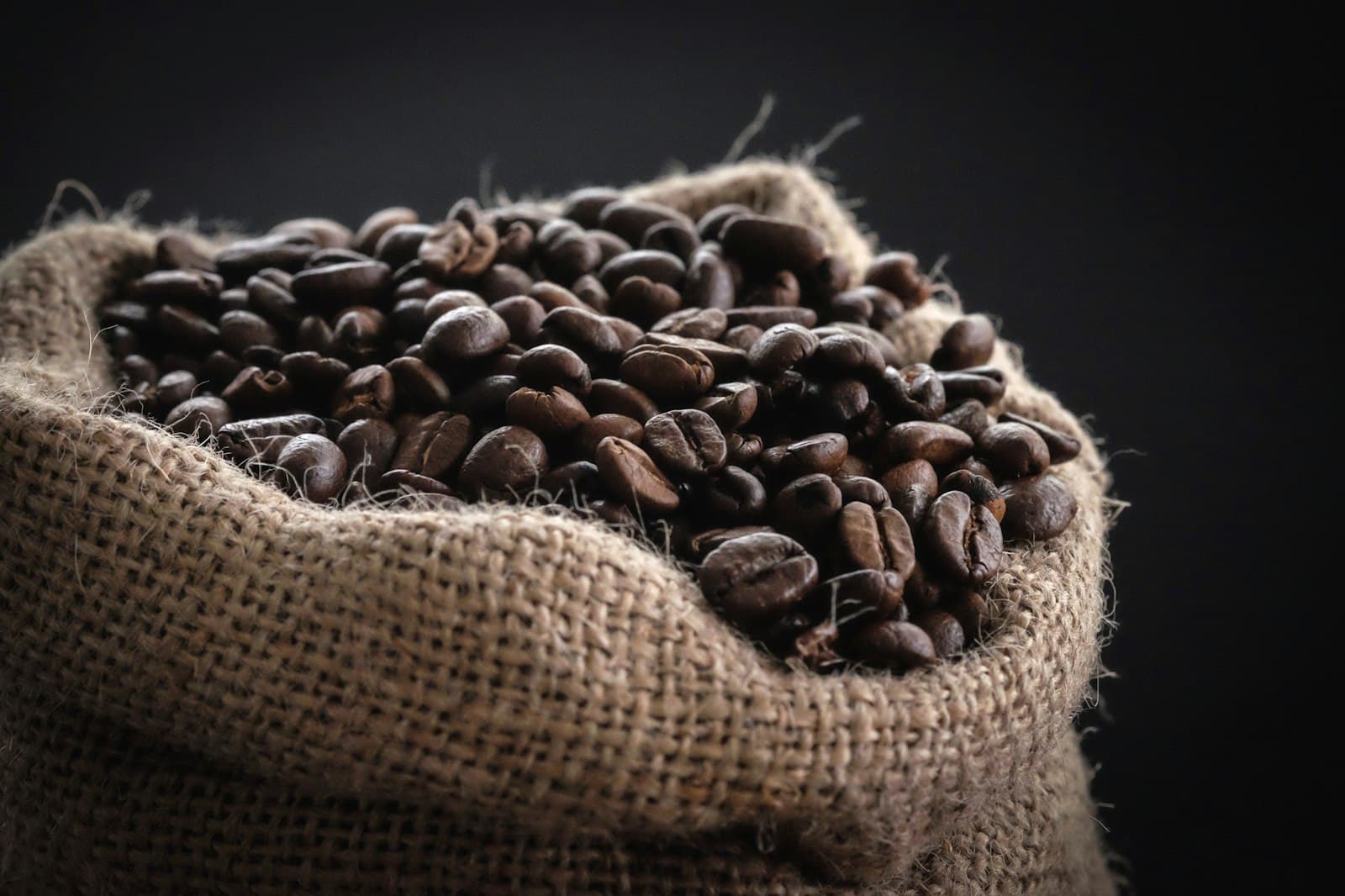
Geography: why is Yirgacheffe special?
Yirgacheffe is a district in Sidamo, southern Ethiopia, about a six-hour drive south of the capital Addis Ababa. Altitude of 1,700–2,200m, annual rainfall of 1,500–2,000mm, fertile volcanic soil, and a highland climate with a large day-night temperature swing. These conditions feed directly into the formation of complex flavor compounds.
- Altitude: 1,700–2,200m (world-class high-altitude cultivation)
- Soil: fertile volcanic-ash soil, rich in organic matter
- Temperature: 22–25°C by day / 10–15°C at night
- Rainy season: April–October. The dry season, November–March, is the harvest
- Farm scale: 80% are ultra-smallholders of 0.5 hectares or less
Variety: Ethiopian heirloom
In Ethiopia, coffee's birthplace, the genetic diversity of the coffee tree is overwhelming. The major varieties grown in Brazil and Colombia (Bourbon / Typica / Caturra) are merely descendants of a handful of individuals taken out of Ethiopia. Within Ethiopia there are thousands of landraces (heirlooms), most of them without even a scientific name.
Yirgacheffe farms usually interplant several landraces. A bean labeled "Heirloom" is in fact a blend of dozens of wild varieties, and this is the wellspring of a complexity that cannot be reproduced at other origins. In recent years, representative strains such as Kurume / Wolisho / Dega are increasingly identified individually.
The genetic ancestors of the coffee tree Coffea arabica all trace back to the forests of southwestern Ethiopia. The Arabica coffee drunk around the world is, in a sense, "a single branch of Ethiopia's forest" multiplied to a planetary scale. The "wildness" that only beans closest to the birthplace possess is the essence of Yirgacheffe.
Processing: washed vs natural
Even the same Yirgacheffe becomes a different drink depending on the processing method. This rule is not unique to Yirgacheffe, but it shows up especially vividly at an origin whose raw flavor potential is so large.
Washed (Fully Washed)
The harvested cherries are depulped, fermented in water to remove the mucilage, then dried. The cleanest, most transparent result. Washed Yirgacheffe's classic is a delicate, tea-like flavor of "jasmine, lemon, bergamot, white peach." This is also why "Yirgacheffe G1 Washed" is the version most widely carried by Japanese specialty roasters.
Natural (Dry Process)
A traditional method of sun-drying the whole cherry and fermenting it with the fruit still on. A dense fruitiness of "blueberry, strawberry, wine, chocolate" emerges. Ten years ago it was treated as a cheap product full of off-flavors, but with better sorting precision, "Natural G1" now sometimes trades higher than washed.
Anaerobic (oxygen-free fermentation)
A recent method of fermenting in a sealed tank with the oxygen shut out. Unusual flavors of tropical fruit, rum and cacao appear. Supply is small and the price is 2–3 times the usual. You can occasionally meet it at experimental roasters.
Grading: what G1 / G2 mean
The Ethiopian government classifies export beans into Grades 1–5 by the proportion of defective beans mixed in. G1 has the fewest defects (0–3 per 300g), G2 has 4–12. Specialty distribution is almost entirely G1 and G2. If the Japanese market labels something "Yirgacheffe G1," you can take it as the top-quality band.
Recommended brewing
To draw out Yirgacheffe's delicacy, the brewing method matters too. The basics are "filter style, light roast, slightly higher water temperature, short time." Espresso and the French press tend to crush this delicacy.
- Gear: paper drip such as a V60 / Origami / Kalita Wave
- Roast level: light, or light-medium
- Grind: medium-fine
- Water temperature: 92–94°C (light roasts give up their compounds better when it is higher)
- Ratio: 1:15–1:16 (slightly weaker shows off the delicacy)
- Brew time: drain it out at 2:30–3:00
Where to buy
In Japan, third-wave roasters such as Onibus Coffee (Nakameguro), Glitch Coffee (Kanda), Weekenders Coffee (Kyoto) and Mel Coffee (Osaka) carry it as a staple. For mail order, Horiguchi Coffee, Maruyama Coffee and Cafe Façon are reliable choices too. The price band is ¥1,200–2,500 per 100g, and Natural G1 or anaerobic can top ¥3,000.
Frequently asked questions
Why do the spellings wobble — "Yirgacheffe," "Yirgacheffee," "Irgachefe"? Because it is an Anglicization of an Amharic place name with no fixed official spelling. They all point to the same place. "Kochere," "Wote" and "Halo Beriti" are village and co-op names within Yirgacheffe — more tightly specified labels.
Yirgacheffe is a bean that easily becomes "a stunning gateway for someone drinking specialty for the first time." The common sense of supermarket coffee is overturned by this single cup. For your first bag, do not hesitate — choose "Yirgacheffe G1 Washed."
Learning path · Advanced Chapter 6 — Up next
Chapter 7 · Colombia Coffee Deep Dive: 5 Major Regions and How They DifferWas this article helpful?
Choose & compare
Related links
More articles
The Science of Coffee Aroma — The Story of the “800 Molecules” Rising From a Single Cup
BeansPanama Coffee Deep Dive — The Volcanic Highlands That Bore Geisha, and the Story of the World’s Highest Price
BeansThe Science of Bitterness — What Separates Unpleasant “Bitter” From Pleasant “Bitterness”
BeansCoffee and Climate Change — The “2050 Problem” and the Science of Our Cup’s Future