The Science of Coffee Aroma — The Story of the “800 Molecules” Rising From a Single Cup
From the aroma compounds in the steam of a fresh brew, to the difference between smelling with your nose and tasting through your mouth, to why aroma escapes — decoding the sense of smell that decides “80% of flavor”
When you brew a cup of coffee, the first thing that makes us happy is that rising aroma. In fact, most of what we think of as “taste” is perceived not by the tongue but by the nose. The aroma compounds that make up coffee number more than 800 — a complexity that surpasses wine and fruit, among the greatest in nature. And almost none of them exist in the green bean; they are created in an instant by the fire-craft of roasting. This article traces how the sense of smell works, coffee’s characteristic aroma compounds, the difference between orthonasal (smelling) and retronasal (through the mouth) aroma, and why aroma is lost over time — and how to protect it at home. By the end, the steam from a single cup will look completely different.
Contents · 8
- 80% of “taste” is actually aroma
- More than 800 kinds — coffee, a treasure house of aroma
- Orthonasal and retronasal — the two paths of aroma
- Aroma creates “sweetness” — a trick of smell
- Why does aroma escape?
- Protecting aroma at home — five practices
- Reading origin from aroma — the gateway to tasting
- Frequently asked questions
When you brew a cup of coffee, the first thing that makes us happy — before we even take a sip — is that rising aroma. The floweriness the moment you grind, the sweet steam that spreads as you pour the water — in truth, most of what we think of as “coffee’s taste” is perceived not by the tongue but by the nose. The basic tastes the tongue detects are just five: sweet, sour, bitter and so on. All the rest of the rich nuance is carried by aroma. This article traces how smell works, coffee’s characteristic aroma compounds, and why aroma escapes and how to keep it. Read alongside its companion pieces, The Science of Acidity and The Science of Bitterness, and the full picture of a cup comes into three dimensions.
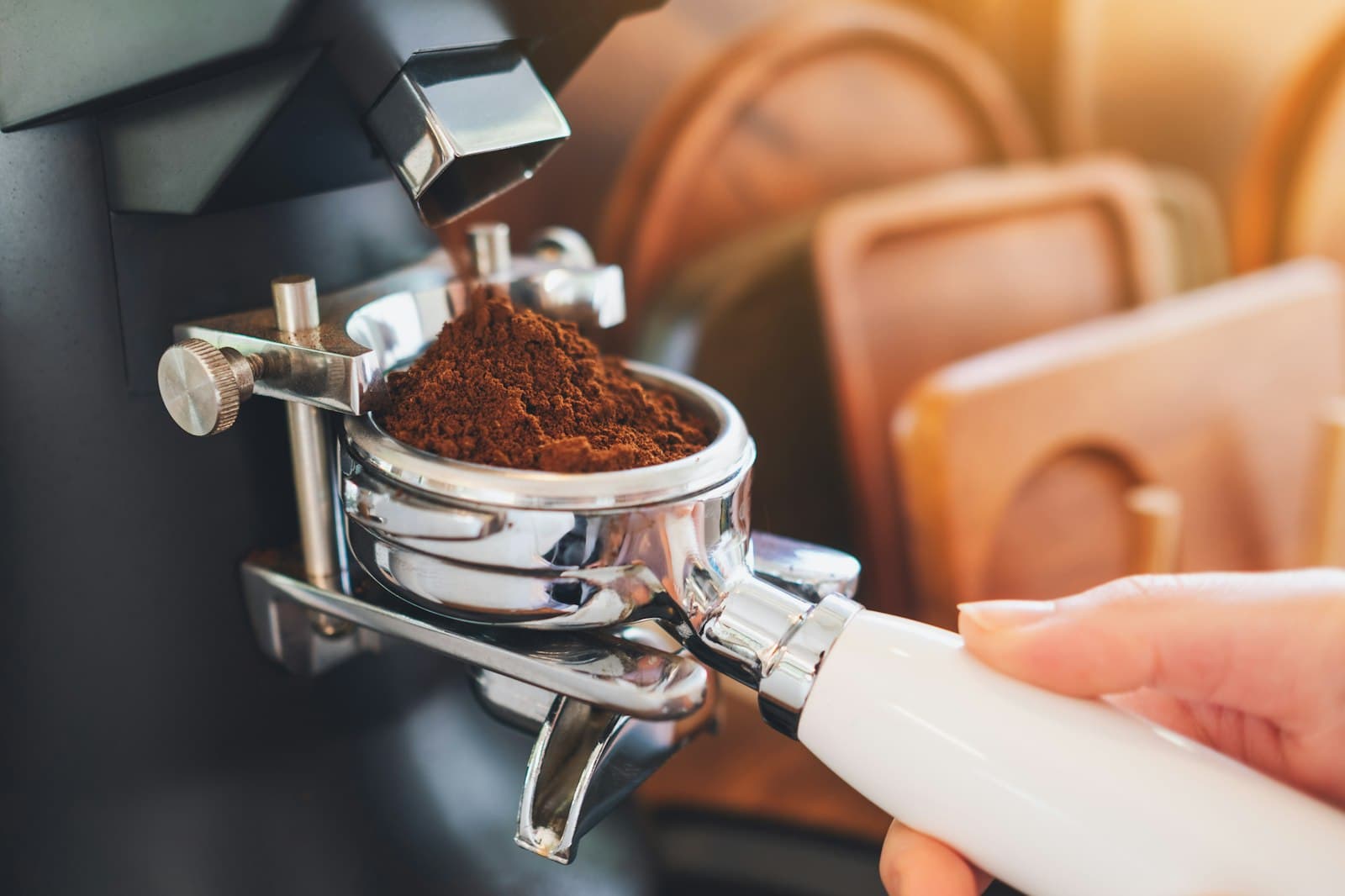
80% of “taste” is actually aroma
The first thing to understand is the division of labor between taste and smell. What the taste buds on your tongue can detect are only five basic tastes: sweet, sour, salty, bitter and umami. Almost all the words we use to describe coffee — “fruity,” “chocolatey,” “floral” — are in fact expressions not of taste but of aroma. Pinch your nose and drink coffee, and you can tell it is bitter or sour, but that rich character all but vanishes — a testament to the overwhelming dominance of aroma in flavor. When experts say “80% of deliciousness is decided by aroma,” it is not a metaphor at all.
“Flavor” is the total sensation integrated in the brain from taste, smell and touch (mouthfeel and temperature). That is why, in evaluating coffee, aroma is treated as a separate category from the taste felt on the tongue. When professionals first smell the ground coffee, then pour water and check the aroma that rises, it is because this aroma is the heart of quality.
More than 800 kinds — coffee, a treasure house of aroma
The reason coffee’s aroma captivates us so is its overwhelming complexity. More than 800 kinds of volatile aroma compounds have been found in roasted coffee. That surpasses wine, tea and many fruits — one of the most complex aromatic structures in nature. And each compound carries a different impression — flower, fruit, nut, chocolate, caramel, spice, earth — and as they blend in delicate proportions, the signature aroma of each origin and variety is born. It is not that one molecule makes “the smell of coffee”; rather, an orchestra of countless molecules plays all at once inside our nose.
Here is a remarkable fact: almost all of these aroma compounds barely exist in the green bean. A green bean freshly processed after harvest smells grassy and has none of the fragrance we know. The aromas that recall flowers, fruit, caramel and chocolate are all created during roasting, as sugars, amino acids and organic acids react in complex ways. The leading roles belong to the “Maillard reaction” and “Strecker degradation,” along with the “caramelization” of sugars. These reactions proceed in the heat of several hundred degrees in just a few minutes, generating aroma molecules one after another. Roasting is, in a sense, a chemistry workshop that assembles aroma all at once.
- Maillard reaction: the central reaction where sugars and amino acids combine, producing toasty, rich aroma
- Strecker degradation: amino acids break down, producing malty, nutty and chocolatey aromas
- Caramelization: sugars themselves brown, creating a sweet, caramel-like aroma
- From organic acids: some of the fruity, floral aromas also arise from changes in acids
Orthonasal and retronasal — the two paths of aroma
Aroma actually has two entrances. One is “orthonasal (front-of-nose) aroma,” smelled by bringing your nose close to the cup — the aroma that rises with the steam, sniffed directly through the nostrils; the “aroma you smell.” The other is “retronasal aroma,” which travels from the back of the throat up to the nose as you hold coffee in your mouth and swallow. This is the “aroma you feel in your mouth,” and much of what we call “taste” is in fact this retronasal aroma. The reason the same coffee smells slightly different in the cup versus after swallowing is that these two routes work separately. When professionals slurp coffee with air in their mouth, deliberately making a loud sound, it is to draw out this retronasal aroma to the fullest.
You can try it at home. Take a sip, and instead of swallowing right away, roll it around your mouth while drawing in a little air. The “returning aroma” that passes up through your nose becomes far richer, and fruitiness and chocolate notes rise clearly. Just being aware of aroma raises the resolution of your everyday coffee a notch.
Aroma creates “sweetness” — a trick of smell
What is fascinating is that aroma changes the very way we perceive taste. For instance, when there is a sweet aroma like vanilla or caramel, we perceive that coffee as “sweeter” even when no sugar is present. This is because the brain links memories of aroma and taste, and aroma rewrites the judgment of taste. Conversely, when beans grow old and their aroma thins, the same concentration tastes flat and somehow blurred. Much of what makes coffee feel “sweet,” “mellow” or “long in the finish” is in fact supported by aroma compounds. That is exactly why protecting aroma directly means protecting “deliciousness.”
Why does aroma escape?
As we have seen, aroma is coffee’s life force, yet it is also fragile and fleeting. Aroma compounds are “volatile” — substances that fly off easily into the air. Freshly roasted beans are the most aromatic, and that aroma is lost over time because these compounds gradually volatilize and degrade by reacting with oxygen in the air. Especially the moment you grind the beans, the surface area increases many times over at once, and both aroma release and oxidation accelerate sharply. Freshly ground coffee smells so strongly because the aroma once locked inside is being released all at once. Turn that around, and it means that aroma has already begun to be lost minutes later. Aroma’s enemies are oxygen, humidity, heat, light — and time. These five rob coffee of its aroma.
This chart shows, as a rough guide, how quickly aroma is lost when whole beans are stored sealed at room temperature. The numbers vary greatly with storage conditions and the bean, but the broad flow is common: coffee is most delicious 1–2 weeks after roasting, and aroma declines gently but surely from there. What matters here is that the slope of this curve is utterly different for whole beans versus ground coffee. Once ground, degradation runs several times faster, a far steeper downhill than this chart. That is exactly why “grind just before drinking” is the number-one rule for protecting aroma. See also the prime window after roasting for reference.
Protecting aroma at home — five practices
Once you know aroma’s enemies, how to protect it becomes clear. No difficult equipment is needed. With a little daily habit, your coffee’s aroma will last dramatically longer. The key is to “not let aroma escape” rather than to “create” it. Not needlessly scattering the aroma the roaster went to such lengths to lock in is the surest shortcut to deliciousness.
- Grind just before drinking: the single biggest lever. Avoid storing pre-ground; buy whole beans
- Seal out oxygen: after opening, move to an airtight container or valve bag. Keep it from air
- Store somewhere cool, dark and at room temperature: avoid heat and light. A sunlit shelf is out
- Buy an amount you can finish in 2–4 weeks: ideally use it up before aroma thins
- Drink it fresh: brewed aroma is volatile too. Don’t let it sit — drink while hot
“Refrigerating makes it last longer” is a common belief, but caution is needed. The fridge is humid, and each time you take beans in and out they condense and absorb moisture, which can instead harm aroma. They may also absorb odors from inside the fridge. The basic answer is sealed storage somewhere cool and dark at room temperature. Only for long-term storage, divide into small portions, seal, and freeze — that division of use is what to recommend. For more, see 7 tips for storing coffee beans.
Reading origin from aroma — the gateway to tasting
Once you can be aware of aroma, the world of coffee opens up at once. The floral, berry-like brightness of an Ethiopian coffee, the dense blackcurrant fruit of Kenya, the chocolate and nut toastiness of Guatemala or Colombia — these are all aroma personalities woven by origin, variety, processing and roast. In particular, natural-processed beans tend to have a strong sweet, fruit-like aroma, while washed processing tends toward a cleaner, clearer aroma. Next time you brew a cup, before drinking, first breathe the aroma in deeply and ask yourself: “What does this aroma remind me of?” Flower, fruit, nut, or chocolate? That one question guides you to the gateway of tasting.
Frequently asked questions
Why is coffee aroma so complex?
Because roasted coffee contains more than 800 kinds of volatile aroma compounds — more than wine, tea and many fruits. These aromas are generated all at once during roasting, through the Maillard reaction between sugars and amino acids, the caramelization of sugars, and more. Molecules carrying various impressions — flower, fruit, nut, chocolate, spice — blend in delicate proportions, giving rise to that deep, complex aroma. The true nature of coffee aroma is not a single molecule but an ensemble of countless molecules.
How do “aroma” and “flavor” differ?
Aroma refers to olfactory information captured by the nose, while flavor refers to the total sensation integrated in the brain from taste, smell, mouthfeel and more. Much of what we express as “fruity” or “chocolatey” is in fact aroma captured by the nose, not taste on the tongue. The fact that pinching your nose while drinking coffee makes its rich character vanish — while bitterness and acidity remain — shows how important aroma is to flavor.
Are there tricks to sense aroma more while drinking?
When you hold coffee in your mouth, instead of swallowing right away, roll it around your mouth while drawing in a little air. The “returning aroma” that passes from the back of the throat up to the nose — retronasal aroma — becomes richer, and fruitiness and chocolate notes are felt clearly. Professionals slurping with a loud sound do so to maximize this returning aroma. Being aware of orthonasal aroma too, by bringing your nose close to the cup and breathing in deeply before drinking, raises the resolution of the tasting a notch.
Why is my coffee’s aroma weak?
The most common cause is that the beans or grounds have grown old and lost their aroma compounds. Aroma is volatile; over time it flies off into the air and degrades by reacting with oxygen. Ground coffee degrades several times faster. The remedies are: buy whole beans and grind just before drinking, store sealed somewhere cool and dark, and finish within 2–4 weeks. If it is still weak, the beans are likely well past their roast date, so choose ones with a fresh roast date.
Can I store coffee beans in the refrigerator?
Generally not recommended. The fridge is humid, and each time you take beans in and out, the temperature difference causes condensation, and the beans absorb moisture, which can harm aroma. They may also absorb odors from foods in the fridge. For what you drink day to day, sealed storage somewhere cool and dark at room temperature is the answer. Only when you must store long term, divide into single portions, seal, and store in the freezer. When using, don’t bring them to room temperature — grinding them frozen prevents condensation.
Does aroma really change that much between fresh-ground and pre-ground?
Yes, dramatically. Grinding beans increases the surface area at once, releasing the locked-in aroma all together while oxidation also advances sharply. Ground coffee begins to lose aroma within minutes to tens of minutes, degrading several times faster than whole beans. Freshly ground coffee smells so strong precisely because that aroma is being released right now. That is why “grind just before drinking” is the number-one rule for protecting aroma. Whether hand mill or electric, the habit of grinding just before drinking greatly changes a cup’s aroma.
Coffee aroma is what a cherry, ripened on a farm near the equator, becomes after passing through processing and roasting — transformed into an orchestra of more than 800 molecules. It is astonishingly rich, and just as astonishingly fleeting. From the moment you brew, aroma escapes little by little into the air. That is why, next time you brew a cup, before you take a sip, first breathe the aroma in deeply. Flower, fruit, nut, or chocolate? That aroma is a single instant in which the land where the bean grew and the roaster’s craft glitter, one last time, above this very cup. To savor aroma is to savor the richest part of coffee, this drink of ours.
Was this article helpful?
Choose & compare
Related links
References
More articles
The Science of Bitterness — What Separates Unpleasant “Bitter” From Pleasant “Bitterness”
BeansCoffee and Climate Change — The “2050 Problem” and the Science of Our Cup’s Future
BeansThe Science of Processing — From a Single Fruit to a Green Bean, How Fermentation and Drying Decide the Taste
BeansThe Coffee Variety Family Tree — Reading the “Genealogy” That Begins with Typica and Bourbon