Recommended Coffee Grinders: Choosing Well Under ¥10,000
Sorting out electric vs manual and ceramic vs stainless
Learning path · Intermediate/Chapter 5
One of the 7 chapters in this level. Tap the button on the right when you finish reading to log your progress.
Freshly ground beans and pre-ground beans are different things. You can find a grinder with plenty of performance for under ¥10,000. From a use-case cheat sheet to burr types and materials, easily missed pitfalls, picks by price band, espresso use and long-term upkeep — the decision axes that keep you from going wrong, all at once.
Contents · 13
- Why the grinder matters most
- The bottom line first: a use-case cheat sheet
- Manual or electric?
- Burr types: conical / flat / blade
- Burr material: ceramic vs stainless
- Three easily missed points
- Picks by price band (under ¥10,000)
- Match the grind to the "brewing method"
- If you are aiming for espresso, know it is "another world"
- A problem peculiar to cheap grinders: fines
- Maintenance to make it last
- A pre-purchase checklist
- Frequently asked questions
Ask which coffee tool to invest in first and the answer is, without doubt, the grinder (mill). An ¥800 dripper can still pull a top-tier taste, but uneven particle size from a grinder feeds straight into unstable extraction. That freshly ground beans are a different thing from pre-ground ones, you will feel in the very first cup. This article sorts out the decision axes for not going wrong under ¥10,000 — from a use-case cheat sheet to choosing burrs, easily missed pitfalls and picks by price band.
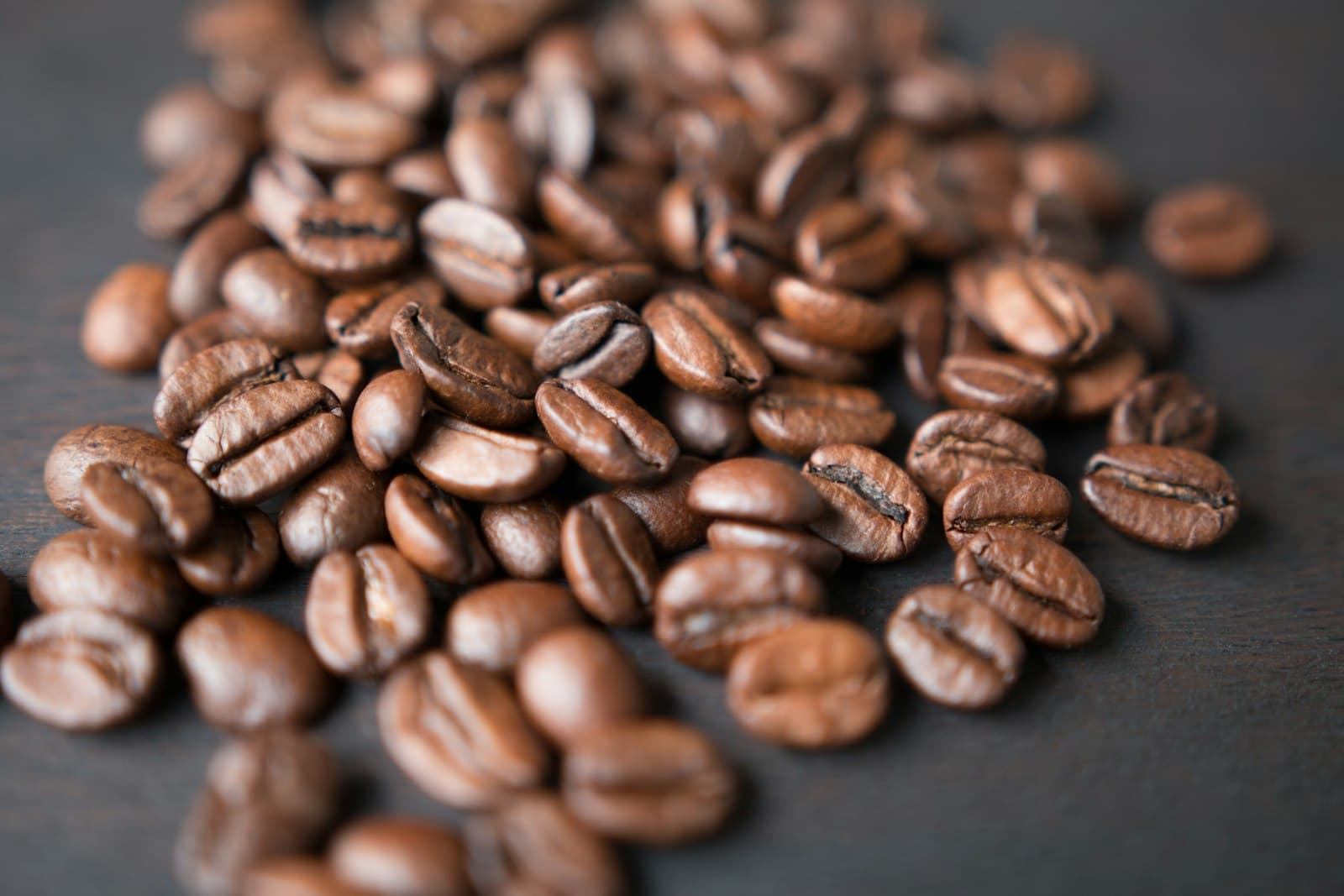
Why the grinder matters most
Coffee's flavor compounds oxidize rapidly the moment the beans are ground. Grounds from ten minutes ago and grounds from just now can differ in aroma intensity by what feels like double. And when the particle size is very uneven, the fines over-extract (bitterness) while the coarse bits under-extract (sourness), so the flavors clash within a single cup and turn muddy. "Grinding evenly" is actually a foundation that takes effect before the beans or the brewing method.
The supermarket "pre-ground" bag is the option to avoid most. The moment you open the bag, most of the aroma is already gone. Just buying whole beans and grinding at home changes everything.
The bottom line first: a use-case cheat sheet
Before the fine print, here is the "just get this" for each type. If in doubt, start your shortlist from the first model.
- Hand drip mostly, value-focused → Timemore C2 (stainless, manual — the go-to)
- Want to start as cheaply as possible → HARIO Ceramic Slim (¥3,000s)
- Want it for travel / outdoors → Porlex Mini II / 1Zpresso Q2 (compact and rugged)
- Several cups daily, want to save morning time → electric (add a little budget for something like the Kalita Nice Cut G)
- Also want to do espresso → underpowered under ¥10,000; raise the budget (see below)
Manual or electric?
For one or two cups a day, a manual grinder is plenty. If you value entertaining guests or saving time in the morning, go electric. The key point is that at the same price, manual tends to have higher particle-size accuracy. Between a ¥5,000 manual and a ¥5,000 electric, the manual has the edge in taste consistency — because in an electric, much of the price disappears into the motor and housing.
- Manual pros: quiet, compact, stable particle size, no power needed, long-lasting (10+ years)
- Manual cons: 1–2 minutes of effort to grind 20g. Dark roasts are easy, but light roasts and large amounts are tiring
- Electric pros: one button, easy to brew many cups in a row, fast mornings
- Electric cons: noisy, prone to heat (flavor degradation), and below ¥5,000 the particle size is loose
Burr types: conical / flat / blade
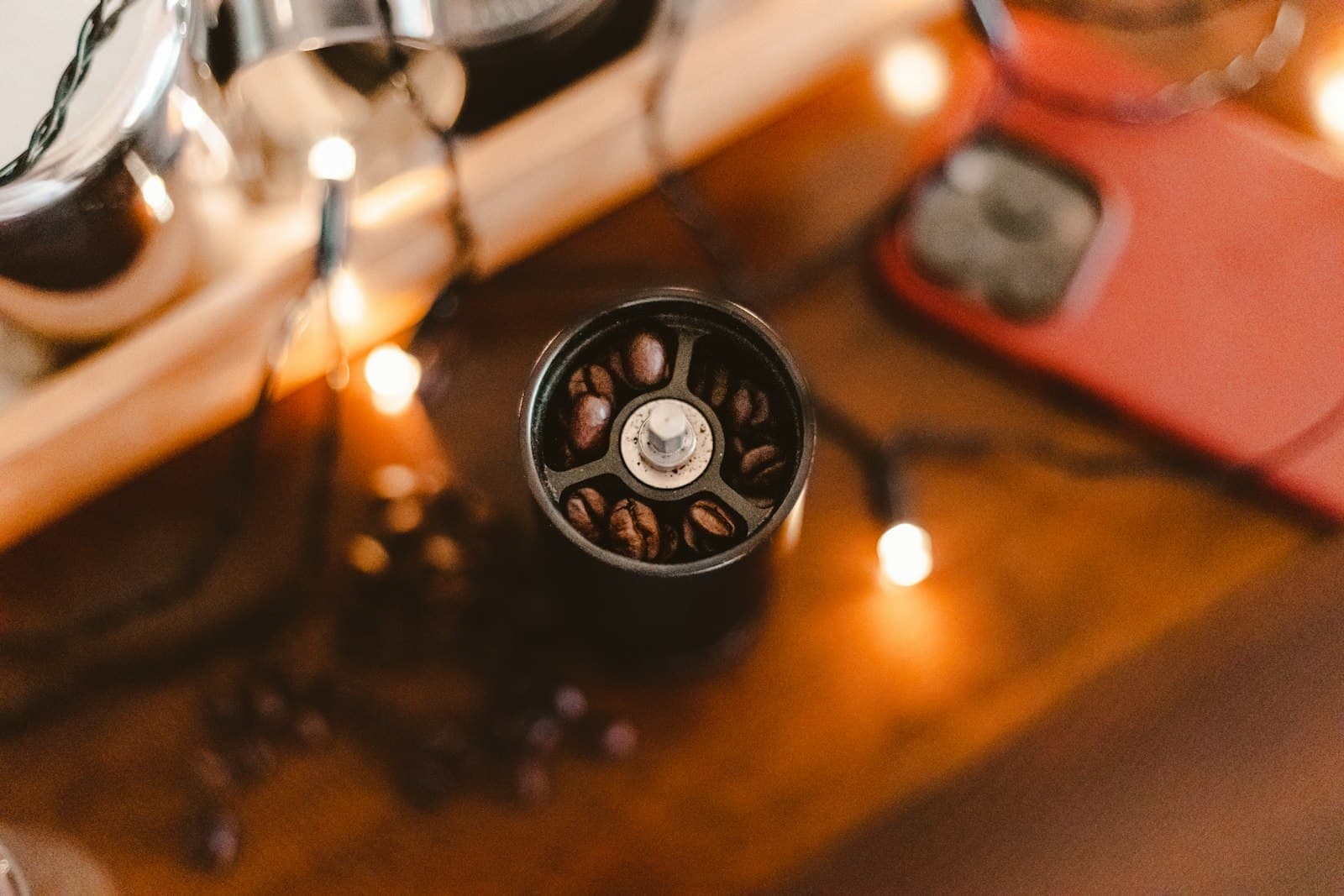
- Conical: even particle size, low-speed so little heat, the manual mainstay. Timemore / 1Zpresso / Porlex and others
- Flat: mostly commercial units for baristas. Often ¥30,000+, overspec for home
- Blade (propeller type): repurposed spice grinders. From ¥1,500. Wildly uneven particle size and a cause of muddiness. Avoid
The "propeller-type coffee mills" at home centers and electronics stores (¥1,500–3,000) are not quality you can call dedicated coffee gear. Because they smash rather than evenly shave the beans, they produce a flood of fines and coarse bits at once. At minimum, choose a conical burr.
Burr material: ceramic vs stainless
Conical burrs come mainly in two materials, ceramic and stainless (steel). It is less which is better than a difference in character.
- Ceramic burrs: quiet, slow to heat up, slow to wear, washable. The cutting is a touch gentle, so grinding takes slightly longer
- Stainless burrs: sharp cutting and fast grinding, with high particle-size accuracy. A bit pricier, and avoid washing as it invites rust
Three easily missed points
Even grinders that look identical on a spec sheet diverge here, in feel and taste consistency.
- Adjustment type (stepped vs stepless): a clicky stepped type is easy to reproduce. A stepless one gives more freedom for fine-tuning. For drip-focused use, stepped is plenty
- Shaft play and rigidity: if the central shaft wobbles, the burr tilts and the particle size scatters. This is a common weakness in too-cheap no-name units, so check reviews for a "rattle" reputation
- Capacity and effort: can it comfortably grind 20–30g at a time? Manuals are surprisingly tiring for light roasts or large groups, so if you grind often, consider electric too
Picks by price band (under ¥10,000)
- ¥3,000–5,000: HARIO Ceramic Slim MSS-1B, Porlex Mini II (ceramic / manual)
- ¥5,000–8,000: Timemore C2 / C3 (stainless / manual / best value)
- ¥8,000–10,000: 1Zpresso Q2 (an upper-tier manual; accuracy more than enough for anything but espresso). The manual options run deep in this band
Truly serious electric grinders actually start just above ¥10,000 (the Kalita Nice Cut G and the like). If you are after "the best cup under ¥10,000," the right move is to accept that the lead role is a manual grinder.
Match the grind to the "brewing method"
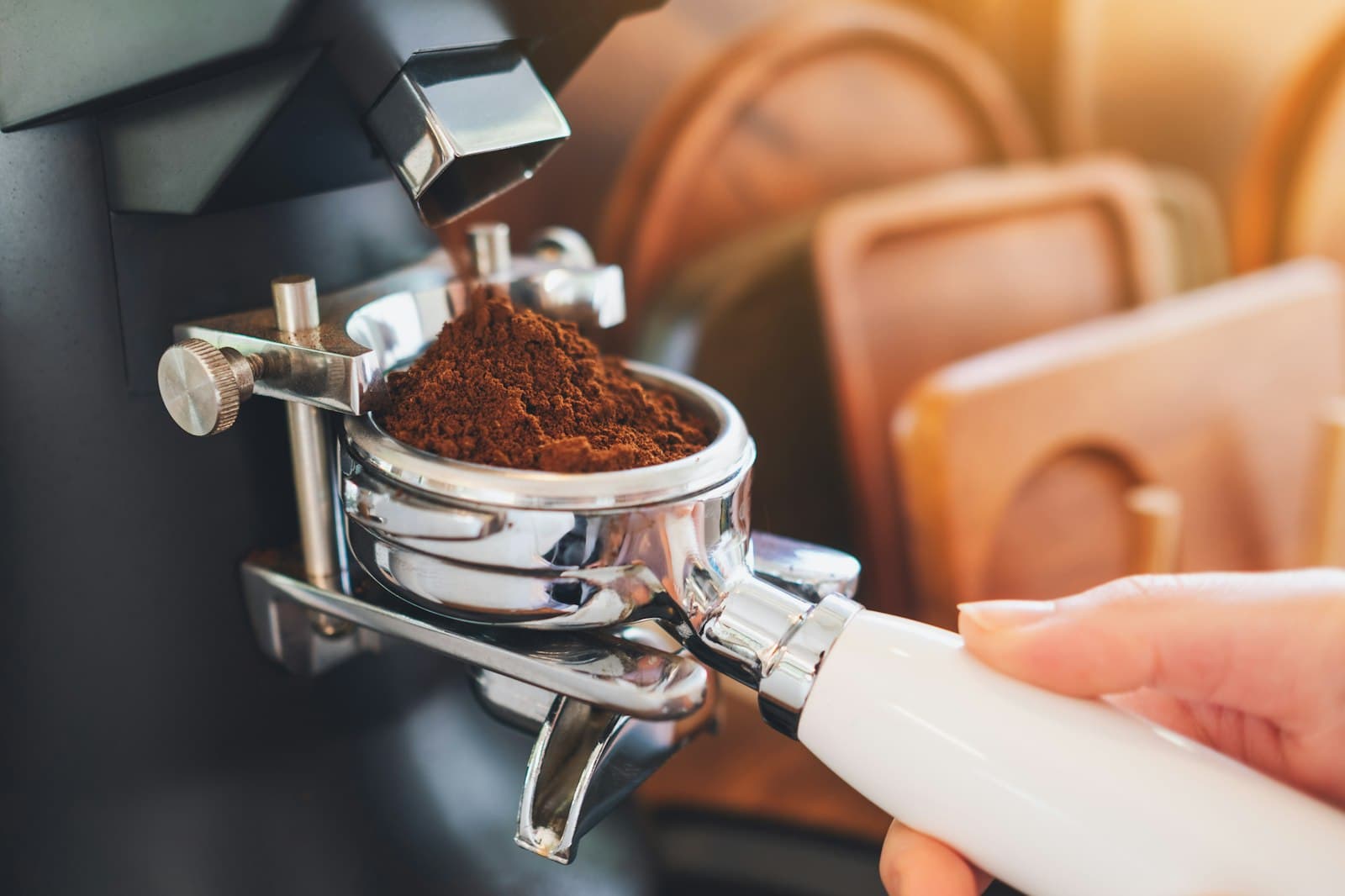
Once you have a grinder, first learn the grind that suits the gear you use. The basics: medium to medium-fine for paper drip, coarse for a French press, extra-fine for espresso. A good grinder is one that "delivers the particle size you aim for, without wandering, every time." For guidance by gear, see the grind-size guide too.
If you are aiming for espresso, know it is "another world"
Worth noting: espresso demands a different level entirely. It needs an extra-fine yet even grind, and most manual grinders under ¥10,000 lack accuracy in the fine range. If home espresso is in your sights, a realistic gateway is the 1Zpresso J-Max / JX-Pro class (around ¥15,000–20,000) or above. Conversely, if drip or French press is the goal, a ¥5,000 Timemore C2 is more than enough. Deciding "your own use case" first is the single biggest tip for avoiding waste.
A problem peculiar to cheap grinders: fines
Grinders under ¥5,000 tend to mix in "fines" (ultra-small particles). Fines cause over-extraction and bring on muddiness and bitterness. The fixes: (1) sift out the fines with a grounds sieve (from ¥500), (2) take it apart and clean it regularly (leftover old grounds drop performance), (3) double up the paper. These alone visibly improve cup clarity even with a cheap grinder.
Maintenance to make it last
- Take it apart regularly and clear the grounds around the burr with the included brush or an air duster
- Washing is only for ceramic burrs. Stainless burrs rust, so basically wipe dry and brush
- Old grounds oxidize and cloud the flavor. Think of "cleaning = flavor maintenance"
- Rubber gaskets and resin parts are consumables. A product whose replacement parts are available lasts longer
A pre-purchase checklist
- Grind-adjustment steps (just enough for drip-focused use; a finer adjustment range if you also aim for espresso)
- Hopper capacity (grinding 20–30g at a time is plenty)
- Ease of cleaning (does it include a brush, can it be disassembled?)
- Noise (a manual is reassuring for flats or early-morning use)
- Grounds-catch design (an integrated one is easy to clean up; a clamp type grinds stably)
Frequently asked questions
Manual or electric grinder — which is better?
For one or two cups a day, manual is plenty. At the same price, manual tends to have higher particle-size accuracy, so between a ¥5,000 manual and electric, the manual wins on taste consistency. Go electric if you entertain often or value saving morning time — but truly serious electric grinders start just above ¥10,000.
Can I get an espresso grinder for under ¥10,000?
Honestly, not recommended. Espresso needs an extra-fine yet even grind, and most manual grinders under ¥10,000 lack accuracy in the fine range. If you are aiming for home espresso, a realistic gateway is the 1Zpresso J-Max / JX-Pro class (around ¥15,000–20,000) or above.
How do I deal with "fines" from a cheap grinder?
Grinders under ¥5,000 tend to mix in fines, which cause over-extraction and muddiness. Three fixes: sift them out with a grounds sieve, take it apart and clean it regularly, and double up the paper. These alone visibly improve cup clarity.
If you are torn on your first one, the Timemore C2 (around ¥5,000) rarely disappoints. A build that lasts ten years, and a simple look too. It steadily delivers the medium to medium-fine grind ideal for hand drip. Just changing the grinder makes your usual beans a notch tastier — please taste that for yourself in your next cup.
Learning path · Intermediate Chapter 5 — Up next
Chapter 6 · The Basics of Pairing Coffee and FoodWas this article helpful?
Choose & compare
Related links
More articles
The Science of Coffee Aroma — The Story of the “800 Molecules” Rising From a Single Cup
BeansThe Science of Caffeine — Why a Single Cup Wakes You: How It Works, Its Half-Life, and How to Get Along With It
BeansPanama Coffee Deep Dive — The Volcanic Highlands That Bore Geisha, and the Story of the World’s Highest Price
BeansThe Science of Bitterness — What Separates Unpleasant “Bitter” From Pleasant “Bitterness”