Panama Coffee Deep Dive — The Volcanic Highlands That Bore Geisha, and the Story of the World’s Highest Price
The mist of Boquete at the foot of Volcán Barú, the discovery of the Geisha variety, the stage called Best of Panama — why a small country changed the world of specialty coffee
The small Central American country of Panama now stands at the summit of the world of specialty coffee. What sealed its name is “Geisha,” which stunned the world with a floral aroma and a brightness recalling jasmine and bergamot. At auction it has fetched thousands of dollars per pound, overturning coffee’s conventional wisdom. Why does this small country produce such special coffee? The keys lie in the volcanic soil brought by Volcán Barú, the unique microclimate of Boquete where Pacific and Caribbean air masses collide, and a stage called Best of Panama that competes on quality alone. This article digs into Panama coffee’s history, the story of Geisha’s discovery, the character of its main regions, and tips for enjoying it at home.
Contents · 7
- Why is Panama special?
- The mist of Boquete — the gift of microclimate
- The story of Geisha’s discovery — from Ethiopia to Panama
- Best of Panama — the stage that pushed the ceiling on price
- Not just Geisha — Panama’s many faces
- Enjoying Panama at home — getting the most from a cup
- Frequently asked questions
If you love coffee, you have surely heard the name “Geisha” at least once. A floral aroma and a tea-like brightness recalling jasmine and bergamot — a variety that stunned the world with its taste and has fetched thousands of dollars per pound at auction, overturning coffee’s conventional wisdom. The country that sent Geisha into the world and now stands at the summit of specialty coffee is the small Central American nation of Panama. Why does this country produce such special coffee? Let’s unravel it through five lenses that decide an origin’s character — volcanic soil, altitude, microclimate, variety, and the system that competes on quality.
Why is Panama special?
- Volcanic soil: the mineral-rich earth brought by Volcán Barú gives the beans complexity and depth
- High altitude: highlands of 1,400–1,900m. The day-night temperature swing slows ripening, concentrating acidity and aroma
- A unique microclimate: Pacific and Caribbean air masses collide, and mist (bajareque) and fine rain water the farms
- The Geisha variety: a rare Ethiopian-origin variety bloomed into a one-of-a-kind brightness in Panama’s highlands
- Best of Panama: an international auction competing on quality alone. It drew the world’s eyes and pushed the ceiling on price
Panama may be better known as the country of the Canal, but in the world of coffee it is in a class of its own. At its heart are the highlands spreading at the foot of Volcán Barú (3,475m, Panama’s highest peak) in Chiriquí Province in the west. This area is blessed with fertile soil brought by the volcano, the cool climate created by high altitude, and the mist born where humid air masses from the sea collide. This ideal environment for the coffee tree is the foundation that nurtures delicate, aromatic beans.
The mist of Boquete — the gift of microclimate
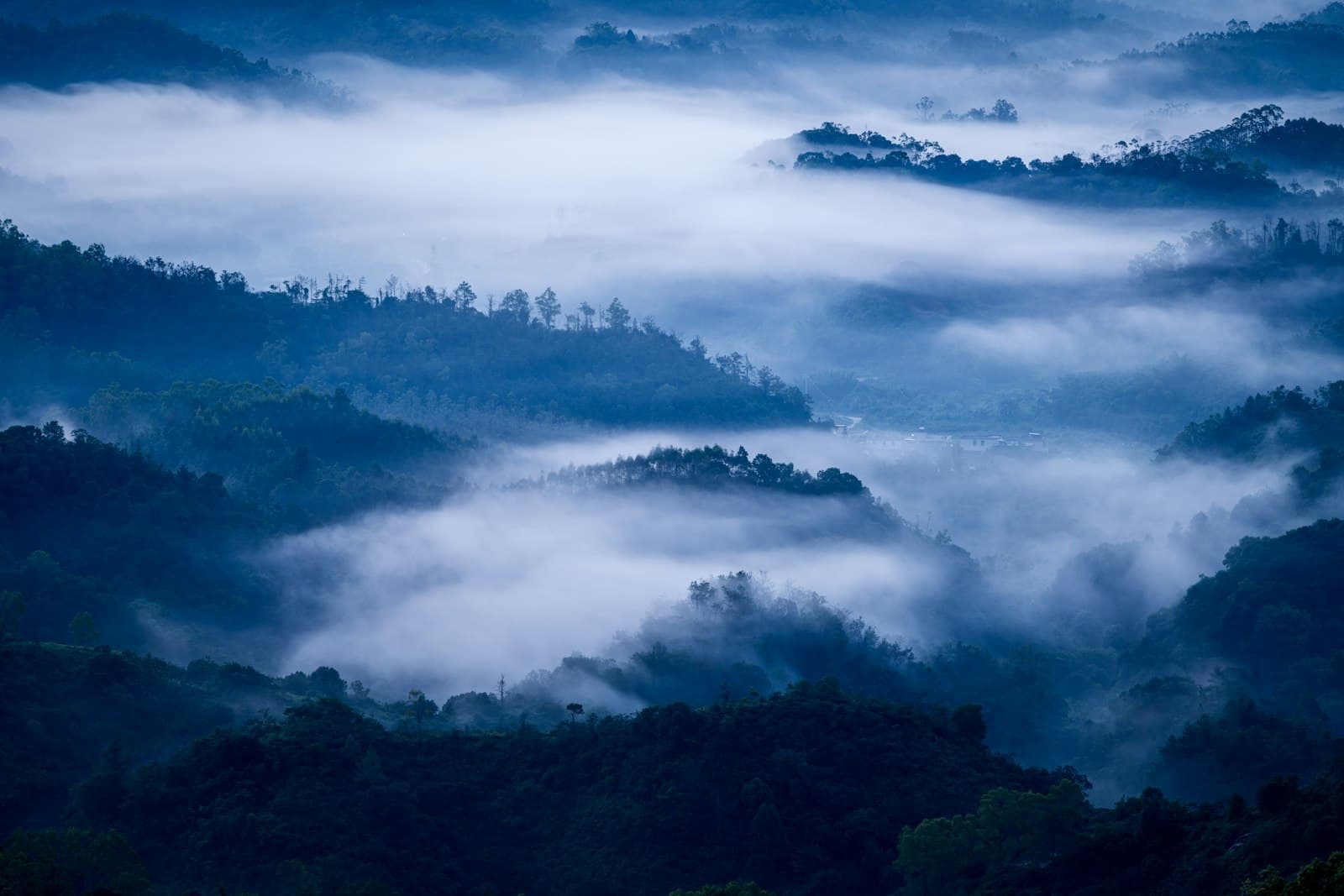
Indispensable in talking about Panama coffee is a town called “Boquete.” This highland town on the eastern slope of Volcán Barú is the heart of Panama specialty. Boquete’s specialness lies in its unique microclimate. Humid air masses from both the Pacific and Caribbean sides collide around Volcán Barú, and a fine mist-rain called “bajareque” often wraps the farms. This mist softens the strong sunlight, holds humidity, and helps the coffee cherries ripen slowly. The more slowly the cherries ripen, the more sugars, acids and aroma precursors are stored deep in the bean, giving rise to that concentrated, brilliant flavor. The large day-night temperature swing created by high altitude spurs this slow ripening further. Boquete’s mist is truly a gift from the heavens.
Panama’s main regions are not only Boquete. On the far side of Volcán Barú, on the western slope, “Volcán” and “Renacimiento” are also excellent regions, high in altitude and blessed with soil. Volcán has a drier climate, with a firm, well-structured cup as its signature. Even within the same Panama, differences in position around the volcano and in altitude give rise to distinct personalities.
The story of Geisha’s discovery — from Ethiopia to Panama
The Geisha variety that made Panama’s name known worldwide has a dramatic story. Geisha (Geisha/Gesha) was originally a wild coffee variety found around the Gesha region of southwestern Ethiopia, brought to Central America in the mid-20th century as a disease-resistant variety. But because it yielded little and grew with thin, hard-to-cultivate branches, it long went unnoticed. The turning point was 2004. When Boquete’s Hacienda La Esmeralda entered this overlooked variety in the Best of Panama auction, the judges were shocked by its floral aroma and overwhelming brightness. “A coffee unlike anything tasted before” — so praised, the price soared at once. An unknown variety climbed, overnight, to the summit of the world’s specialty coffee.
The reason Geisha bloomed so fully in Panama lies precisely in the environment described above. Geisha is a variety that originally grew in Ethiopia’s cool highlands. Panama-Boquete’s high altitude, volcanic soil and mist-wrapped microclimate had, unexpectedly, created conditions close to Geisha’s homeland. The same Geisha seedling, grown in the lowlands, would not show that brightness. Only when the three elements — high altitude, volcanic soil and mist — come together is a cup born that is delicate and aromatic like tea, recalling jasmine and bergamot, peach and mango. A miraculous meeting of variety and land created the Geisha legend. Geisha itself is explored further in Geisha, the world’s most expensive coffee.
Best of Panama — the stage that pushed the ceiling on price
Panama’s other weapon is the quality-competition system called “Best of Panama (BOP).” This is an international competition-cum-auction held each year, where judges from around the world evaluate entered lots blind, and the top lots go to an online auction. The buyers are roasters worldwide. Quality alone is evaluated, and good things fetch high prices without stint — this transparent system gave producers a strong incentive: “raise quality and you will be justly rewarded.” As a result, farms competed on quality, and Panama’s overall level was lifted year by year. Geisha’s record-breaking auction prices often make the news. This very stage is the driving force that pushed Panama into a “country that competes on quality, not quantity.”
This chart shows the rough trajectory of the record highs Geisha has set at the Best of Panama auction (these are only a guide to record-breaking lots, not the average price of Panama coffee overall). Even the roughly $21/lb when Geisha first appeared in 2004 was extraordinary for the time, but records kept being broken, and in 2019 it topped $1,000 for the first time. In 2021, a natural-processed Geisha reached the all-time high range, over $2,500. Considering that the price of ordinary commodity coffee is a few dollars per pound, you can see how otherworldly these figures are. Panama’s Geisha showed the world, in the form of price, that coffee can be elevated from an “agricultural product” to a “one-of-a-kind work of art.”
Not just Geisha — Panama’s many faces
Geisha’s brightness draws all the attention, but Panama’s appeal is not only that. In this country, traditional varieties such as Typica, Caturra and Bourbon are also grown to a high standard, prized for their balanced, refined taste. Panama’s producers are also active in exploring processing, deploying a wide range of methods: washed for clean acidity, natural to heighten fruitiness, and the recently noted honey process and anaerobic (oxygen-free) fermentation. The same Geisha, washed, becomes delicate like tea; natural, sweet like ripe fruit — processing gives it entirely different expressions. Panama is also an origin full of experimental spirit, pursuing infinite variation through the interplay of variety and processing.
To try a Panama Geisha for the first time, start with a washed-processed one. Geisha’s inherent, delicate and clean brightness — recalling jasmine and bergamot — comes through most clearly. For brewing, use a hand drip that easily draws out aroma, slowly, at a slightly lower water temperature (88–90°C). Don’t add milk or sugar; first savor the aroma black.
Enjoying Panama at home — getting the most from a cup
A Panama Geisha is by no means cheap, but that single cup is packed with a story woven by volcano, mist and variety. To make the most of its delicate aroma, there are a few tips. First, freshness is vital. Choose beans with a fresh roast date, and grind just before drinking. Roasting is mainly light to medium; go dark, and Geisha’s signature bright aroma hides behind the flavor of scorching. For extraction, keep the water temperature slightly low to avoid muddiness, and brew carefully and slowly. And above all, before drinking, bring your nose close to the cup and breathe in deeply that rising aroma. Panama coffee is a cup that teaches the luxury of enjoying aroma first, before you even taste.
Frequently asked questions
Why is Panama coffee expensive?
The main reasons are that the rare Geisha variety is difficult to grow and yields little, and that at the Best of Panama auction, roasters worldwide compete at high prices. Geisha has thin, hard-to-grow branches and only shows its true brightness in limited highland environments. Hand-picking and careful processing also take effort. On top of this, worldwide demand concentrates on its one-of-a-kind aroma, so record lots can fetch thousands of dollars per pound. Of course, there are also more accessible Panama coffees besides Geisha.
Is the Geisha variety native to Panama?
No — Geisha (Geisha/Gesha) was originally a variety found around the Gesha region of southwestern Ethiopia. It was brought to Central America in the mid-20th century, but long went unnoticed because it yielded little and was hard to grow. It became famous when Boquete’s Hacienda La Esmeralda entered it in Best of Panama in 2004 and its floral brightness stunned the world. Panama’s environment — high altitude, volcanic soil and mist — unexpectedly created conditions close to its Ethiopian homeland, bringing out Geisha’s appeal to the fullest.
What does Panama coffee taste like?
The Geisha variety in particular features a floral aroma recalling jasmine and bergamot, fruitiness like peach and mango, and a delicate, clean, tea-like taste. You could call it a bright, light experience entirely unlike coffee’s usual “bitterness and richness.” Non-Geisha varieties such as Typica and Caturra have a more balanced, refined taste, suggesting chocolate, nuts and soft acidity. Expression also changes with processing: washed emphasizes clean delicacy, while natural brings out the sweetness of ripe fruit.
How should I brew a Panama Geisha?
To make the most of its delicate aroma, hand drip, slowly, at a slightly lower water temperature (88–90°C) is recommended. Roasting is mainly light to medium; go dark, and the bright aroma hides behind the flavor of scorching. Grind just before drinking, and don’t add milk or sugar — first, black. Bringing your nose close to the cup and breathing in deeply before drinking lets you fully enjoy Geisha’s signature floral fragrance. Since it is such a special cup, also savor how the aroma changes as the temperature falls.
What kind of place is Boquete?
Boquete is a highland town on the eastern slope of Volcán Barú in Chiriquí Province, western Panama, and the heart of Panama specialty coffee. Humid air masses from the Pacific and Caribbean collide to often produce a fine mist-rain called “bajareque,” which softens sunlight and slows the ripening of the cherries. Fertile volcanic soil, a high altitude above 1,400m, and a large day-night temperature swing also come together, making it an ideal environment for growing delicate, aromatic coffee. Many prestigious farms gather here, producing high-quality coffee including Geisha.
What is Best of Panama?
It is an international competition-cum-auction for Panama coffee held each year. Judges from around the world evaluate entered lots blind, and the top lots go to an online auction where roasters worldwide bid. A transparent system in which quality alone is evaluated and the excellent fetch high prices gave producers a strong incentive to “raise quality and be rewarded.” This competition lifted Panama’s overall quality and became the stage for Geisha’s record highs. It is the key figure that pushed Panama into a “country that competes on quality, not quantity.”
Panama coffee proved that a small country can stand at the world’s summit through “quality” rather than “quantity.” At the foot of Volcán Barú, in the mist-wrapped highlands of Boquete, an overlooked Ethiopian-origin variety bloomed through a miraculous meeting with the land — Geisha’s story teaches us how delicate and beautiful coffee can become. If you ever have the chance to meet a Panama Geisha, layer that single cup with the long story woven by volcano, mist and variety. The floral aroma rising above the cup is the very possibility of coffee, this drink of ours, delivered from the distant highlands of Panama.
Was this article helpful?
Choose & compare
Related links
References
More articles
The Science of Coffee Aroma — The Story of the “800 Molecules” Rising From a Single Cup
BeansThe Science of Bitterness — What Separates Unpleasant “Bitter” From Pleasant “Bitterness”
BeansCoffee and Climate Change — The “2050 Problem” and the Science of Our Cup’s Future
BeansThe Science of Processing — From a Single Fruit to a Green Bean, How Fermentation and Drying Decide the Taste