The Basics of Pairing Coffee and Food
Combining with chocolate, cheese, fruit and wagashi
Learning path · Intermediate/Chapter 6
One of the 7 chapters in this level. Tap the button on the right when you finish reading to log your progress.
Like wine and cheese, coffee has pairings too. We sort out which foods go well, organized by flavor profile.
Contents · 8
Have you ever been told at a café, "this coffee goes with this scone"? This is not a random match; like wine-and-cheese pairing, it rests on solid logic. Coffee's range of flavor is wide, and the right food multiplies the enjoyment. Learn the basic rules and you can recreate a café-like experience at home.
Two basic principles of pairing
Borrow the theory of wine pairing and the approach is surprisingly simple.
- Similarity: layer flavors of the same family. A chocolatey bean × chocolate cake for "a synergy of deep sweetness"
- Contrast: balance with opposite elements. The bitterness of a dark roast × the acidity of a fruit tart, "lifting each other up"
At first, building on "similarity" is the safer bet. Match similar flavors — "a berry-ish coffee with a berry sweet," "a nutty coffee with a baked treat" — and you will not fail.
A flavor-by-flavor pairing cheat sheet
Each origin has a typical flavor profile, so choosing food to match it is the classic move.
Floral / tea-like (Ethiopia Yirgacheffe, etc.)
- Wagashi (jōnamagashi, mizu-yōkan, kuzukiri)
- Matcha sweets (matcha roll, matcha tiramisu)
- Vanilla ice cream
- Honey-based sweets
Berry / fruity (Kenya, natural Ethiopia)
- Berry tarts (blueberry, raspberry)
- Cheesecake (lifts both the acidity and the sweetness)
- A yogurt-and-fruit parfait
- Dark chocolate, 70% or more
Chocolate / nut (Brazil, Guatemala)
- Baked treats (financier, madeleine, pound cake)
- Nut sweets (caramel nuts, hazelnut chocolate)
- Cookies (butter cookies, shortbread)
- Banana bread
Citrus (Colombia, Costa Rica)
- Citrus tart, lemon cake
- Bread with orange marmalade
- Carrot cake
- Panna cotta
Spice (Yemen, India Monsooned)
- Spice cookies (cinnamon, ginger)
- Chai-style baked goods
- Middle Eastern sweets like baklava and halva
- Nutmeg-scented pumpkin pie
Dark roast / smoky (Mandheling, dark Colombia)
- Bitter chocolate
- Cheese (blue cheeses, aged cheddar)
- Walnuts, walnut bread
- Cigarette-style rolled wafer cookies
Pairing with meals (bread and egg dishes)
Pairing works not only with sweets but with savory foods too. Here are common breakfast-scene combinations.
- Toast + butter: a balanced medium-roast coffee
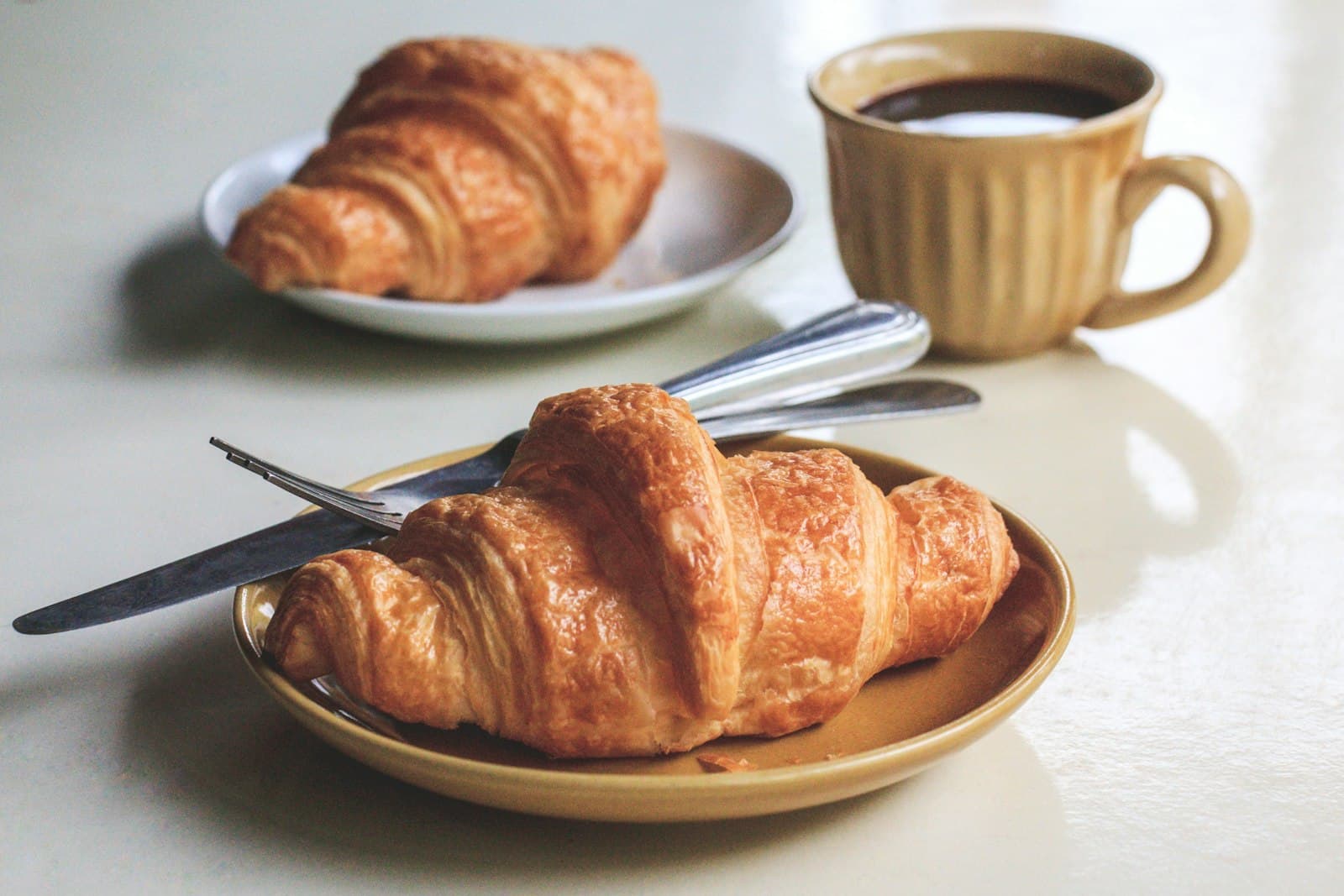
- Croissant: a light-roast floral coffee to brighten it
- Bacon and eggs: the richness of a medium-dark roast to support the heft
- Pancakes + maple syrup: a chocolatey Brazil for a chain of sweetness
- Scone + cream: the tea-like quality of a light-roast Ethiopia
- Cheese toast: a nutty Guatemala to boost the toastiness
Fit with Japanese food and wagashi
Coffee and Japanese fare are often thought "not to match," but a delicate light roast pairs superbly with wagashi. It is a field that Japanese specialty roasters actively propose, too.
- Yōkan (adzuki) × medium-dark Brazil → a synergy of cacao and adzuki
- Matcha daifuku × light-roast Ethiopia → a harmony of green tea and jasmine
- Mitarashi dango × medium-roast Guatemala → a sync of caramel notes
- Ohagi × medium-dark Colombia → a balance of sweetness and acidity
Using each by time of day and mood
- Morning: light-roast Ethiopia + croissant or granola → a bright start to the day
- Mid-morning snack: medium roast + butter cookies → keeping your focus up
- After lunch: medium-dark + a little dark chocolate → post-meal satisfaction
- Evening: decaf medium roast + fruit → without disturbing your night sleep
- Nighttime wind-down: dark-roast decaf + nuts → closing out the day
Examples of failure patterns
- A delicate light roast × a heavy chocolate cake → the coffee's delicacy loses out
- A dark roast × delicate wagashi → the coffee tramples the food
- A high-acidity coffee × sour fruit → the combination of acids is too strong on the tongue
- A bitter coffee × bitter ingredients (bitter melon, etc.) → bitterness running wild
Frequently asked questions
What is the basic rule of pairing?
Starting with "similarity" is the safest. Layer similar flavors — a berry sweet with a berry-ish coffee, a baked treat with a nutty coffee. Once used to it, try "contrast" combinations that lift each other up, like the bitterness of a dark roast against the acidity of fruit.
Do coffee and wagashi really match?
A delicate light roast matches superbly. Yōkan × medium-dark Brazil (a synergy of cacao and adzuki) and matcha daifuku × light-roast Ethiopia (a harmony of green tea and jasmine) pair well. A dark roast tends to trample delicate wagashi, so the knack is to choose a lighter roast for wagashi.
What combinations should I avoid?
A delicate light roast loses to a heavy chocolate cake, and a dark roast overpowers delicate wagashi. Pairing a high-acidity coffee with sour fruit can also make the acid too strong on the tongue. Matching the "intensity" of coffee and food at a similar level makes failure less likely.
In short: build your own pairing notebook
The pairing chart in this article is "convention," not gospel. The best pairing is "the combination that makes you happy." When you buy a new bean, try it with a few snacks. Jot down the combinations you like. Keep it up for a year and you build a pairing book all your own. This may be the most enjoyable part of loving coffee.
Learning path · Intermediate Chapter 6 — Up next
Chapter 7 · Making Blends at Home: 3 Basic Recipes and How to Build ThemWas this article helpful?
Choose & compare
Related links
More articles
The Economics of Coffee — From the C-Market to the Price of a Cup: The Story of “Why This Price?”
CultureA World History of Coffee — From an Ethiopian Legend to the Cup That Moves the World
CultureA Cultural History of the Kissaten — From Ueno’s “Kahi Chakan” to the World’s “KISSATEN”
CultureThe Complete Guide to Coffee Certification Labels: Fairtrade, Organic and Rainforest Alliance