Kenya Coffee Deep-Dive: The Source of That Powerful Acidity and “Tomato” Complexity
AA grade, SL varieties, double fermentation — dissecting a one-of-a-kind cup
Deep blackcurrant fruit, juicy and powerful acidity, and a distinctive complexity sometimes described as “tomato” — Kenya endlessly draws in specialty lovers. High-altitude volcanic soil, SL varieties bred for quality, Kenya’s double-washed processing, and the auction system. Here’s why that flavor exists.
Contents · 10
One sip and it’s there — blackcurrant-deep fruit and a juicy acidity that seems to surge across the palate. Kenyan coffee has a fierce character you won’t forget once it hooks you. Different from Ethiopia’s florals: structured and powerful. Why does only Kenya produce this taste? We dissect it through five lenses — altitude, soil, variety, processing and trade.
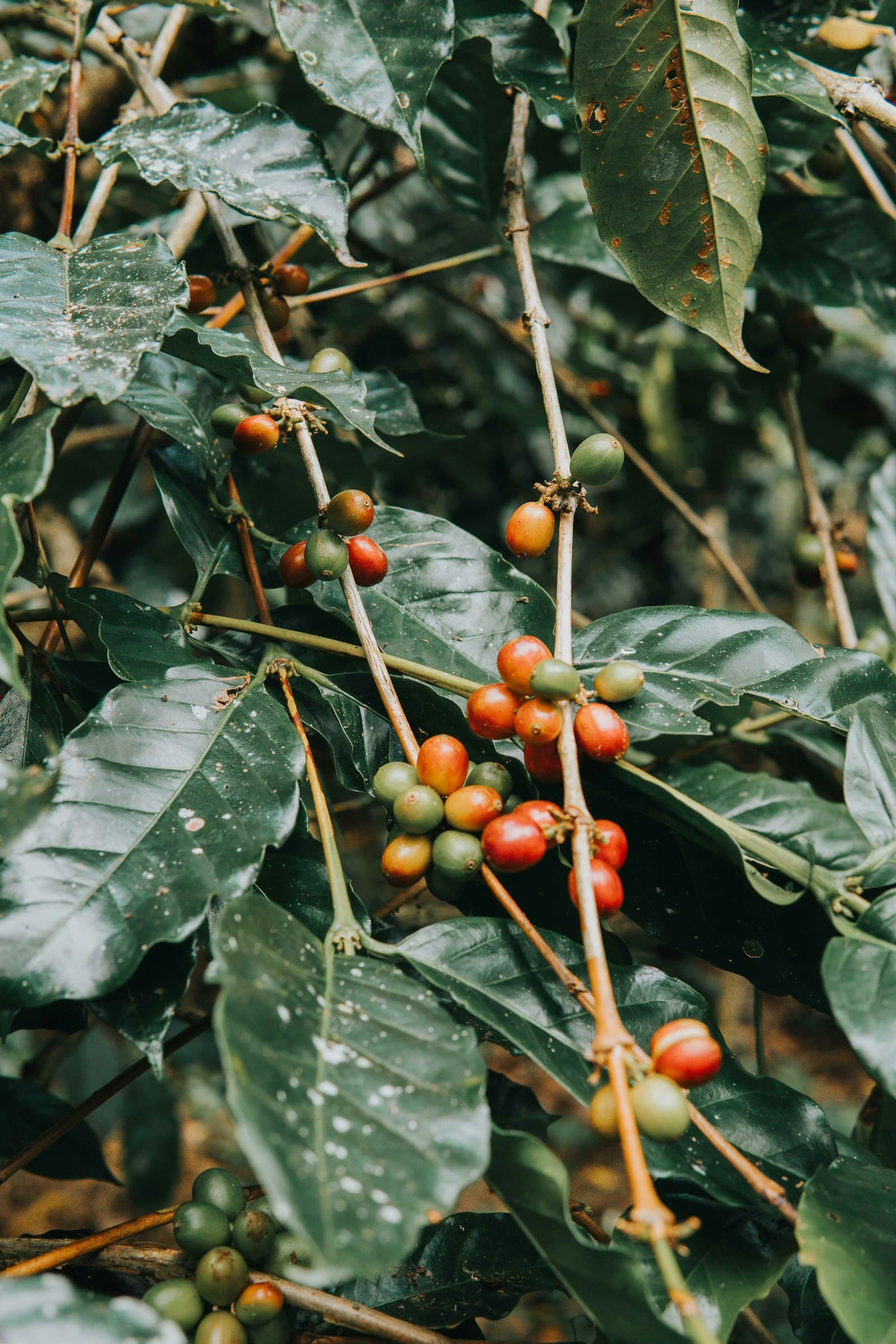
Why Kenya is special
- Equatorial highlands: cool, high-altitude growing at 1,400–2,100m on the slopes of Mt. Kenya and the Aberdares
- Volcanic red soil: acidic, fertile “nitisol” nurtures bright acidity and deep fruit
- Varieties for quality: SL28, SL34 and other varieties selected for flavor dominate
- Thorough processing: Kenya’s double-washed method (two-stage fermentation plus soaking) maximizes cleanliness
- Quality competition by auction: Nairobi’s auction system has long incentivized making better beans
Many Kenyan smallholders bring their cherries to a local “factory” — a cooperative washing station. Sorting of ripe cherries, processing and grading happen there in a concentrated way, and lots circulate under the factory name rather than a farmer’s name.
Flavor profile — what “Kenyan” means
The Kenyan archetype combines bright, strong acidity with a fruity sweet-tartness and firm body. Blackcurrant especially is the signature flavor, and you can sometimes sense a wine-like complexity.
- Blackcurrant / berry: deep fruit centered on blackcurrant — Kenya’s calling card
- Powerful, juicy acidity: bright, mouth-watering acidity like citrus or grapefruit
- Tomato / cape gooseberry: a ripe-tomato sweet-tartness and savoriness — a complexity considered uniquely Kenyan
- Firm body: not light, with a wine-like weight and long finish
In our flavor data, “tomato” is a rare note recorded almost exclusively in Kenya. When you drink Kenya, focus on the fruity sweet-tartness alongside the quality of the acidity, and this origin’s appeal comes into view.
Grading — what AA and AB really mean
You often see “AA” and “AB” on Kenyan labels. They’re mistaken for quality ranks, but they actually denote the bean’s size (screen size).
- AA: large (screen 17–18). Looks impressive and fetches higher prices
- AB: slightly smaller than A, the central grade (screen 15–16). The most widely traded
- PB (peaberry): a single round bean per cherry; said to feel concentrated
- C / TT / T / E: smaller, or lower grades containing defects
“AA = top quality” is half a myth. AA is purely about bean size, separate from how it tastes. In fact, AB or PB can cup better. Judge real quality by cup score, factory name and variety rather than the size grade.
Main varieties — SL28, SL34, Ruiru 11, Batian
- SL28: selected by Scott Labs in the 1930s. A celebrated variety embodying the Kenyan taste — drought-tolerant, with rich fruit and powerful acidity
- SL34: also of the SL line. Suited to higher, wetter sites, with excellent body and complexity
- Ruiru 11: a rust- and CBD-resistant variety introduced in 1985. Yield-focused; flavor is said to fall a step short of the SLs
- Batian: a newer disease-resistant variety from 2010, bred to aim for SL-like flavor
Main growing regions
Central (Mt. Kenya) — Nyeri, Kirinyaga, Embu
Kenya’s flagship terroir. The high altitude and volcanic red soil at the foot of Mt. Kenya yield the most “Kenyan” deep fruit and powerful acidity. Nyeri and Kirinyaga are especially highly rated.
Kiambu / Murang’a — traditional, near the capital
Traditional regions north of Nairobi. With many large estates, they produce classic Kenya of consistent quality.
Rift Valley / Western — Nakuru, Kisii, Bungoma
Regions in the west and the Great Rift Valley. Smallholder-centered, they’ve drawn growing specialty attention in recent years.
Processing — Kenya’s double-washed method
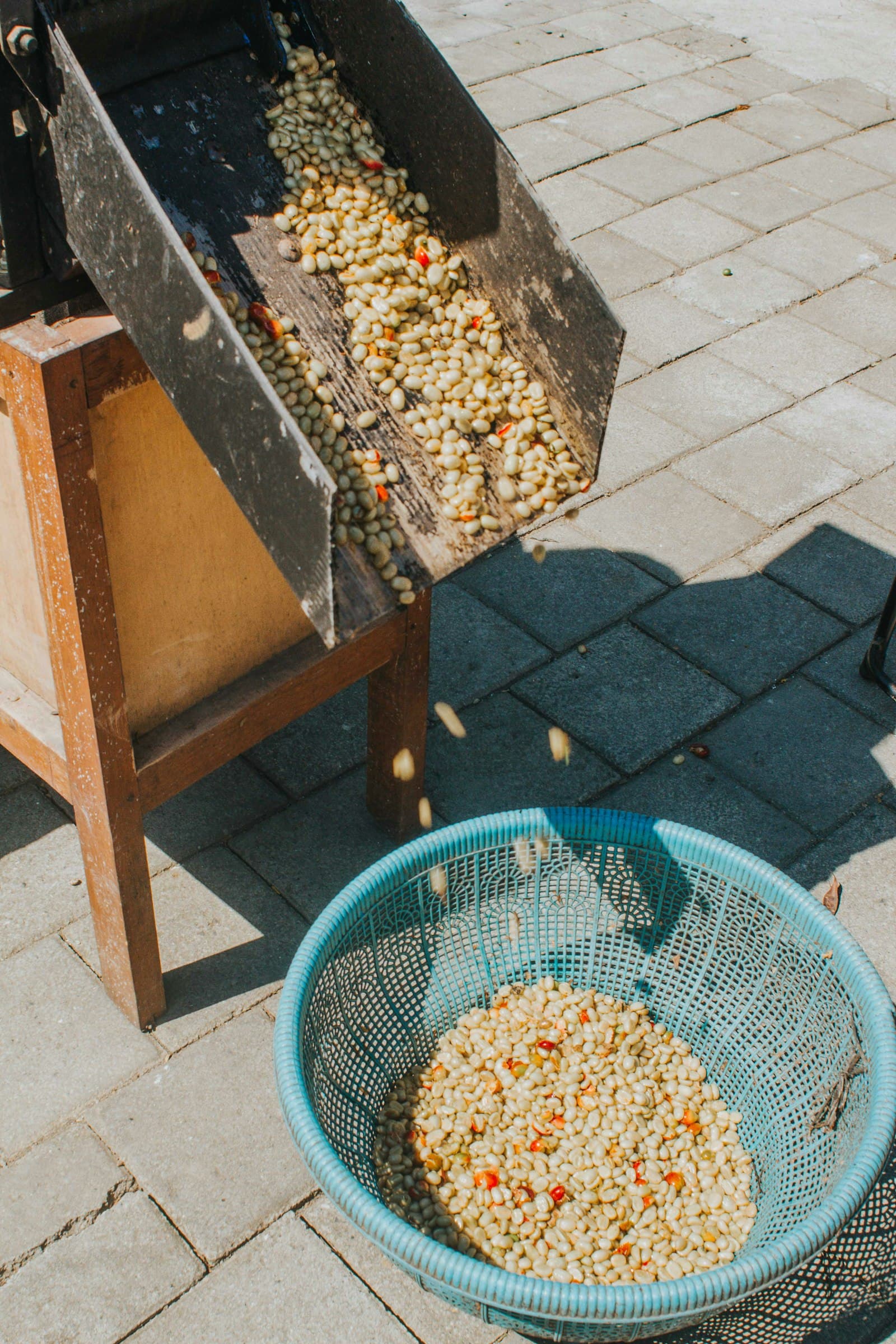
Behind Kenya’s clean, defined taste is a distinctive process. After depulping, the coffee ferments in tanks, is washed once, then ferments and soaks again — the traditional “double (two-stage) fermentation plus washed.” A long underwater soak at the end produces a defect-free clarity and a sharply defined acidity.
Recommended brewing
Kenya’s appeal is bright acidity and fruit. To draw it out fully, clean-extracting paper drip (such as the V60) is the classic choice. A light-to-medium roast and a slightly higher water temperature suit it.
Base ratio for V60 (1:16)
Beans 15g / Water 240g
- Roast: light-to-medium to use the fruit and acidity; a dark roast tends to bury the character
- Water temperature: a slightly high 92–94°C to fully draw out the bright acidity and flavor
- Brew: paper drip for cleanliness; a French press lets you enjoy the body
- Iced: a flash-chilled iced brew makes the blackcurrant fruit pop — superb
Roasters that carry Kenya (Japan)
- Maruyama Coffee: regularly carries top Kenyan lots
- Horiguchi Coffee: a polished, classic Kenya is a signature
- PHILOCOFFEA / LIGHT UP COFFEE: light-roasted Kenya that draws out the fruit
- Onibus Coffee / Mel Coffee: often handle factory-level specialty
Tips for buying Kenya next time
- Don’t choose by the AA label alone — check the region (Nyeri, Kirinyaga, etc.) or factory name
- If the variety reads SL28 / SL34, expect the typical “Kenyan” character
- Choose a light-to-medium roast to keep the acidity and fruit alive
- Start with 100g; tasting it against Ethiopia makes the difference in acidity clear
FAQ
Does AA mean top quality?
AA is a grade for bean size (the large screen 17/18), not a guarantee of taste quality. Bigger does not necessarily mean better, and it is separate from the cup score. To judge quality, check region, factory and cupping score (how grading works).
Why is Kenya so acidic?
The main factors are phosphorus-rich volcanic soil and Kenya’s two-stage-fermentation washed process. Sugars and acids develop together, producing a bright, juicy "sweet-tartness." The traits of the SL28 / SL34 varieties also underpin this vivid acidity.
Light or medium roast?
To make the most of Kenya’s fruit and bright acidity, light to medium is the classic. A dark roast tends to bury the character in bitterness. A slightly higher water temperature (92–94°C) is easier to dial in and sharpens the clean acidity.
Kenya is often called an “acidity origin,” but its essence isn’t the strength of the acidity — it’s the fruity sweet-tartness and structured complexity. Look past the letters “AA” to region, factory and variety, and the same Kenya reveals utterly different faces. Curious how it compares to Ethiopia? See our Ethiopia vs. Kenya tasting.
Was this article helpful?
Choose & compare
Related links
More articles
The Science of Coffee Aroma — The Story of the “800 Molecules” Rising From a Single Cup
BeansPanama Coffee Deep Dive — The Volcanic Highlands That Bore Geisha, and the Story of the World’s Highest Price
BeansThe Science of Bitterness — What Separates Unpleasant “Bitter” From Pleasant “Bitterness”
BeansCoffee and Climate Change — The “2050 Problem” and the Science of Our Cup’s Future