Natural vs Washed: How Processing Changes the Taste
The same bean, a different drink. How the handling of the fruit sets the flavor's direction
Learning path · Advanced/Chapter 2
One of the 7 chapters in this level. Tap the button on the right when you finish reading to log your progress.
"Natural," "washed," "honey" written on a coffee bag. These are the names of processing methods, one of the biggest factors deciding the direction of the taste. We untangle why even the same farm and the same variety become a different coffee, starting from the green-bean processing steps.
Contents · 9
- What is processing? From coffee cherry to green bean
- Washed (wet process): a byword for clean
- Natural (dry process): the king of fruitiness
- Honey: the best of both
- Sumatran style (wet hull): unique to Indonesia
- Anaerobic (oxygen-free fermentation): the frontier of experimental processing
- Processing and brewing compatibility
- Conclusion: processing decides "50% of the taste"
- Frequently asked questions
Even with the same Ethiopia Yirgacheffe beans, "natural" and "washed" become different coffees. Natural has a sweet, blueberry-jam-like fruitiness; washed is delicate and clean like black tea. This difference comes not from variety or altitude but from the post-harvest "processing." It is an essential keyword you cannot skip when talking about coffee.
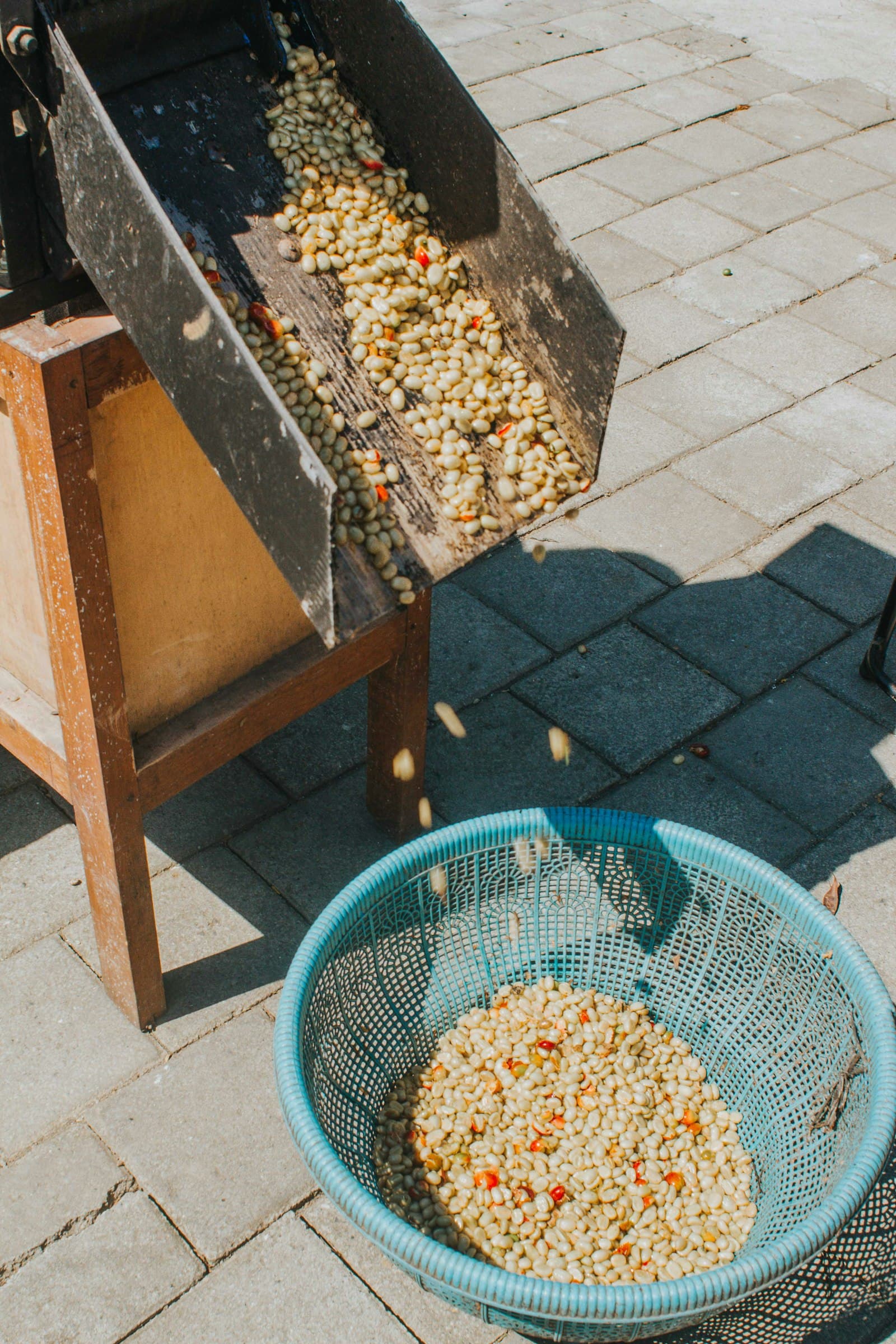
What is processing? From coffee cherry to green bean
Coffee is harvested as a red fruit (cherry). The "coffee bean" we drink is the seed of that fruit. Removing the cherry's skin, fruit, mucilage and parchment to extract just the seed is "processing." How the fruit and the seed relate during this step greatly changes the final flavor.
Processing is called processing in English, beneficiamento in Portuguese and beneficio in Spanish. The "processing method" and the "mill" are different things — the latter refers to the physical facility where processing is done (washing station / dry mill).
Washed (wet process): a byword for clean
The most common processing method in specialty coffee worldwide. The fruit is mechanically removed from the cherry (pulping), the mucilage on the seed surface is broken down in a fermentation tank, then it is washed off with water before drying.
- Steps: harvest → density sorting → pulping → fermentation (12–36 hours) → washing → drying
- Flavor tendency: clean, bright acidity, transparency, the origin traits easy to read
- Notable origins: Kenya (double fermentation), Colombia, Costa Rica, Guatemala
- Pros: uniform lot quality, little impact from defective beans
- Cons: uses a lot of water, wastewater-treatment issues
Washed's biggest trait is that "the bean's own character shows." By removing fruit-derived sweetness and fermentation notes and drawing out only the flavor locked in the seed, you get a "clean" result through which the origin, altitude and variety show clearly. It is easy for beginners to read and easy to use as a tasting baseline.
Natural (dry process): the king of fruitiness
The oldest processing method, still the mainstay in Ethiopia, the birthplace of coffee. The cherry is sun-dried whole, and at the end the dried fruit and seed are mechanically separated.
- Steps: harvest → density sorting → dry as-is (2–4 weeks, turned daily) → hulling
- Flavor tendency: sweet fruitiness, berry- or wine-like flavor, a thick body
- Notable origins: Ethiopia (Sidamo/Harrar/natural lots), Brazil, Yemen
- Pros: uses no water; fruit sugars transfer to the seed for a distinctive sweetness
- Cons: large lot-to-lot variation, risk of defective beans, drying needs advanced management
Because natural "ferments the fruit itself while drying," fermentation-derived sweetness and fruitiness that washed cannot produce transfer to the bean. The blueberry note of Ethiopia natural, the chocolate-and-nut depth of Brazil natural — both are the result of the fruit's sugars and polyphenols soaking into the seed.
Buy two bags, natural and washed, from the same farm at once and brew them under the same conditions — this is the best way to feel the difference in processing. Many specialty roasters sell "different processes" side by side.
Honey: the best of both
An intermediate method developed in Costa Rica. The fruit is removed, but the mucilage on the seed surface is left partly or wholly in place during drying. The name comes from the mucilage having "a honey-like stickiness" (no bees are involved).
- White honey: 10–25% mucilage left → close to washed in cleanness
- Yellow honey: 25–50% → light sweetness and moderate fruitiness
- Red honey: 50–75% → juicy and sweet, a caramel note
- Black honey: 75–100% → dense fruitiness close to natural
Honey is a rational Central American method that "saves water while producing a sweetness close to natural." In Costa Rica's Tarrazú and El Salvador's Apaneca, many lots use it as the main process, and there is fun in tasting the differences by farm and degree of processing.
Sumatran style (wet hull): unique to Indonesia
A unique method done only on the islands of Sumatra and Sulawesi. After depulping, the bean is half-dried with the mucilage still on, and the parchment is removed while moisture remains in the green bean, then it is fully dried. The green bean turning a greenish-blue is characteristic (a normal green bean is yellow-green to beige).
- Flavor tendency: earthy, spice, cacao, low acidity, full body
- Notable origins: Mandheling (Sumatra), Toraja (Sulawesi)
- Character: a distinctive heaviness that feels "unmistakably Indonesian"
Anaerobic (oxygen-free fermentation): the frontier of experimental processing
An innovative method spreading rapidly of late. The cherry, or the depulped seed, is fermented in a sealed tank (oxygen shut out), then dried as usual. With no oxygen, microbes different from those in normal fermentation are active, creating a distinctive flavor.
- Flavor tendency: intense fermentation aromas (wine, spirits, tropical fruit), sweet, distinctive
- Notable origins: thriving in Colombia, Costa Rica, Bolivia and others
- Reputation: many high-scoring lots even at the Cup of Excellence
- Note: so strong in character that some find it "un-coffee-like"
Anaerobic has demanding process control, and a failure becomes a defect of fermented or sour off-smells. Even specialty roasters are split on how to handle it. When you see an "anaerobic" label, it is especially important to choose one from a roaster you trust.
Processing and brewing compatibility
The processing method also changes which brewing method suits it.
- Washed: V60, Chemex (to make the most of the cleanness), light to medium roast
- Natural: French press, AeroPress (to make the most of the fruitiness), medium roast
- Honey: V60, AeroPress (to make the most of the delicate sweetness), medium roast
- Sumatran style: nel drip, French press (to make the most of the heft), medium-dark to dark roast
- Anaerobic: V60, AeroPress (to make the most of the character), light roast
Conclusion: processing decides "50% of the taste"
Coffee's flavor is sometimes said to be "variety 30% + origin/altitude 20% + processing 50%." That is how large the influence of processing is, making even the same bean a different drink. Next time you buy beans, do check the processing method, not just the origin name. Simply lining up a washed and a natural from the same farm for a taste comparison opens up the world of coffee at a stroke.
Frequently asked questions
Which is "better," natural or washed?
It is a difference of direction, not of rank. Washed is clean and lets the origin character show through; natural is rich in fruitiness and sweetness. If you want to build a tasting baseline, washed suits you; if you want to enjoy showy fruit, natural does. Tasting two from the same farm side by side shows the difference best.
How does honey process differ from natural?
Where natural dries the cherry with the whole fruit on, honey removes the fruit and dries with only the mucilage left on. The amount left (white to black) tunes it from washed-like cleanness to natural-like richness — that is its hallmark.
What if the label does not state the processing?
Beans without a note from Central America, Kenya or Colombia are traditionally washed in most cases. When Ethiopia or Brazil is natural, it is often marked "Natural" or "Sun-dried." If in doubt, ask the roaster or infer from the origin tendency.
Learning path · Advanced Chapter 2 — Up next
Chapter 3 · Why Geisha Keeps Breaking the World Price RecordWas this article helpful?
Origins in this article
Choose & compare
Related links
More articles
The Science of Coffee Aroma — The Story of the “800 Molecules” Rising From a Single Cup
BeansPanama Coffee Deep Dive — The Volcanic Highlands That Bore Geisha, and the Story of the World’s Highest Price
BeansThe Science of Bitterness — What Separates Unpleasant “Bitter” From Pleasant “Bitterness”
BeansCoffee and Climate Change — The “2050 Problem” and the Science of Our Cup’s Future