Ethiopia vs Kenya: What Makes Them Different
Same East Africa, yet completely different — the reasons from variety, processing and altitude
Both are fruity. But taste them side by side and Ethiopia is flowers, Kenya is fruit. Why so different in neighboring countries? Read through landrace vs SL lines, the details of washed processing, and altitude and soil.
Contents · 9
- ① Variety: the diversity of landraces vs selected consistency
- ② Processing: the difference of "double fermentation"
- ③ Altitude and soil
- Choosing by representative origins and lots
- Quick reference: Ethiopia vs Kenya
- Tasting them side by side under the same conditions
- How does the difference change with roast level?
- FAQ
- Not which is "above," but which you like
Ethiopia and Kenya tend to get lumped together as "fruity East African coffee." But taste them side by side and you notice they are different drinks. Ethiopia is the aroma of flower petals and bergamot; Kenya is the acidity of tomato and blackcurrant. Why are they so different in the same region? We explain along three axes.
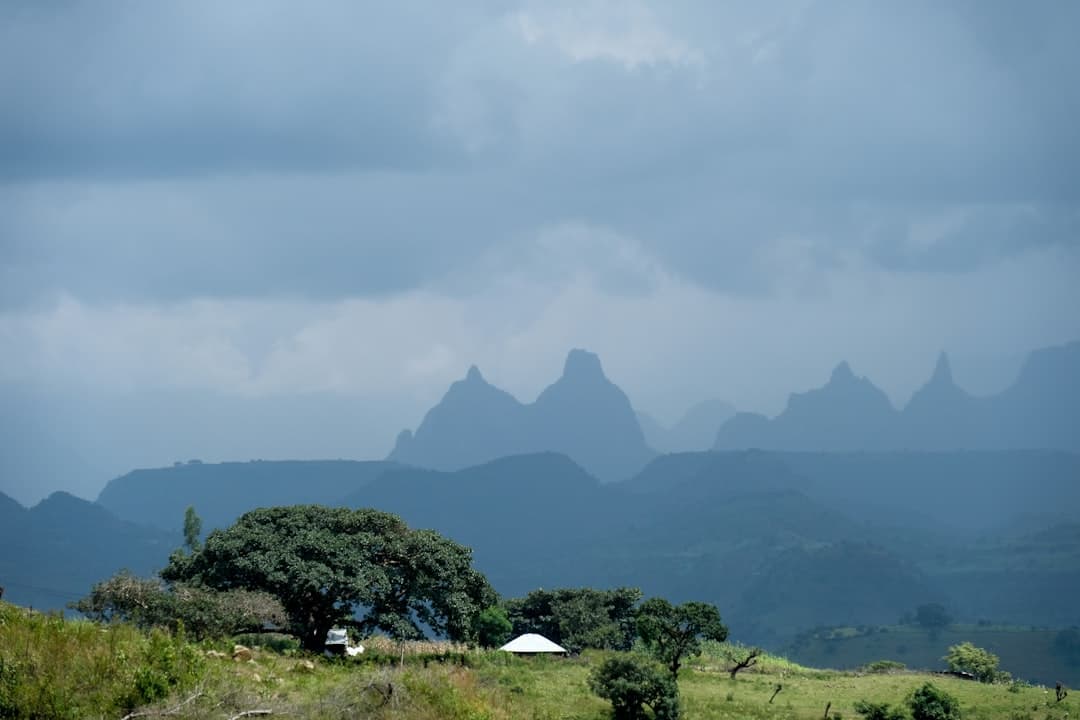
① Variety: the diversity of landraces vs selected consistency
Ethiopia is coffee's birthplace. Thousands of wild varieties and landraces exist, intermixed farm by farm. This is the cause of the phenomenon that "even the same Yirgacheffe tastes different from a different co-op." Kenya, on the other hand, centers on the selected varieties SL28 and SL34. The standardized genetics make Kenya's unique "that acidity" reproducible.
② Processing: the difference of "double fermentation"
Ethiopia's washed is mainly single fermentation + washing. Kenya uses its own two-stage "double fermentation," washing it off with water after the first fermentation and then fermenting it again. This second fermentation creates Kenya's characteristic "heavy yet bright acidity."
To tell them apart in the cup: if a floral aroma rises at the rim, it is Ethiopia; if saliva floods your mouth, it is Kenya.
③ Altitude and soil
- Ethiopia: 1,700–2,200m, volcanic red soil
- Kenya: 1,500–2,100m, phosphorus-rich volcanic soil
- Phosphorus ties directly to Kenya's acidity — it promotes intracellular sugar metabolism and aids the simultaneous formation of sugars and acids
Choosing by representative origins and lots
As an answer to "so which do I actually buy?", here are each country's representative regions and grades. Spot these place names on a label and the lot is likely to show its country's character.
- Ethiopia: Yirgacheffe (flowers, tea) / Sidamo, Guji (showy) / Limu (calmer fruit). G1 is the top grade
- Kenya: Nyeri / Kirinyaga / Kiambu (dense blackcurrant acidity). The AA mark for bean size is a quality guide
- If torn: start with a washed G1 from Ethiopia and a single-origin AA from Kenya
Quick reference: Ethiopia vs Kenya
As a decision aid when you are torn, here is the typical pair on one page. These are "tendencies" — lots and processing throw exceptions — but they give you an axis for choosing.
- Aroma: Ethiopia = flowers, jasmine, bergamot / Kenya = blackcurrant, tomato, berry
- Acidity: Ethiopia = light and tea-like / Kenya = juicy and powerful, a saliva-flooding feel
- Body: Ethiopia = light to medium / Kenya = medium to heavy with a long finish
- Processing: Ethiopia = both washed and natural take the lead / Kenya = two-stage-fermentation washed by default
- Roast affinity: both suit light to medium; a dark roast tends to bury the character
- If it is your first: Ethiopia if you like the floral side, Kenya if you like dense fruit
Tasting them side by side under the same conditions
To know the difference accurately, tasting side by side with the same brewing is best. We recommend a light-medium roast, water at 91°C, a 1:16 ratio, and a V60 drip at 3:00. Line them up under the same conditions and the differences in variety, processing and altitude show directly as differences in taste.
Basic recipe for the side-by-side tasting
Beans 15g / Water 240g
How does the difference change with roast level?
Even with the same beans, raising the roast level narrows the gap between the two. The lighter the roast, the more the origin character stands out; the darker it goes, the more roast-derived toastiness and bitterness come forward, and differences of variety and processing tend to get buried. If you want to enjoy the "difference" between Ethiopia and Kenya, the iron rule is to match them at a light-to-medium roast.
- Light roast: maximum difference. Ethiopia = flowers, Kenya = blackcurrant split cleanly
- Medium roast: sweetness builds while character remains. Easy to handle for everyday drinking
- Medium-dark to dark: roast aroma dominates and the gap shrinks. Pairs well with milk
- Bottom line: for a side-by-side, stay light-to-medium and match them at the same roast level
FAQ
Which has more caffeine?
Differences by variety and brewing matter more, so you cannot generalize by origin. Both are Arabica, so they share the point of having less than a Robusta-blended coffee. If it concerns you, reviewing your dose and brew time moves the caffeine more than the roast level does — for the same bean, a finer grind and longer contact extract more.
How does it change with natural processing?
A natural Ethiopia gains a sweeter, berry- or wine-like fruitiness that can narrow the distance to Kenyan character — naturals from Yirgacheffe and Guji in particular show pronounced strawberry and blueberry notes. If you want to compare the difference cleanly, lining up two washed coffees first is the clearest; two naturals, by contrast, push the processing-driven fruit forward and are harder to tell apart.
On a tight budget?
100g of each fits comfortably even together. Brewing with the same dripper and recipe and taking notes as you taste is the highest-value learning for the money.
Which one for a blend?
Both have lead-role character, so in a blend they work as an "accent" rather than the base. Layer a small amount of Ethiopia's floral lift or Kenya's bright acidity over a sweet, settled base like Brazil or Colombia and you add depth. Start at a ratio of "8 base : 2 accent" and adjust to taste. Just note that matching them at a light-to-medium roast keeps the character alive; blend into a dark-roast base and that character tends to vanish.
Not which is "above," but which you like
If you like "juicy, bright acidity, tea-like," it is Kenya. If you like "flowers, bergamot, light," it is Ethiopia. Not better or worse, but preference. On the same budget, buy both and rank them with your own tongue. That becomes the outline of "your coffee."
Was this article helpful?
Choose & compare
More articles
The Science of Coffee Aroma — The Story of the “800 Molecules” Rising From a Single Cup
BeansPanama Coffee Deep Dive — The Volcanic Highlands That Bore Geisha, and the Story of the World’s Highest Price
BeansThe Science of Bitterness — What Separates Unpleasant “Bitter” From Pleasant “Bitterness”
BeansCoffee and Climate Change — The “2050 Problem” and the Science of Our Cup’s Future