What Is SL28 — the Legendary Variety That Defines Kenya
The truth behind the blackcurrant acidity, its origin and its difficulty to grow
That "acidity" in Kenyan coffee comes from the variety. SL28 and SL34, selected by Scott Laboratories in the 1930s. Drought-tolerant, yet low-yielding and disease-prone. We read why it endures from the variety's history.
Contents · 6
If you have ever drunk a Kenyan specialty and felt "blackcurrant, cassis, tomato-like," you have almost certainly met the variety SL28. Selected in the 1930s at Scott Laboratories on the outskirts of Nairobi, it is the driving force that put Kenyan coffee at the top of the world.
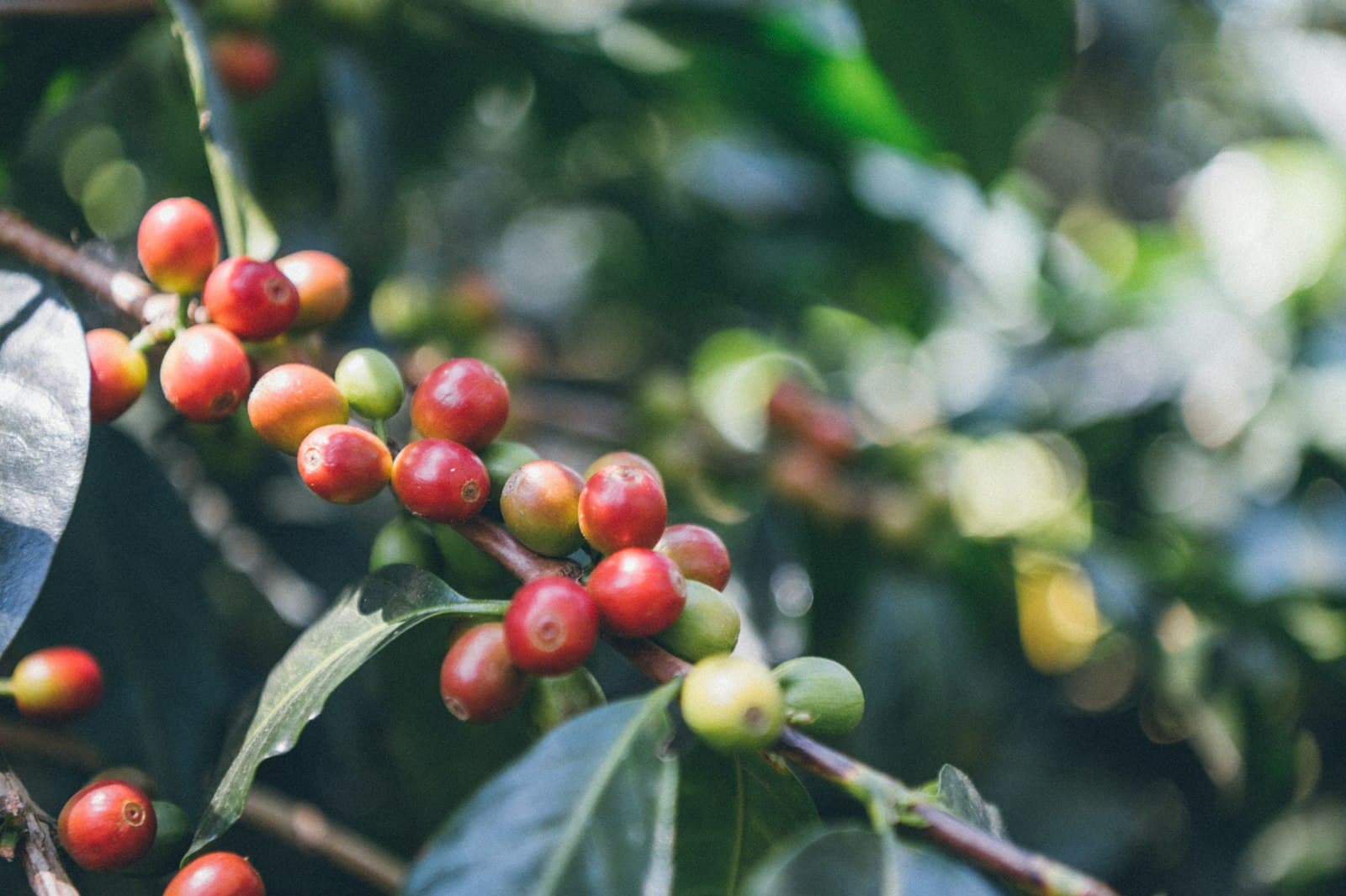
The background of the selection: in search of a drought-tolerant variety
Back in the 1930s, Kenya's large farms were plagued by severe drought. The colonial government commissioned Scott Laboratories to develop a drought-tolerant variety. From landraces brought in from Tanzania they selected promising individuals and managed them by number as the SL (Scott Labs) lines. SL28 was the individual among them that showed the brightest acidity and the most complex aroma.
The difference between SL28 and SL34
- SL28: altitude 1,500–2,100m, secures water with deep roots, strong blackcurrant acidity
- SL34: strong in areas with heavy rainy seasons, a slightly gentler acidity than SL28
- Both carry Bourbon-line genetic traits and make Kenya's "that taste"
If you get hold of a single SL28 lot, avoid a dark roast. A light-medium to medium roast brings out the blackcurrant acidity most clearly.
The price of being hard to grow
SL28 is weak against rust (coffee leaf rust) and yields less than newer varieties. Commercially, disease-resistant hybrids like Ruiru 11 and Batian are more rational. That Kenyan farmers keep growing SL28 anyway is because the market pays a premium for "that acidity." It is a textbook example of the quality-versus-efficiency trade-off shown through variety choice.
How to try SL28
Top lots of Kenya AA and peaberry, especially single-co-op lots from Nyeri/Kirinyaga/Murang'a, are candidates with a high SL28 ratio. Specialty roasters sometimes carry lots marked "100% SL28," and that is the clearest gateway.
Basic ratio for brewing with a V60 (1:16)
Beans 15g / Water 240g
A water temperature of 90–92°C is recommended. Above 94°C the acidity turns too aggressive and crushes SL28's delicate aroma. With a medium-speed drip that drains out at 3:00, enjoy the sweetness that rises as it cools.
How does it differ from Ruiru 11 and Batian?
Kenyan plots often interplant the disease-resistant varieties Ruiru 11 and Batian alongside SL28/SL34, and the ratio varies by lot. Knowing the flavor tendencies lets you explain cup differences by variety.
- SL28 — deep blackcurrant/cassis acidity and complexity. The heart of Kenya's "that taste." Low yield, weak to rust
- SL34 — close to SL28 but slightly gentler and more body-leaning. Strong in heavy rain and at high altitude
- Ruiru 11 — a disease-resistant variety introduced in 1985. Clean, but said to lag the SL lines a step in complexity
- Batian — introduced in 2010. A newer disease-resistant variety aimed at an SL-like flavor; a yield-and-quality balance type
If a lot clearly states "SL28/SL34," expect classic Kenyan character; if it centers on "Ruiru 11" or "Batian," expect a relatively mild, clean profile. The variety listing is a strong clue for predicting the cup.
FAQ
Does an "AA" mark mean SL28?
No. AA/AB are grades for bean "size," separate from variety. Whether it is SL28 is judged from the variety listing or the factory/co-op information. Even an AA can be a Ruiru-11-led lot.
Why is SL28 so expensive?
Because it yields less than newer varieties and is weak to rust, so growing costs are high. The market pays a premium for "that acidity" anyway, so farmers keep it despite the effort — a textbook quality-versus-efficiency trade-off.
Is a dark-roasted SL28 a waste?
To taste its character, light-to-medium is the rule. A dark roast buries the blackcurrant acidity and delicate aroma under roast flavor, undercutting the point of choosing SL28. It is a variety for enjoying acidity and flavor over body.
What does "SL" stand for?
The "SL" is the initials of Scott Laboratories, the research station near Nairobi that carried out the selection. In the 1930s, commissioned by the colonial government, this lab managed promising individuals by number, and the 28th and 34th individuals survive today as SL28 and SL34. The number itself became part of the variety name and is recognized in specialty markets worldwide.
Is SL28 grown outside Kenya too?
Yes. For its outstanding cup quality, SL28 is now grown outside Kenya too — in Colombia, Central America, and China's Yunnan, among others. But "that acidity" arises not from the variety alone but from the combination of Kenya's high altitude, volcanic soil and distinctive washed processing. Even the same SL28 changes in flavor when the origin changes. The variety is the "potential"; terroir gives "the face of the place."
Why does Kenya's "blackcurrant" acidity arise?
It is mainly a combination of three elements. First, the inherent potential of the SL28/SL34 varieties themselves. Second, the high altitude (1,500–2,100m) and volcanic soil of Nyeri and Kirinyaga. And third, the careful washed processing with Kenya's two-stage fermentation. These overlap to produce the deep, bright blackcurrant-like acidity and clean finish.
How does SL28 differ from Geisha?
Both are highly prized varieties, but their flavor directions are contrasting. SL28's hallmark is a deep, savory acidity reminiscent of blackcurrant (cassis) and tomato. Geisha, on the other hand, is known for a vivid, floral aroma like jasmine and bergamot. Their origins differ too: SL28 was selected in Kenya, while Geisha came from Ethiopia and blossomed in Panama.
Once you get into the habit of reading not just "AA" but the variety field when buying Kenya, you can start predicting taste differences within the same origin. For your next cup, do check the variety listing on the label.
Was this article helpful?
Choose & compare
Related links
More articles
The Science of Coffee Aroma — The Story of the “800 Molecules” Rising From a Single Cup
BeansPanama Coffee Deep Dive — The Volcanic Highlands That Bore Geisha, and the Story of the World’s Highest Price
BeansThe Science of Bitterness — What Separates Unpleasant “Bitter” From Pleasant “Bitterness”
BeansCoffee and Climate Change — The “2050 Problem” and the Science of Our Cup’s Future