Coffee and Climate Change — The “2050 Problem” and the Science of Our Cup’s Future
Why is arabica so vulnerable to warming? Shrinking suitable land, the shift to robusta, leaf rust, and the hope of F1 hybrids and shade growing
The cup of coffee we drink every morning without a second thought — its future is quietly wavering. Coffee, and especially the arabica species that carries quality, is a plant extremely sensitive to changes in temperature and rainfall, one of the crops most exposed to climate change in the world. Have you heard the phrase “the 2050 problem”? It is the projection that by the middle of this century, the land suitable for growing arabica will be greatly lost. This article traces, through the eyes of science, why coffee is weak to warming as a plant, the shrinking of suitable land, the reality producers face, and the adaptations and hope of a shift to robusta, F1 hybrids and shade growing. To know the future of a cup is also to taste today’s coffee more deeply.
Contents · 8
- Why is coffee weak to warming?
- The 2050 problem — how much suitable land will be lost?
- What warming changes is not only “quantity” — the blow to quality
- The shift to robusta — compromise, or realistic answer?
- Hope ①: the power of varieties — F1 hybrids and resistant cultivars
- Hope ②: the wisdom of cultivation — shade trees and agroforestry
- The reality producers bear — who is most fragile?
- Frequently asked questions
The cup of coffee we drink every morning without a second thought — its future is quietly wavering. Coffee, and especially the arabica species that carries quality, is a plant extremely sensitive to changes in temperature and rainfall, one of the crops most exposed to climate change in the world. Have you heard the phrase “the 2050 problem”? It is the projection that by the middle of this century, the land suitable for growing arabica will be greatly lost. This article traces why coffee is weak to warming as a plant, the shrinking of suitable land, the reality producers face, and the hope of a shift to robusta, F1 hybrids and shade growing. To know the future of a cup is also to taste today’s coffee more deeply.
Why is coffee weak to warming?
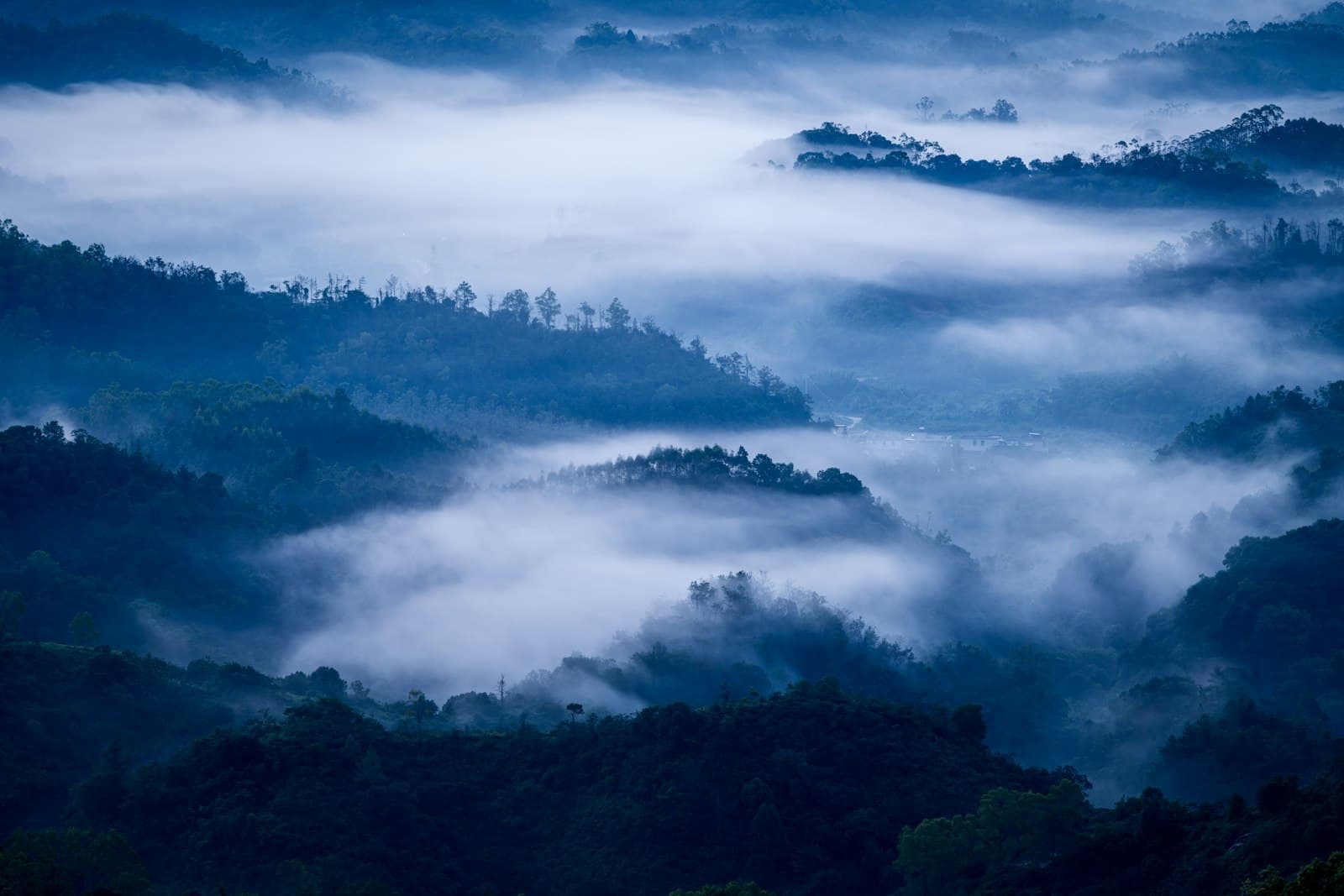
The reason coffee is vulnerable to climate change lies in its nature as a plant. Arabica, which makes up roughly 60% of the world’s cultivation, originally grew in the cool forests of the Ethiopian highlands, and its suitable annual mean temperature is limited to a surprisingly narrow range of 18–22°C. Hotter than this, and photosynthesis is disrupted, the fruit ripens too quickly for flavor to develop, and the tree itself weakens; colder, and it suffers frost damage. So arabica grows to high quality only on high, cool mountain land near the equator — a limited part of the coffee belt. This narrowness of the “suitable-temperature band” is the biggest reason coffee is fragile to warming. A rise of just a few degrees pushes that band up the mountains, until it runs out of places to escape.
Arabica’s ideal is 18–22°C; robusta’s is said to be 22–28°C. It looks like a difference of just a few degrees, but a rise of 2–3°C in average temperature turns much of today’s optimal origin into “land that is too hot.” And on mountains, however much you seek coolness by fleeing upward, there is the physical limit of the summit. Suitable land can no longer flee “up” — this is the heart of the 2050 problem.
Temperature is not the only weakness. Coffee is also extremely sensitive to the “amount” and “timing” of rain. The sequence of flowering, setting fruit and ripening is supported by the clear contrast between dry and rainy seasons. Yet climate change disrupts that very pattern of rainfall. If heavy rain falls out of season, the flowers do not bloom all at once, flowering scatters, and the ripeness of the cherries to be harvested no longer aligns. Conversely, if the rainy season is late or drought drags on, the fruit fails to develop and drops. Extreme downpours wash away the soil; scorching heat withers the trees. In other words, warming does not merely push up the average temperature — by breaking the “regularity of the seasons” that coffee cultivation has taken for granted, it shakes origins doubly. Where rising temperatures and disrupted rainfall overlap lies coffee’s fragility.
The 2050 problem — how much suitable land will be lost?
“The 2050 problem” is a phrase for a body of research projections that, if warming continues as it is, the land suitable for growing arabica will fall sharply by the middle of this century (around 2050). The numbers vary by study, but a stark outlook is widely cited: up to roughly half of the land currently suitable for arabica could become unsuitable by 2050. Low-to-mid-altitude fields in major origins such as Brazil, Vietnam, Central America and East Africa become unsuited to cultivation one after another, through heat, drought and disrupted rainfall patterns. Meanwhile, it is pointed out that some highlands previously too cold to grow coffee, and some higher-latitude regions, may newly become suitable — but the prevailing view is that this is nowhere near enough to make up for the area lost. On the whole, the land where fine coffee can be grown is thought to be shrinking.
What warming changes is not only “quantity” — the blow to quality
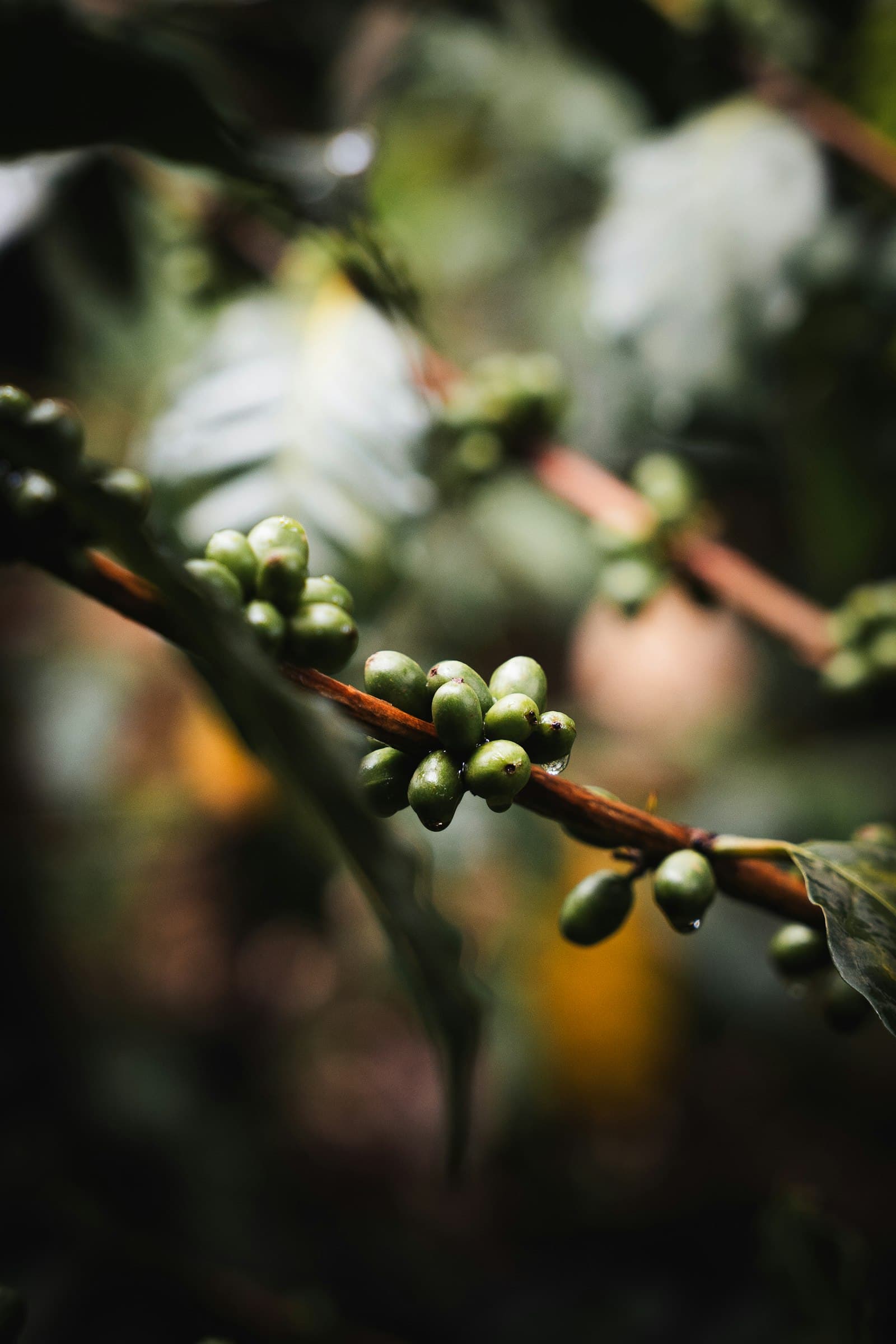
When we think of climate change’s impact, falling harvest volume comes to mind first. But for the coffee lover, the blow to “quality” may be more serious. Arabica’s delicate acidity and aroma are nurtured when the fruit ripens slowly in a cool climate. As temperatures rise, ripening becomes too fast, and the fruit matures before sugars, acids and aroma precursors have accumulated enough. As a result, the beans do not grow large, the taste is flat, and that bright acidity and floral aroma are lost. High-altitude origins are prized precisely for this “delicacy that coolness brings.” Warming undermines this premise and makes the very beans capable of being specialty ever rarer. It is a problem of quantity and, at the same time, a problem of the “flavor” we love.
Warming also raises the risk of pests and disease. “Leaf rust (coffee leaf rust),” coffee’s great enemy, and the coffee berry borer that ravages the fruit — once hard to appear in cool high-altitude fields — are spreading upward with rising temperatures. The history of Sri Lanka, which lost its coffee production to leaf rust in the 19th century, tells how utterly this disease can transform an origin.
The shift to robusta — compromise, or realistic answer?
Is there no variety strong against heat and disease? One answer is the robusta species. Robusta has a higher ideal temperature of 22–28°C, grows even at low altitudes, and is strongly resistant to leaf rust. The further climate change advances, the more robusta’s presence, easy to cultivate, grows. In fact, robusta’s share of world production has crept upward. However, robusta is poor in the delicate acidity and floral aroma of arabica, with strong bitterness and heavy body. It was long a species with a strong image of cheap industrial use. In recent years, the production of high-quality “fine robusta” and quality gains through processing have advanced, but it cannot simply substitute for arabica’s flavor. The shift to robusta is a realistic adaptation to climate and, at the same time, no small compromise in terms of the diversity of taste.
This chart shows the current situation in which world coffee production splits roughly 60 to 40 between arabica and robusta. Arabica, which carries quality, is still the majority, but that ratio is not fixed. If climate change costs us low-to-mid-altitude arabica fields and the planting of heat-tolerant robusta increases, this ratio is expected to drift little by little toward robusta. In other words, this chart is both a snapshot of the present and a starting point for changes to come. The figures fluctuate somewhat by year and statistics, but the broad picture — “arabica in the majority, robusta catching up” — is shared.
Hope ①: the power of varieties — F1 hybrids and resistant cultivars
From here, the story of hope. One frontline countermeasure against climate change is to borrow the power of varieties. Research institutions including World Coffee Research (WCR) are developing new varieties that are strong against heat and disease while preserving arabica’s delicate flavor. Of particular note are “F1 hybrids” — first-generation crosses of different lineages that combine, at a high level, the best of both parents (disease resistance, yield, flavor). Where conventional breeding took decades, modern breeding drawing on genetic knowledge has greatly raised its speed and precision. Rust-resistant varieties have already saved origins around the world, and the decades ahead will turn on “how quickly climate-adapted varieties can be delivered to farmers.” Varieties are a blueprint for flavor and, at the same time, a shield to protect coffee’s future.
Hope ②: the wisdom of cultivation — shade trees and agroforestry
Another hope alongside varieties is ingenuity in cultivation methods. Its flagship is “shade-grown” coffee. In this traditional method, tall trees are planted above the coffee, and it is grown in dappled light; the shade lowers the field’s temperature, prevents soil from drying, and slows the ripening of the fruit. Compared with full-sun cultivation exposed to strong direct sunlight and high heat, shade growing works as a buffer against warming. Furthermore, “agroforestry,” in which coffee coexists with diverse trees, protects biodiversity, enriches the soil, and diversifies farmers’ sources of income. What certifications like Rainforest Alliance value is precisely this kind of sustainable cultivation. Climate countermeasures advance hand in hand not only with the latest varieties but also with the renewed appreciation of such time-honored wisdom.
There are several other adaptations around cultivation. Gradually moving fields to higher, cooler ground — the “upward migration of origins”; grafting onto rootstocks strong against drought and disease; using organic matter and cover crops to retain soil moisture; and introducing irrigation to guard against premature flowering and drought. None happen overnight; all require money, technique and years of time. What is important is that these measures do not close with “any one of them.” Plant resistant varieties, grow shade trees, protect the soil, manage the water — only by combining multiple measures can an origin hold its ground against a changing climate. Adapting to climate change is not a single solution, but the accumulation of patient, origin-wide effort.
There is something consumers can do, too. Choosing certified coffee such as Fairtrade or Rainforest Alliance helps support, economically, the producers standing up to climate change. Only when producers receive a fair reward — enough to invest in adaptation — can an origin picture its future. A single cup’s choice is quietly connected to the future of a distant origin.
The reality producers bear — who is most fragile?
Those who bear the heaviest impact of climate change are not, in fact, we who drink the world’s billions of cups, but those who grow it. Much of the world’s coffee is supported by small family-run farms. For them, the shrinking of suitable land, the wild swings in harvest volume, and the spread of disease mean, directly, a crisis of livelihood. Replanting varieties, growing shade trees, moving fields to higher ground — all cost time and money. Yet within the structure of coffee economics we will look at later, the share producers receive is often small, and their capacity to invest in adaptation is limited. Climate change thus falls most heavily on people already in a fragile position. That is exactly why this is a matter of fairness and sustainability as much as of the environment.
Frequently asked questions
What is the “coffee 2050 problem”?
It is a phrase for a body of research projections that, if climate change continues, the land suitable for growing arabica will fall sharply by the middle of this century (around 2050). The figures vary by study, but a stark outlook is widely cited: up to roughly half of the land currently suitable for arabica could become unsuitable. Because arabica has a narrow ideal temperature of 18–22°C and is weak to heat, it is strongly affected by rising temperatures. Beyond falling volume, the impact on “quality” — beans with delicate flavor becoming rare — is also serious.
Why is arabica weak to climate change?
Because arabica originally grew in the cool forests of the Ethiopian highlands, its suitable annual mean temperature is limited to a narrow 18–22°C. Hotter than this, ripening is disrupted, flavor fails to develop, and the tree weakens. And since it grows to high quality only on high, cool mountain land, rising temperatures push suitable land up the mountains, until it hits the limit of the summit and runs out of places to flee. A narrow suitable-temperature band, and limited places to escape — this is the reason for arabica’s fragility.
If warming continues, will we no longer be able to drink coffee?
It is not that coffee itself will disappear entirely. Cultivation of heat-tolerant robusta will continue, and adaptations such as new resistant varieties and shade growing are advancing. However, the delicate-flavored arabica we are used to, and distinctive coffees from particular origins, are likely to become rarer and pricier. Rather than “we can no longer drink it,” the change is closer to “high-quality coffee becoming a luxury” — that is nearer the reality.
How will taste change if robusta increases?
Compared with arabica, robusta tends to have stronger bitterness and heavier body, and is poor in delicate acidity and floral aroma. So if robusta’s share rises worldwide, on average the taste may drift toward “bitter and heavy.” That said, recent years have seen high-quality “fine robusta” and versions with flavor enhanced through processing. Coffees that make the most of robusta’s own character are increasing, so it cannot simply be said that “quality goes down.”
Is there anything consumers can do?
The most realistic thing is to choose certified coffee such as Fairtrade or Rainforest Alliance, or direct-trade beans where a fair reward reaches producers. Only when producers earn enough income to invest in climate adaptation (replanting varieties, growing shade trees, and so on) can an origin picture its future. Everyday choices — using beans without waste, buying from trustworthy roasters — also support sustainable production in the long run.
What is an F1 hybrid?
It is a first-generation hybrid variety made by crossing parents of different lineages. Its feature is combining, at a high level, the superior traits of both parents (disease resistance, yield, flavor), and it is anticipated as a trump card for climate adaptation. Where conventional breeding took decades, modern breeding speeds development using genetic knowledge. How quickly varieties that are strong against heat and disease while keeping arabica-like flavor can be delivered to farmers will shape coffee’s future over the coming decades. For details, see The Family Tree of Coffee Varieties.
A cup of coffee is a gift from a very limited stretch of earth — the cool mountain land near the equator. Its delicacy was grown slowly by coolness and time, which is exactly why it is so fragile against a change like warming. The 2050 problem is not a distant threat but a reality quietly unfolding in origins now. Yet hope is surely budding, too — in resistant varieties, in shade growing, and in fair trade that supports producers. The next time you brew a cup, imagine what land, and what climate, that bean grew in. To taste today’s coffee deeply may be the first step toward protecting its future.
Was this article helpful?
Choose & compare
Related links
References
More articles
The Science of Bitterness — What Separates Unpleasant “Bitter” From Pleasant “Bitterness”
BeansThe Science of Processing — From a Single Fruit to a Green Bean, How Fermentation and Drying Decide the Taste
BeansThe Coffee Variety Family Tree — Reading the “Genealogy” That Begins with Typica and Bourbon
BeansThe Coffee Belt and Terroir — Why Coffee Grows Only in the “Equatorial Band,” and Why Each Origin Tastes Different