Hawaiian Kona Coffee: The Volcanic Slopes Behind a “Top-Three” Coffee, and the Story of Japanese Immigrants
The only serious U.S. origin, the name only Hualālai’s west slope may use, and the reasons for its smooth sweetness and rarity
A sweetness of nuts and macadamia, and a smooth, edge-free body — Hawaiian Kona ranks with Jamaican [Blue Mountain](/articles/jamaica-blue-mountain-deep-dive) among the “three great coffees of the world.” It is the only place in the United States producing meaningful volume, and only a narrow strip on the west slope of the Hualālai volcano may call itself “Kona.” Why it is so expensive and rare, its flavor, the history Japanese immigrants built, and the pitfall of “Kona Blend” — all unpacked here.
Contents · 11
- Why Kona is special
- The flavor profile
- The land that may use the name — Hualālai’s west slope
- “Kona weather” and volcanic soil
- Japanese immigrants and Kona coffee
- Variety and processing
- Grading — from Extra Fancy to Peaberry
- The “Kona Blend” trap — check for “100% Kona”
- Why is it so expensive?
- How to brew it
- Frequently asked questions
Hear “Kona coffee” and many picture a gentle Hawaiian souvenir cup. But Kona ranks alongside Jamaican Blue Mountain and Yemeni Mocha among the “three great coffees of the world” — a genuine premium origin. It is the only land in the U.S. growing serious volumes of Arabica, and the only place that may use the name is a tightly limited area on the west slope of the Hualālai volcano on the Big Island of Hawaii. Let’s dig into the source of that smooth sweetness and the reasons for its rarity.
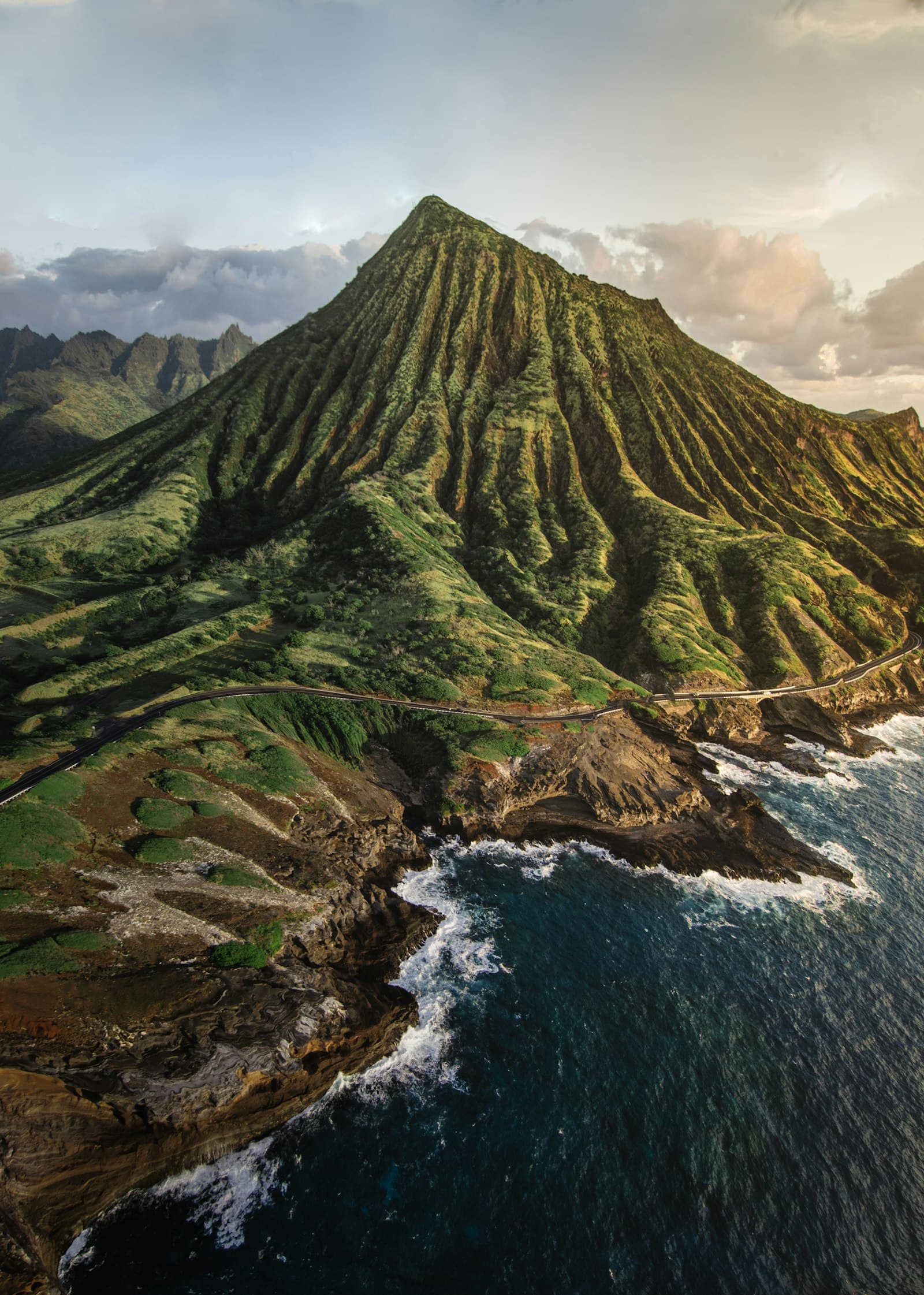
Why Kona is special
- The only serious U.S. origin: Hawaii is the only U.S. state growing coffee commercially, and Kona is its flagship
- A top-three coffee: long prized as one of the “big three” alongside Blue Mountain and Mocha
- A tiny area may use the name: only the North and South Kona districts on Hualālai’s west slope may say “Kona”
- Smooth and sweet: notes of nuts, macadamia and milk chocolate with an edge-free, mellow body
- A Japanese-immigrant history: from the late 1800s Japanese immigrants grew it, and their descendants’ family farms support it still
There are clear reasons Kona is expensive and rare: high U.S. labor costs, hand-picking on steep slopes, and a tiny total volume. Hawaii ranks low among coffee-producing regions worldwide — nowhere near Ethiopia or Brazil in quantity. Its position as a “rare luxury” comes not only from quality but from this structure.
The flavor profile
Kona’s appeal comes down to “drinkability.” A gentle, not-too-bright acidity; a sweetness of nuts, macadamia, milk chocolate and brown sugar; and a smooth, rounded body. Rather than the fierce character of African coffees, its calling card is an elegant balance that almost anyone finds delicious.
- Acidity: gentle and mellow. There’s a light citrus lift, but nothing sharp
- Sweetness and flavor: nuts, macadamia, milk chocolate, brown sugar — a soft, Hawaiian sweetness
- Body: medium and silky. Smooth, neither heavy nor thin
- Overall: clean and refined. Ideal for those who want everyday comfort over fierce character
The land that may use the name — Hualālai’s west slope
“Kona” is not a variety or a brand; it is a place. On the west of the Big Island, the North and South Kona districts spread across the west slopes of the Hualālai and Mauna Loa volcanoes. Only beans grown in this narrow band may legally be called “Kona Coffee.” At roughly 200–800m, the altitude is by no means high by specialty standards. What makes this land special is its peculiar climate and soil.
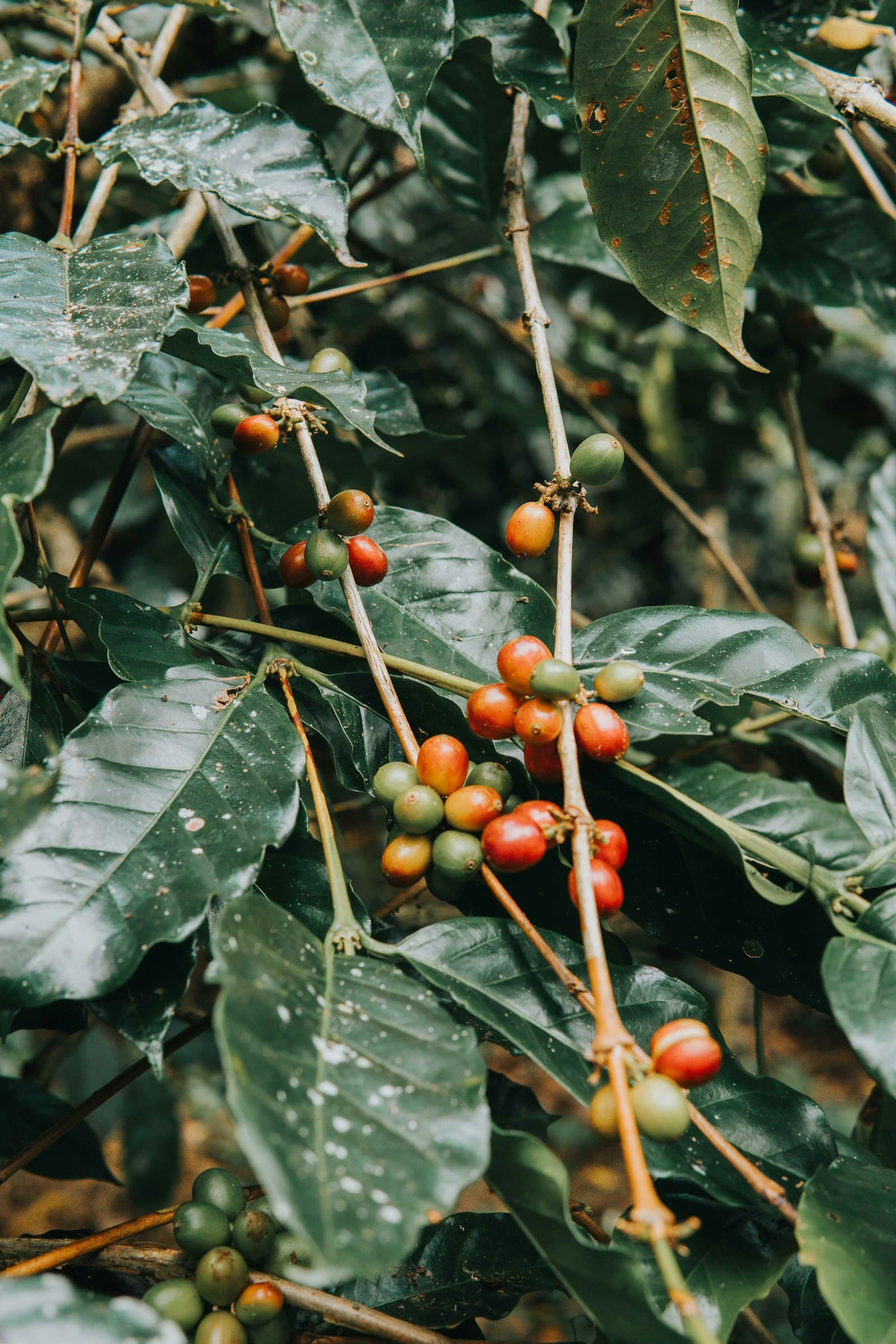
“Kona weather” and volcanic soil
The Kona district has a distinctive weather pattern known as “Kona weather”: sunny mornings, clouds and rain in the afternoon, and mild, cool nights. Those afternoon clouds act as natural shade, protecting the trees from harsh sun while letting the cherries ripen slowly. This climate compensates for the low altitude.
- Climate: morning sun plus afternoon cloud and rain = natural shade. Cherries ripen slowly even at low altitude
- Soil: mineral-rich, well-draining volcanic soil. The source of depth and sweetness
- Compensating for low altitude: 200–800m is low, but cloud, rain and the day-night swing mimic a highland environment
- Processing: mostly washed, which leads to a clean, clear cup
Japanese immigrants and Kona coffee
No account of Kona is complete without Japanese immigrants. In the late 1800s, many first-generation immigrants (issei) who had finished contract labor on the sugar plantations leased small coffee farms to work for themselves. Whole families hand-picked cherries on steep slopes and sun-dried the beans on “hoshidana,” drying decks with a roof that slides on rails — a Japanese-origin device still part of the Kona landscape today. Many family farms with Japanese names remain, and they built the foundation of Kona coffee culture.
Variety and processing
- Main variety: the Typica lineage brought in during the 1800s (known as “Kona Typica”), with newer varieties introduced recently
- Processing: mostly washed. Remove the pulp, ferment and wash, then dry
- Drying: sun-drying on the traditional “hoshidana” (a sliding-roof drying deck) is iconic
- Harvest: hand-picking on steep slopes, selecting only ripe cherries — careful work that underpins quality
Grading — from Extra Fancy to Peaberry
Hawaii has a strict grading system specific to Kona coffee. Beans are graded by size, moisture and freedom from defects; higher grades have larger, more uniform beans with fewer defects. Grade does not directly indicate how good it tastes, but as a measure of appearance and uniformity it maps straight onto price.
- Kona Extra Fancy: the top grade. The largest beans with the fewest defects — the flagship
- Kona Fancy: large and high quality. Fancy and above is the “gift / premium” zone
- Kona No.1: a standard high-quality grade with the most volume
- Kona Prime / Select: lower grades, smaller or with more defects
- Kona Peaberry: a rare lot of single round beans, prized in Kona too
The “Kona Blend” trap — check for “100% Kona”
The thing to watch most when buying is the “Kona Blend” label. In the U.S., a product may be sold as “10% Kona Blend” with just 10% Kona beans. In other words, the contents of a “Kona Blend” are often 90% cheaper beans from elsewhere.
To enjoy the true taste of Kona, always check the label for “100% Kona.” “Kona Blend,” “Kona Style” and “Kona Roast” likely contain only a small amount of Kona. An extremely cheap “Kona” is also safest to suspect as a blend.
Why is it so expensive?
- Labor: high U.S. wage levels, and hand-picking is labor-intensive
- Low volume: a small growing area and tiny total output — supply is far below demand
- Selective hand-picking: the effort of harvesting only ripe cherries on steep slopes
- Brand demand: high name recognition and popularity as a “top three” and a Hawaiian souvenir
How to brew it
Kona’s strengths are smooth sweetness and balance. To draw those out honestly, a clean paper drip is the royal road. Higher grades have no off-flavors, so brewing flaws don’t show — an easy bean for beginners too.
Baseline for a V60 (1:16)
Beans 15g / Water 240g
- Roast: medium is the royal road. Sweetness and nuttiness come through most cleanly
- Temperature: 90–93°C, to round out the gentle acidity and sweetness
- Brewing: keep it clean with paper drip. The bean is fine, so brew it straight, no gimmicks
- Beware dark roasts: roast too dark and the delicate sweetness hides behind bitterness
Frequently asked questions
Why is Kona coffee expensive?
It’s not just the quality rating — structural reasons loom large: high U.S. labor costs, hand-picking on steep slopes, and a small growing area with tiny output. Demand is high worldwide while supply is extremely limited, so prices stay high. In a sense, it’s natural that “100% Kona” costs a lot.
What’s the difference between “Kona Blend” and “100% Kona”?
The share of actual Kona beans is completely different. U.S. labeling rules let a product be called “Kona Blend” with just 10% mixed in, so most blends are mostly beans from elsewhere. To taste Kona itself, it’s “100% Kona” or nothing. Price and quality both diverge sharply there.
Is it similar to Blue Mountain?
In direction, yes. Both are “top three” coffees prized for smoothness, balance and refined sweetness over fierce character. Compared side by side, Blue Mountain has a more delicate, transparent elegance, while Kona leads with the cheerful sweetness of nuts and macadamia. Tasting them together is a fun way to enjoy the contrast.
Kona is a coffee of “everyday comfort” rather than an “intense experience.” Next time you spot Kona as a souvenir or gift, first check the label for “100% Kona” and the grade. Then, with a thought for the history Japanese immigrants built on those steep slopes, take your time and savor that smooth sweetness.
Was this article helpful?
Origins in this article
Choose & compare
Related links
More articles
The Coffee Variety Family Tree — Reading the “Genealogy” That Begins with Typica and Bourbon
BeansThe Coffee Belt and Terroir — Why Coffee Grows Only in the “Equatorial Band,” and Why Each Origin Tastes Different
BeansThe Science of Coffee Acidity — What Fruitiness Really Is, and How It Differs from “Sour”
BeansTaiwan Coffee Deep-Dive: The Tea-Like Cup Born of Alishan’s High Mountains