Taiwan Coffee Deep-Dive: The Tea-Like Cup Born of Alishan’s High Mountains
An emerging specialty from the island of tea, tiny hand-picked harvests, and a delicate sweetness that surprised the competition circuit
Taiwan means oolong — above all the “high-mountain tea” of Alishan. Yet those same high mountains also grow a remarkably tea-like coffee. Output is tiny, it is among the world’s most expensive coffees, and most is consumed on the island — but lots scoring high in international competitions have appeared, and Taiwanese coffee is quietly drawing notice. We unpack why the island of tea grows coffee, and the cup Alishan’s heights produce, through history, regions and processing.
Contents · 9
You may struggle to find Taiwan on the world map of coffee. Taiwan means oolong — above all the “high-mountain tea” of Alishan. Yet those same high mountains in fact also grow a distinctive coffee. Output is tiny, prices are among the highest in the world, and most is consumed on the island — but lots that score high in international competitions have appeared, and Taiwanese coffee is now quietly drawing the world’s notice. We dig into why the island of tea grows coffee, and the tea-like cup Alishan’s heights produce, through history, regions and processing.
Why Taiwanese coffee is special
- Coffee from the island of tea: a world-class high-mountain-tea region grows an emerging specialty coffee on the very same slopes
- The Alishan brand: the high-mountain coffee of Alishan, Chiayi County, is Taiwan’s signature — a delicate, tea-like sweetness
- Tiny and expensive: output is small, hand-picked and small-scale; one of the world’s most expensive coffees
- Rising recognition: lots scoring high in international competitions have appeared, and quality is being recognized worldwide
- A drinking nation too: it also has a big café culture and convenience-store coffee — a major consumer
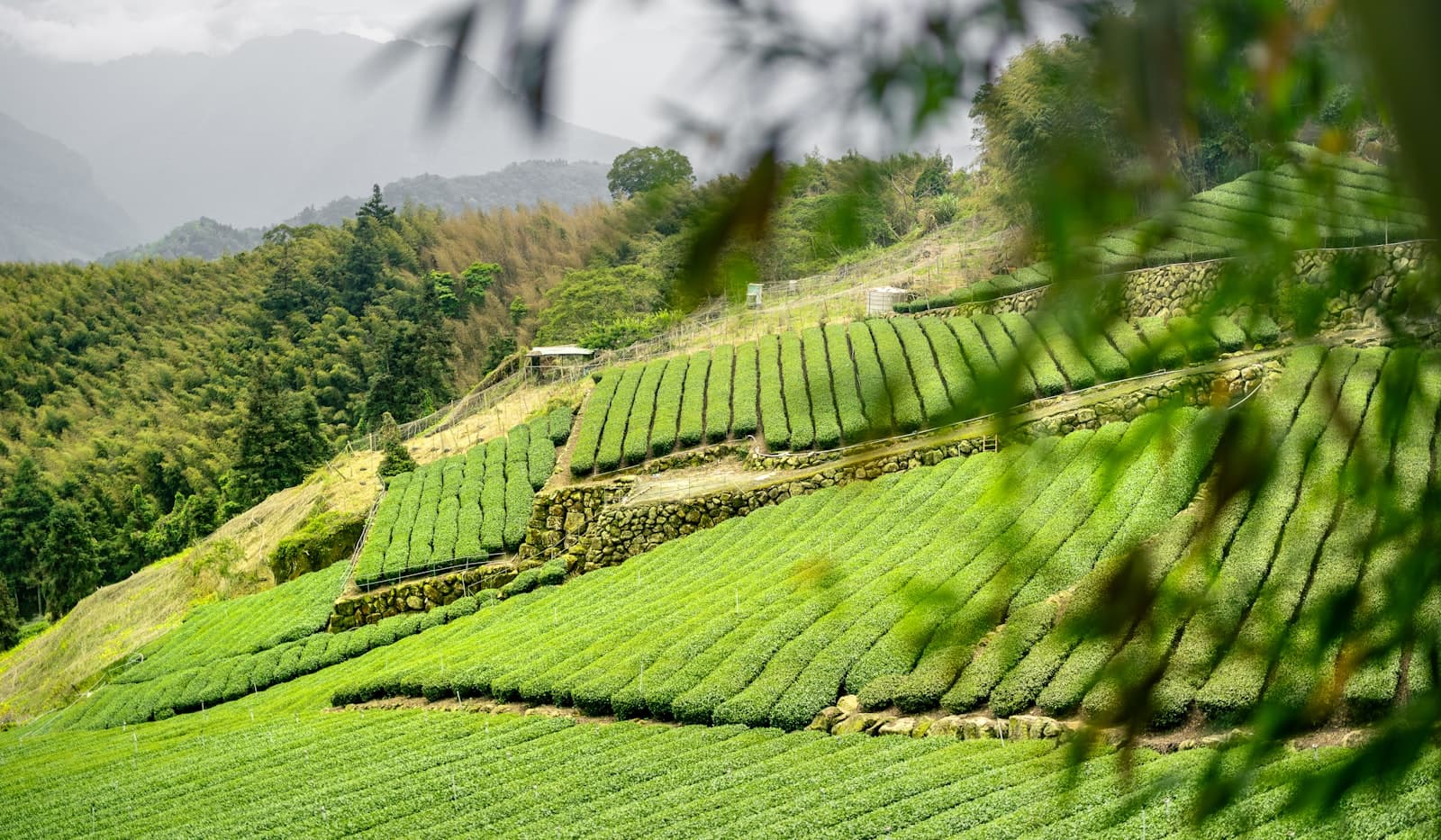
Taiwan’s “high-mountain tea” gains its delicate, sweet character by growing slowly at high altitude where the day-night temperature swing is large. Coffee works on exactly the same principle. On Alishan’s heights, cherries ripen slowly, building sugar and complexity, yielding a delicate sweetness reminiscent of black tea and stone fruit. The careful hand-picking and processing culture honed in tea-making carries straight over into coffee quality.
How the island of tea came to grow coffee — a history
Taiwan’s coffee-growing history is surprisingly old, reaching back to the late 19th century. It is said to have begun around 1884, when a British merchant brought seedlings from Manila, and during the Japanese colonial era (1895–1945), the Japanese tried coffee cultivation in various places. Coffee then was mainly for the Japanese home market, and it faded after the war. Taiwanese coffee truly “revived” around the year 2000. Gukeng in Yunlin County in central Taiwan — hit hard by the 1999 “921” earthquake — put its energy into coffee growing and tourism as a symbol of recovery, becoming the spark for Taiwan’s coffee boom.
Gukeng (Huashan) in Yunlin County is known as the “birthplace of Taiwanese coffee,” with an annual coffee harvest festival and other efforts that rooted coffee culture in Taiwan. Afterward, high-mountain regions such as Alishan raised their reputation with high-quality lots, and Taiwanese coffee transformed from a “cheap souvenir” into a “premium specialty.”
Alishan — Taiwan’s signature high-mountain coffee
What has become synonymous with Taiwanese coffee is Alishan, in Chiayi County. Alishan is a tourist destination famed for high-mountain tea and its forest railway, but fine arabica is also grown on its slopes at 1,000–1,600m. A large day-night temperature swing and the mists that settle over the mountains create a cool climate. Cherries ripen slowly over time, taking on a delicate, tea-like sweetness, floral aromatics and a stone-fruit juiciness. Thorough hand-picking and careful processing finish it into a clean cup free of off-notes.
Flavor profile — a tea-like sweetness
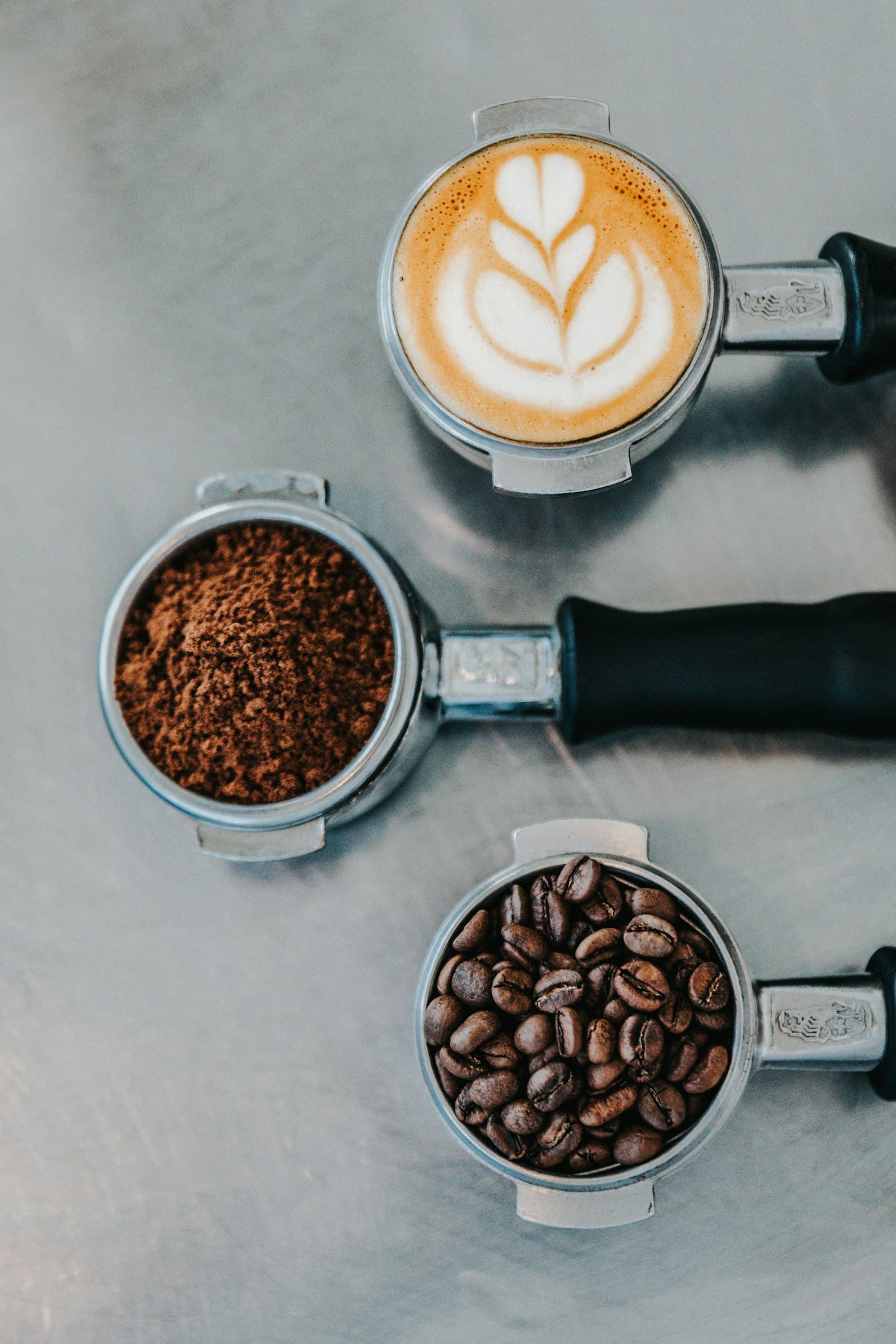
The appeal of Taiwanese coffee, especially the high-mountain kind, lies in its delicacy. Rather than pushing with bold body or sharp acidity, it offers a refined, black-tea-like sweetness and a clean, transparent finish. Different from the showy acidity of African coffees and from the heaviness of Indonesian ones, its hallmark is a distinctive “light sweetness.”
- Sweetness: a refined, delicate sweetness like black tea, honey or brown sugar
- Aroma: floral and vivid — sometimes reminiscent of jasmine or white flowers
- Fruit: a juiciness like stone fruit (peach or apricot)
- Body and acidity: medium body, bright and clean acidity; delicate and clean overall
Taiwanese coffee is one to savor for its delicacy. Rather than a dark roast’s strong bitterness, a light-to-medium roast that opens up its tea-like sweetness and aroma is recommended. Rare and expensive, it is a coffee to brew slowly as a special cup. Tasting it side by side with Hawaiian Kona — in the same lineage of high-altitude, low-volume, high-price coffee — is a fun exercise.
Growing regions
Taiwan’s coffee is scattered across the mountains of central, southern and eastern parts of the island. All are high-altitude highlands, with small but distinctive regions taking shape.
- Alishan / Chiayi (south-central): Taiwan’s signature high-mountain region, known for a delicate, tea-like sweetness
- Yunlin / Gukeng-Huashan (central): the birthplace of Taiwanese coffee. Nutty and well-balanced
- Nantou (central): around Sun Moon Lake and elsewhere — one of the older regions
- Taitung & Hualien (east): mountains on the Pacific-facing east coast, drawing notice as new regions
- Pingtung (south): the southernmost mountains, with cultivation that leverages a tropical climate
We organize the regional characters by area on the Taiwan origin page, too. Even within Taiwan, high-mountain Alishan and central Gukeng head in different flavor directions.
Processing and varieties
- Processing: mostly washed for a clean cup; lately honey and natural are increasing
- Varieties: mostly arabica, with farms trying Typica, SL types and Geisha
- Hand-picked, small-scale: with high labor costs, careful hand-picking and small-lot production are the norm
- High processing skill: the processing culture honed in tea-making lives on in careful processing and drying
Why Taiwanese coffee is expensive
Taiwanese coffee is one of the most expensive in the world, for several overlapping reasons. First, output is tiny: Taiwan is one of the smallest growing origins, and that scarcity shows up directly in price. Second, Taiwan’s high labor costs: hand-picking on steep mountains takes enormous effort, and the cost structure is utterly different from mass-producing countries. Third, much of it is consumed within the island for the specialty and gift markets, so even less is left to export. It competes not on cheapness but on quality and rarity — that is Taiwanese coffee’s position.
How to brew it
To draw out the delicate sweetness and aroma of Taiwanese coffee, a clean paper drip is the royal road. The trick is not to scorch it but to open up its tea-like nuances. A slightly lower water temperature makes its delicacy stand out.
Baseline ratio for the V60 (1:16)
Beans 15g / Water 240g
- Roast: light to medium. Bring out the tea-like sweetness and floral aroma
- Water temp: 88–92°C. Keep it low to draw out the delicate sweetness and aroma
- Brew: a clean paper drip — no off-notes, taste it plainly
- Black first: rare and expensive, so taste its character black at first
FAQ
What does Taiwanese coffee taste like?
Centered on the high-mountain kind, its hallmark is a delicate, refined, black-tea-like sweetness. With floral aroma, a stone-fruit juiciness and a clean finish, it is not a type that pushes with bold body or sharp acidity. The “delicate sweetness” it shares with high-mountain tea is Taiwanese coffee’s very own character.
Why is Taiwanese coffee expensive and rare?
The main reasons are that output is tiny, hand-picking on steep mountains takes great effort, and Taiwan’s labor costs are high. On top of that, much is consumed within the island, so export volume is even more limited. It is a boutique coffee valued not for cheapness but for quality and rarity.
What is Alishan coffee?
It is the high-mountain coffee grown in Alishan, Chiayi County, Taiwan (about 1,000–1,600m), and Taiwan’s signature label. In the same mountain area famed for high-mountain tea, a cool climate, mists and a large temperature swing ripen the cherries slowly, producing a delicate, tea-like sweetness. Its clean, floral character is highly rated internationally too.
Taiwanese coffee is another story born of the “island of tea.” In one of the world’s smallest origins, high mountains and careful handwork nurture a cup as delicate and sweet as black tea. A rare, fine coffee, far removed from flashy volume or cheapness. Next time you spot the name Alishan, savor it slowly — remembering that it is a gift of the same mountains as high-mountain tea.
Was this article helpful?
Origins in this article
Choose & compare
Related links
More articles
The Coffee Variety Family Tree — Reading the “Genealogy” That Begins with Typica and Bourbon
BeansThe Coffee Belt and Terroir — Why Coffee Grows Only in the “Equatorial Band,” and Why Each Origin Tastes Different
BeansPhilippine Coffee Deep-Dive: A Country of Four Species and the Story of the Rare Liberica, "Barako"
BeansEl Salvador Coffee Deep-Dive: The Sanctuary of Bourbon and the Volcanic Land That Created Pacamara