Yemen Coffee Deep Dive: The Birthplace of “Mocha” and the Home of the Coffee Trade
Tracing the world’s oldest trading port, a wild flavor, and the origin of Mocha-Java
The “mocha” you see in cafés, and the chocolate-laced “caffè mocha” — the word comes from the port town of Mokha (Al-Makha) on Yemen’s Red Sea coast. Coffee the plant originated in Ethiopia, but the home of the commercial cultivation and trade that sent it to the world was Yemen. We trace the world’s oldest trading port, the traditional rooftop natural process, a wine-like, wild and complex flavor, and a dramatic modern revival.
Contents · 9
The “mocha” on a menu, the chocolate-laced “caffè mocha” — do you know where the word comes from? The answer is a small port town on Yemen’s Red Sea coast: Mokha (Al-Makha). From the 15th century on, it was the single great hub of the world coffee trade. The coffee tree’s home is Ethiopia, but the civilization that first grew it as a commodity and sent it out to the world started in Yemen. In the history of coffee, this is an origin you cannot skip.
Why Yemen is special
- Birthplace of commercial cultivation: one of the first places to establish the culture of growing, roasting and drinking coffee
- The world’s oldest trading port: the port of Mokha monopolized world coffee exports for centuries
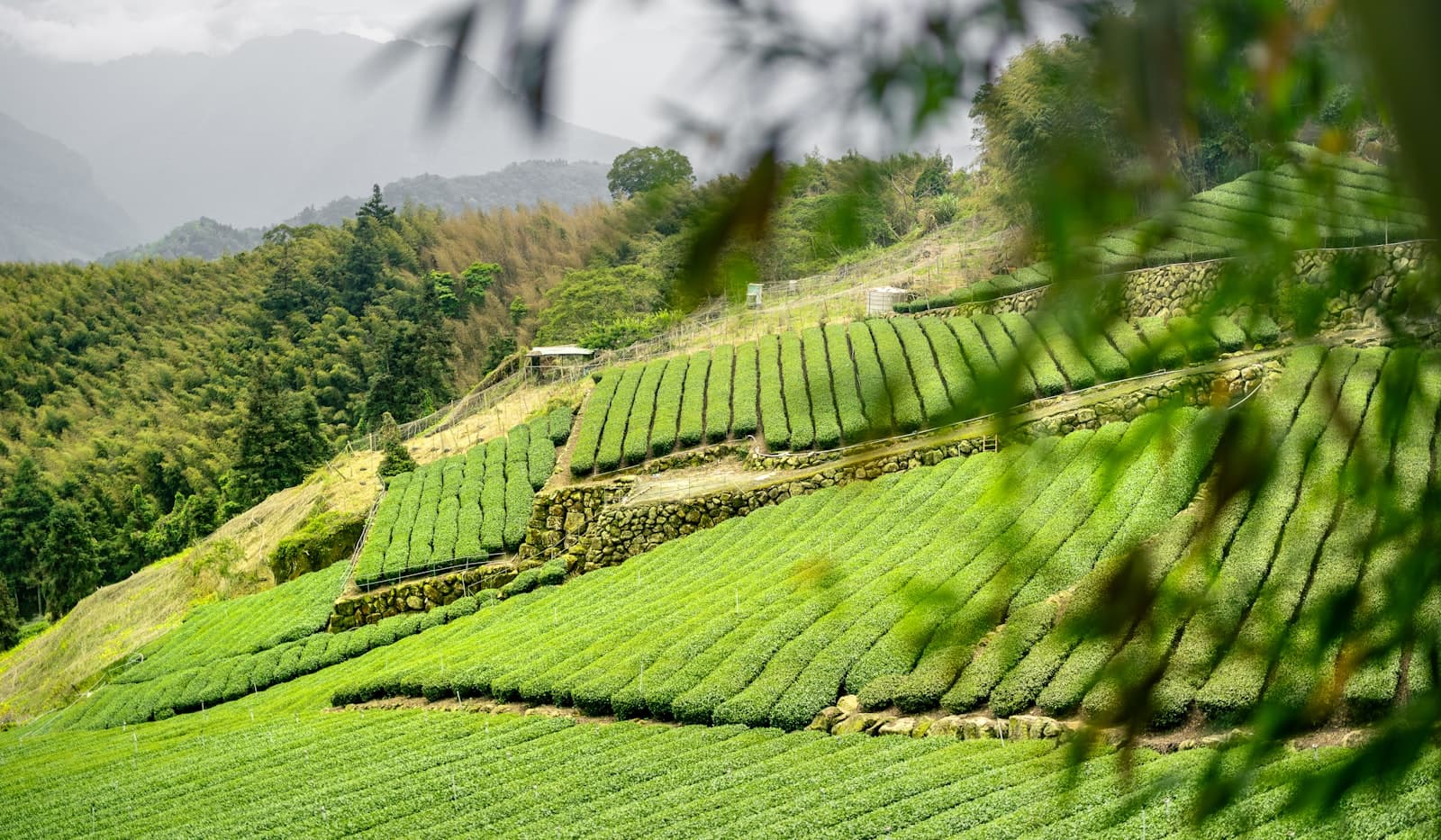
- Terraced plots on rugged highlands: grown on stone terraces in dry mountains at 1,500–2,400m
- A treasury of heirloom varieties: distinctive native varieties that evolved over long isolation
- Traditional natural process: with scarce water, the basic method is sun-drying the whole cherry
They are often confused: the botanical home of coffee is Ethiopia, while Yemen is where the “drink culture” of growing, roasting and brewing — and the trade — was first systematized. In the 15th–16th centuries, Sufi (Islamic mystic) practitioners used it to stay awake, which is said to be the starting point of its spread.
The three meanings of the word “Mocha”
“Mocha” is a polysemous word whose meaning shifts with context. Let’s sort it out, since it is a common source of confusion.
- ① The port: Yemen’s trading port of Mokha (Al-Makha). The word originates here
- ② A name for the coffee: Yemeni beans shipped from that port, and by extension Ethiopian beans too
- ③ A drink name: coffee with chocolate added (a caffè mocha)
Why did “mocha” come to mean “chocolate flavor”? Because Yemen’s Mocha coffee strongly carried a sweet flavor reminiscent of cacao and chocolate to begin with. That impression stuck in the word, and later led to the habit of calling “coffee with chocolate” a mocha. Trace the etymology and you find a memory of taste inscribed in a place name.
Mocha-Java — the world’s oldest blend
The classic blend that survives in coffee history, “Mocha-Java,” also has this port as its stage. It pairs the wild, fruit-forward Yemeni Mocha with the heavy, settled coffee of Java in Indonesia — the archetype of combining two contrasting coffees. It is said to date from the Age of Sail, when the Dutch began cultivation in Java and sold those beans alongside the Mokha-shipped ones.
Flavor profile — “wild” and complex
In a word, Yemen Mocha tastes “wild and complex.” It is the opposite of the clean clarity of a washed coffee — a dense, unpredictable flavor born of the land and fermentation.
- Wine, fermented notes: a deep, swaying acidity and sweetness like ripe fruit or wine
- Dried fruit: the concentrated sweetness of raisins, dates and dried figs
- Chocolate, cacao: the bittersweet finish that gave “mocha” its name
- Spice, earth: complex nuances of cinnamon, tobacco and soil
- Distinctive for better or worse: a coffee to enjoy for its depth and ruggedness over cleanliness
Yemen Mocha is not a “tidy honor student” but a “characterful specialty.” To fans of bright, fruity African coffee it can feel provocative; to those seeking deep, complex flavors it looks one of a kind. Start around a medium roast and savor that distinctive fermented note and chocolate finish.
Major regions and names
Yemeni beans traditionally trade under a region name as the “brand” rather than a farm name. Here are the representative ones.
- Mattari: the Bani Matar district west of the capital Sana’a. The most famous — powerful fruit and chocolate
- Sanani: a general name for the area around Sana’a. Balanced and slightly gentler
- Hraazi (Haraz): the western highlands. Highly rated lately for its florals and complexity
- Ismaili: a classic name for small, concentrated beans
“Mocha Mattari” is from Yemen; “Mocha Harrar” is from Ethiopia. The similar names get confused, but they are beans from different countries. Ethiopia’s Harrar is also a wild, naturally dried, popular coffee, but its origin differs from Yemen’s Mattari. For Ethiopia’s character, see our Ethiopia Yirgacheffe article.
Processing — drying on the rooftop, a natural
Yemen has little rainfall and scarce water, so the washed process — rinsing off the fruit with water — is not realistic. Harvested cherries are spread directly on rooftops and stone terraces and slowly dried in the sun: the traditional natural (sun-drying). The fruit’s sugars migrate into the bean, creating that rich fermented depth and sweetness. Drying tends to be uneven, and the beans are small and irregular in shape. Boiling and drinking the husk as “qishr” is another bit of dry-land wisdom that wastes nothing of the fruit.
Why it is rare and expensive
Yemen Mocha is one of the most expensive coffees in the world. The reasons are not only about taste.
- Water scarcity and harsh conditions: terraces relying on rainfall alone, with very low yields
- Competition with qat: farmland is often taken by the more profitable stimulant plant qat
- Conflict and logistics: a long civil war has destabilized production and export infrastructure
- Entirely by hand: terraces on steep slopes can’t be mechanized — harvest and drying are all manual
- Low yield × high demand: with so little to go around, prices for high-quality lots soar
The modern revival — Qima Coffee and the new variety “Yemenia”
Long seen as merely an “old origin,” Yemen began a dramatic revival in the late 2010s. The true story of Mokhtar Alkhanshali, a Yemeni-American young man who smuggled beans out under civil war, is known worldwide as the nonfiction book “The Monk of Mokha.” Through efforts by Qima Coffee and others, a new variety lineage native to Yemen, “Yemenia,” has been academically identified, and Yemeni coffees have scored among the world’s highest at international competitions. The reputation is flipping from “historical origin” to “cutting-edge specialty origin.”
FAQ
If it says “Mocha,” is it from Yemen?
Not necessarily. Today “mocha” is used widely not only for Yemeni beans but also for Ethiopian beans, which share the history of shipping from the same port. To know whether it is really Yemeni, check for Yemeni region names like “Mattari,” “Sanani” or “Hraazi,” or the country of origin on the label.
What is the difference between Mocha Mattari and Mocha Harrar?
The origin differs. Mocha Mattari is from the Bani Matar district of Yemen; Mocha Harrar is from the Harrar region of eastern Ethiopia. Both are wild, fruit-forward naturals, but the countries and varieties differ. Beware the confusion caused by the similar names.
What brewing method suits it?
To savor the character, hand drip or a French press is recommended. Because the beans are small and irregular, start a touch coarser on the grind and adjust. Around a medium roast it is easy to balance the chocolate and the fermented note; roast it darker and a bittersweet, weighty depth stands out.
How did coffee spread across the world? On the very first page of that story sits Yemen’s port of Mokha. A cup of Mocha Mattari is a drink that contains not just flavor but centuries of trade history. Next time you spot the word “mocha,” picture the terraces facing the Red Sea and the red cherries drying on a rooftop.
Was this article helpful?
Choose & compare
Related links
More articles
The Coffee Variety Family Tree — Reading the “Genealogy” That Begins with Typica and Bourbon
BeansThe Coffee Belt and Terroir — Why Coffee Grows Only in the “Equatorial Band,” and Why Each Origin Tastes Different
BeansThe Science of Coffee Acidity — What Fruitiness Really Is, and How It Differs from “Sour”
BeansTaiwan Coffee Deep-Dive: The Tea-Like Cup Born of Alishan’s High Mountains