The Coffee Belt and Terroir — Why Coffee Grows Only in the “Equatorial Band,” and Why Each Origin Tastes Different
The geography of the growing zone between the tropics, and the science of the “taste of place” shaped by altitude, climate, soil and shade trees
A bag of coffee lists the country, the region and the altitude. Why does that information govern the taste? The answer lies in the “coffee belt” and “terroir.” Coffee cannot be grown just anywhere — only in a narrow band straddling the equator, between the tropics. And even within that band, the conditions of the land — altitude, climate, soil, shade trees — make decisive differences in the cup. Using “terroir,” a concept borrowed from wine, we unravel how each origin’s character is born, through geography and botany. This is the foundation piece beneath every origin deep-dive.
Contents · 9
- What is the coffee belt — the band between the tropics
- What is terroir — a word borrowed from wine
- Altitude — why “higher is better” is said
- Climate — rain, the dry season, and the day-night swing
- Soil — why so many origins have volcanic ash soil
- Shade trees and the ecosystem
- Terroir shows in the taste — an origin’s “fingerprint”
- Climate change and the future of the coffee belt
- FAQ
Pick up a bag of coffee and it usually reads, like “Ethiopia Yirgacheffe, 1,900m,” with country, region and altitude. It closely resembles a wine label. Why is coffee so eager to tell you “where it was grown”? Because coffee is not a plant that grows anywhere on Earth, but only in a very limited band — the “coffee belt” — and because, even within that band, the taste changes completely with the conditions of the land. This article unravels, from the ground up, coffee’s growing geography and the workings of the “terroir” that gives each origin its character. It is the piece that teaches you how to read the map before you read any individual origin guide.
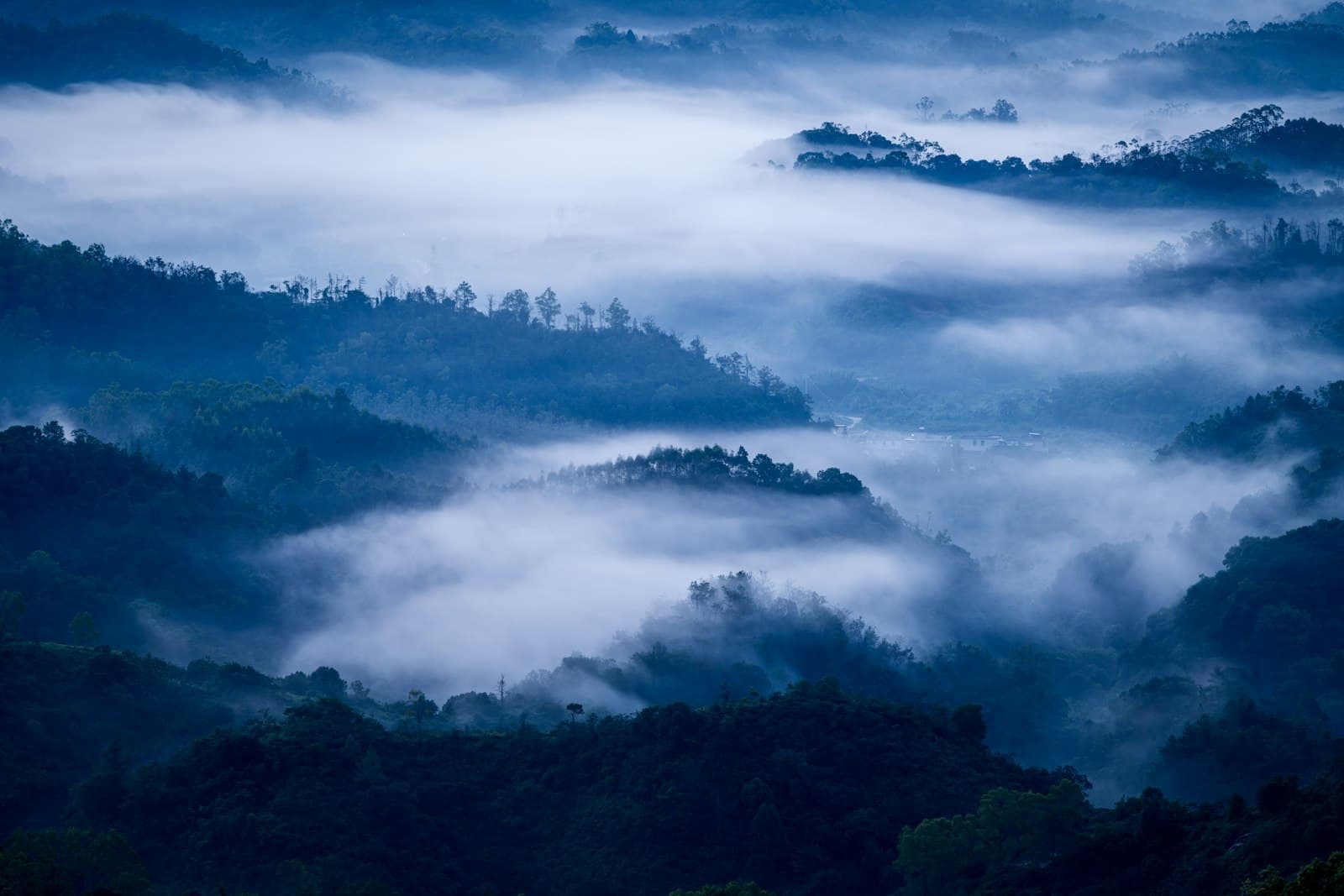
What is the coffee belt — the band between the tropics
Plot the world’s major coffee origins on a map and a single band centered on the equator emerges. This is the growing zone called the “coffee belt” (coffee zone), falling roughly between the Tropic of Cancer (about 23.5°N) and the Tropic of Capricorn (about 23.5°S). It spreads across the tropics and subtropics of Latin America, Africa and Asia-Pacific, and the countries that produce coffee number roughly 60–70 worldwide. Brazil, Vietnam, Colombia, Ethiopia, Indonesia — all are residents of this band. Why must it be this latitude? The reason lies in the delicacy of the coffee tree.
- Temperature: coffee is very vulnerable to frost. Outside the belt (temperate zones), winter cold and frost kill it. Year-round warmth of the tropics and subtropics is essential
- No extreme seasons: rather than places with sharp four seasons, the tropics — with their gentle cycle of wet and dry — suit coffee’s rhythm of flowering and fruiting
- Sunlight: the stable sunshine near the equator supports photosynthesis and fruit ripening. But it dislikes overly strong direct sun (hence the shade trees below)
- Rainfall: it needs both enough rain (roughly 1,500–2,500mm a year) and a dry season for harvest and drying. The regions meeting these conditions are distributed as a band
The coffee belt further divides into two “sub-zones.” The high, cool highlands are the domain of the delicate arabica, and the low, hot, humid areas are the domain of the hardy robusta. Even within the same belt, the “vertical axis” of altitude separates species and taste — this is the first key to coffee geography.
What is terroir — a word borrowed from wine
“Terroir” is a French word long used in the world of wine, expressing the idea that the total environment in which grapes grow — soil, altitude, terrain, climate, sunlight, and the human hand — becomes the wine’s character itself. In recent years it has become clear that this concept applies to coffee just as neatly. Even with the same arabica species, the taste born in the Ethiopian highlands and on the hills of Brazil is utterly different. Same variety, yet change the land and it becomes another drink. Coffee’s “origin character,” pushed to its root, is an expression of terroir. From here we look in turn at the main elements that make up terroir — altitude, climate, soil and shade trees.
Altitude — why “higher is better” is said
The element of terroir that most affects taste is altitude. You have surely heard the phrase “the higher-grown the coffee, the better.” For arabica this is largely true, and the reason is plain. The higher the altitude, the lower the temperature and the larger the day-night temperature swing. The cherries then ripen slowly over time, and during that time they store up plenty of sugar, acid and aroma precursors. Furthermore, beans grown in a cool environment have dense, hard tissue and turn more readily into complex flavor when roasted. In Central America this idea of “high-grown = high quality” is even institutionalized as a grading by bean hardness (SHB = Strictly Hard Bean, and so on).
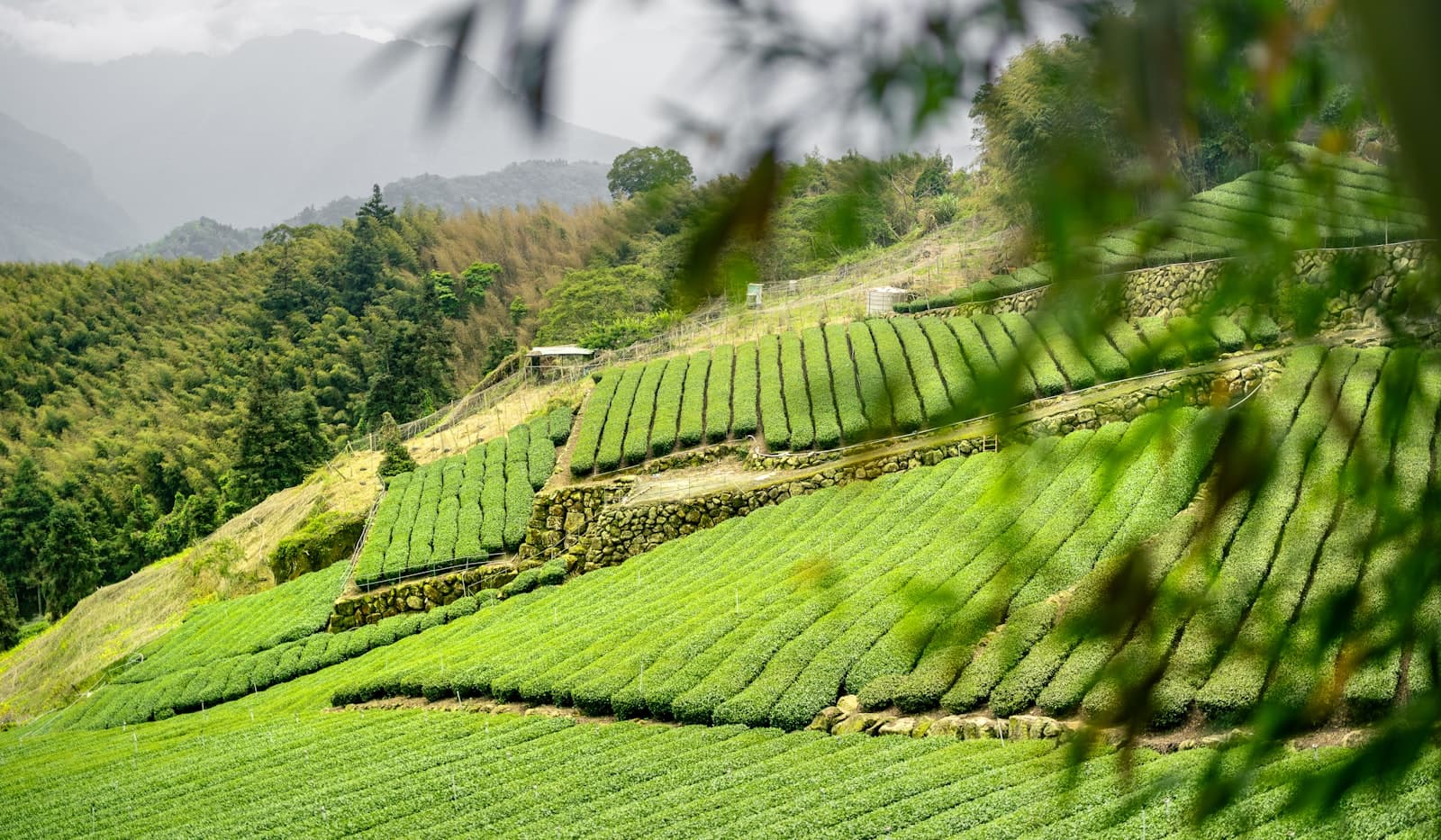
- Up to 900m (lowland): the domain of robusta and commercial arabica. Body, but restrained acidity and complexity. High yield
- 900–1,200m (mid-altitude): the balanced type. Many Brazilian origins and gentle nutty, chocolatey beans
- 1,200–1,600m (high-grown): the main battlefield of specialty. Bright acidity, sweetness and clear character come aboard
- 1,600m and up (very high): parts of Ethiopia, Kenya, Colombia, Yemen and more. Delicate and complex, with standout floral and fruit aromatics
That said, “high altitude means unconditionally delicious” is false. Altitude is only one of the “necessary conditions” for quality. Only when the choice of variety, the processing, and the match with roast level all come together does the benefit of altitude reach the cup. The meaning of altitude-based grading is also explained in specialty grading.
Climate — rain, the dry season, and the day-night swing
The coffee tree is made to flower by rain, and made to ripen and be harvested by the dry season. That is exactly why a climate with a clear contrast of rainy and dry seasons is ideal. Moderate rain (1,500–2,500mm a year) supports growth, and rain in the flowering period sets the fruit. Then the dry season around harvest concentrates the cherries into sweetness and makes sun-drying possible. Also important is the day-night temperature swing (diurnal range) touched on under altitude. By day, photosynthesis makes sugar; by the night’s chill, its consumption is held down. The larger this “make by day, store by night” cycle in an origin, the more sugar and acid accumulate in the bean, giving the taste depth and complexity. High-altitude places right on the equator tend to become fine origins because this rhythm repeats stably all year.
- Rainfall: 1,500–2,500mm a year is the guide. Too much invites disease and fruit drop
- A clear dry season: essential for harvest and drying. Quality control is hard where there is no dry season
- Day-night temperature swing: the larger it is, the more sugar and acid accumulate, and the more complex the flavor
- Optimal temperature: arabica prefers a cool 15–24°C. High heat raises the risk of leaf rust and other diseases
Soil — why so many origins have volcanic ash soil
Overlay a map of coffee’s fine origins with a map of the world’s volcanic belts and they match to a startling degree. Guatemala, Costa Rica, Colombia, El Salvador, Indonesia, and Ethiopia’s Great Rift Valley — all are regions with volcanic soil. This is no coincidence. Soil derived from volcanic ash (andisol) drains well and holds air readily, while also having the power to retain moisture and nutrients, creating the environment coffee roots most prefer. Furthermore, it is rich in minerals such as phosphorus, potassium and trace elements, and its slightly acidic quality is ideal for the coffee tree. In exchange for the threat of eruption, volcanoes have laid out the world’s finest coffee fields at their feet.
Volcanic soil is valued not simply because it is nutrient-rich. Good drainage prevents root rot, moderate water retention carries the plant through the dry season, and gentle acidity aids mineral uptake — this exquisite balance is the key. The Andes of Colombia, the volcanic highlands of Indonesia, and the volcanoes of Central America are celebrated growing regions because the foundation of their terroir is superb.
Shade trees and the ecosystem
Terroir is shaped not only by a land’s natural conditions but also by the method of cultivation. The representative example is the “shade tree.” The coffee tree is originally a plant that grows in the understory of a forest and is not fond of strong direct sunlight. So in many traditional origins, tall trees such as banana and legumes are interplanted in the coffee field, and coffee is grown under dappled light. This “shade-grown” approach carries great meaning for both taste and environment. Shade softens sudden temperature changes, ripening the cherries even more slowly and deepening flavor. At the same time, the trees become homes for birds and insects, fallen leaves enrich the soil, and the whole farm functions as a single ecosystem.
- Slow ripening: shade stabilizes temperature, and cherries ripen over time, storing sugar and acid
- Biodiversity: it becomes habitat for migratory birds and native species — the background of “bird-friendly” certification
- Soil conservation: fallen leaves become organic matter, and tree roots prevent soil runoff. Dependence on chemical fertilizer falls
- Trade-off: shade growing tends to lower yield. The choice against yield-first “sun-grown” is where an origin’s philosophy shows
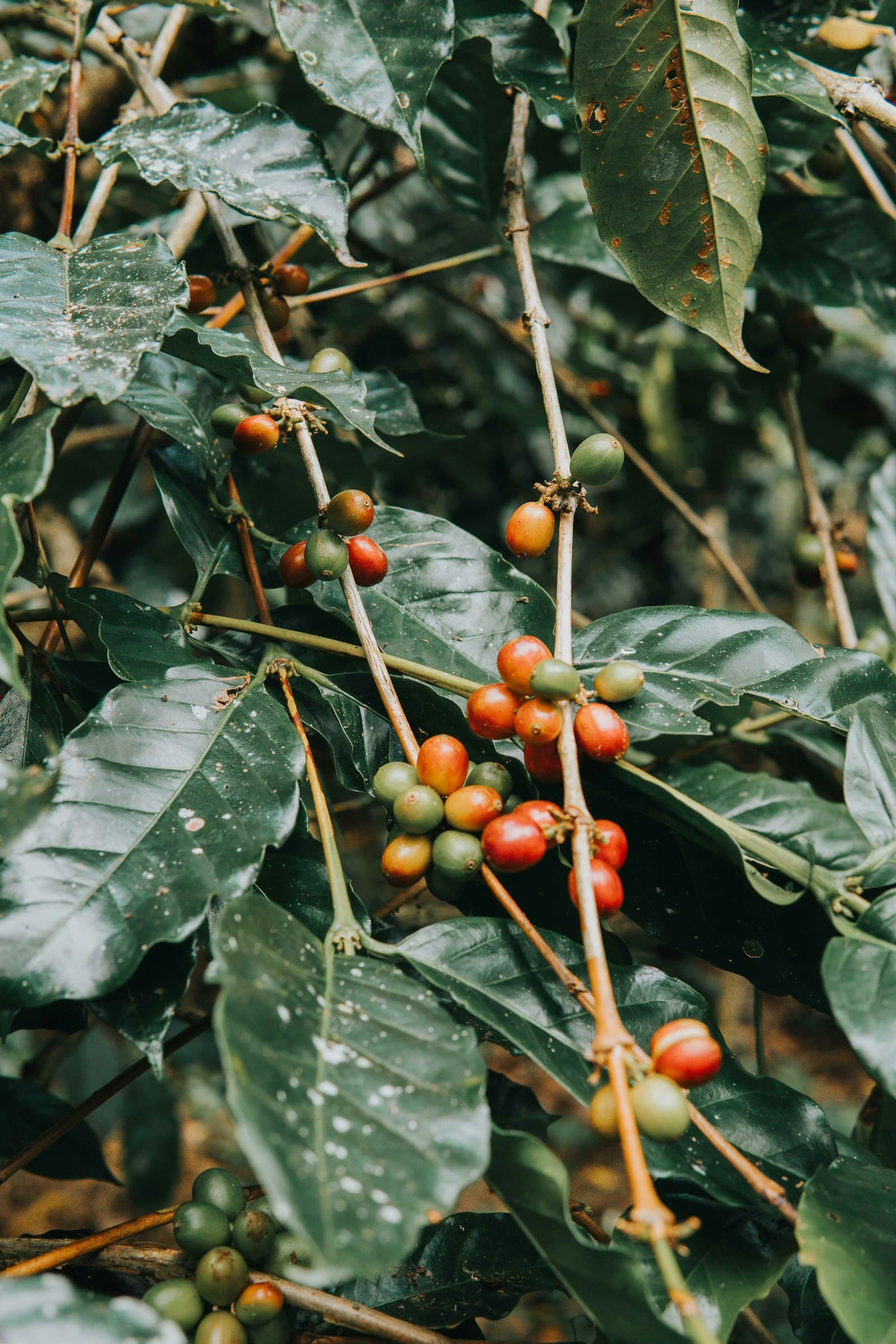
Terroir shows in the taste — an origin’s “fingerprint”
The elements so far — altitude, climate, soil, shade trees — combine to produce each origin’s “taste fingerprint.” Viewed broadly at the continental level, terroir’s differences show in the taste with startling clarity. Of course, taste also moves with variety and processing method, but beneath them always lie the conditions of the land. Even the same “washed arabica” becomes an entirely different cup in the East African highlands and on the hills of Brazil.
- Africa (Ethiopia, Kenya, Rwanda): the bright acidity and gorgeous floral, fruity aromatics that high altitude and a large temperature swing produce. Suggestive of black tea, berries and citrus. The difference between Ethiopia and Kenya is a prime example
- Latin America (Colombia, Guatemala, Costa Rica, Brazil): the cleanliness and balance of volcanic soil. Caramel, nuts, chocolate, gentle citrus. The “reference taste” loved by all
- Asia-Pacific (Indonesia, India, Papua New Guinea): the heavy body and spicy, earthy aromatics that humid volcanic highlands and distinctive processing produce. A treasury of characterful cups
What backs up these “continental fingerprints” with numbers is our own Reading the World’s Coffee Through Data. Aggregating flavor data from 48 countries, terroir’s differences show up clearly in the statistics — for instance, only Asia is defined by spice and earthiness. When you want to compare origins side by side, try the comparison tool, too.
Climate change and the future of the coffee belt
Impossible to avoid in discussing terroir is climate change. Because the coffee belt rests on delicate conditions of temperature and rainfall, a slight rise in temperature or a disturbance of rainfall patterns moves the growing zones greatly. One study predicts that if warming continues at this pace, the land suitable for arabica could halve at most by 2050. Origins are moving their fields to higher altitudes, interest is rising in disease- and heat-resistant varieties and in fine robusta, and areas once unsuited to cultivation are emerging as new origins — the map of the coffee belt is quietly being rewritten even now. That we can enjoy a cup’s terroir at all is itself becoming no longer a given.
Climate change strikes producers’ livelihoods directly. Knowing the meaning of certifications (fair trade, organic, Rainforest and so on) that support sustainable cultivation is also a step toward protecting terroir’s future.
FAQ
How many countries are in the coffee belt?
Roughly 60–70 countries worldwide grow coffee commercially. All fall between the Tropic of Cancer and the Tropic of Capricorn (the band of about 23.5° north and south of the equator), distributed across Latin America, Africa and Asia-Pacific. In production, Brazil and Vietnam stand out, followed by Colombia, Indonesia and Ethiopia. Our origin guide records the terroir of 48 of these countries and 144 regions.
Why is almost no coffee harvested in Japan?
Because most of Japan lies outside the coffee belt (in the temperate zone), and winter cold and frost keep the coffee tree from growing. The exceptions are Okinawa, the Ogasawara Islands and parts of Kagoshima, where small-scale production makes use of a subtropical climate. But with typhoon impacts and high labor costs, it is hard to reach commercial scale. Recently, attempts at domestic cultivation have grown against the backdrop of warming, but origins that balance taste and volume are still limited.
Are higher-grown beans really more delicious?
For arabica it is “largely true,” but it is not decided by altitude alone. High altitude has a large day-night temperature swing, and beans ripen slowly and store sugar and acid, so they do tend to become complex and bright — that is a fact. But quality is decided by the total of variety, processing, cultivation management and roasting on top of altitude. And for robusta, which favors the lowlands, this yardstick does not apply in the first place. Think of “high-grown” as merely one strong clue.
Does terroir disappear with roasting or brewing?
The more deeply you roast, the harder the delicate character from terroir becomes to discern, covered by the roast aroma. If you want to taste the floral and fruity aromas and bright acidity — the “expression of the land” — a light-to-medium roast is favorable. A dark roast, conversely, makes the roast flavor the lead over origin differences. In brewing, too, brew at a proper water temperature and yield and the character comes out plainly, but if extraction is off the taste of the land is ruined. Terroir does not so much “disappear” as “appear or hide depending on how you draw it out.”
Why are beans from volcanic origins rated so highly?
Because soil derived from volcanic ash (andisol) is ideal for coffee cultivation. It drains well and prevents root rot, while its moderate water retention supports the plant through the dry season, and it is rich in minerals such as phosphorus and potassium. Its slightly acidic quality also suits the coffee tree. Many celebrated origins such as Guatemala, Costa Rica, Colombia and Indonesia lie in volcanic zones because of this superb soil foundation. Of course, the rating is decided not by volcanoes alone but by the combination with altitude and climate.
Will climate change make coffee undrinkable?
It will not become “undrinkable,” but the origins, the quality and the price will certainly be affected. Warming shrinks the land suitable for arabica, and moves toward higher altitudes, toward disease- and heat-resistant varieties, and toward fine robusta are advancing. While new origins rise, traditional celebrated origins may take a blow. Choosing certified coffee that supports sustainable production is one of the ways a consumer can help against this future.
The country name and altitude written on a bag of coffee are not mere origin labels. They are terroir’s “address” — woven from the planetary condition of the equatorial band and the altitude, climate, soil and cultivation. The next time you brew a cup, picture what latitude, what mountain, what soil that bean came from. When you can see the geography behind the taste, coffee becomes far more interesting. Begin the journey of terroir by opening the origin guide for a country that intrigues you.
Was this article helpful?
Origins in this article
Choose & compare
Related links
More articles
The Coffee Variety Family Tree — Reading the “Genealogy” That Begins with Typica and Bourbon
BeansThe Science of Coffee Acidity — What Fruitiness Really Is, and How It Differs from “Sour”
BeansTaiwan Coffee Deep-Dive: The Tea-Like Cup Born of Alishan’s High Mountains
BeansPhilippine Coffee Deep-Dive: A Country of Four Species and the Story of the Rare Liberica, "Barako"