The Science of Coffee Acidity — What Fruitiness Really Is, and How It Differs from “Sour”
From chlorogenic acid to the organic acids, what separates bright acidity from unpleasant sourness — how acidity moves with origin, roast and extraction
Some acidity is praised as “fruity and gorgeous”; other acidity is shunned as “sour and hard to drink.” Coffee’s acidity is its most misunderstood flavor dimension. What separates these two? What do the organic acids in coffee — citric, malic, chlorogenic, acetic — each taste like? And how does acidity move with origin, altitude, roast and extraction? We unravel, from a chemical viewpoint, the boundary line that divides “bright acidity” from “unpleasant sour.” Those who master acidity master coffee.
Contents · 9
- Coffee is a “fruit” — the source of the acid
- “Bright acidity” and “sour” are different
- The main acids in coffee
- Acidity changes with origin and variety
- What happens to acid in roasting
- Controlling acid through extraction
- Acidity and the stomach — is “sour = bad for the stomach” true?
- Training to “taste” acidity
- FAQ
“Fruity, gorgeous acidity” — in the world of specialty coffee it is the highest praise. Yet that same word, “acidity,” is generally also used with the negative meaning of “sour and hard to drink.” This very discrepancy is why coffee’s acidity is the most misunderstood. What is the difference between good acidity and bad? Where does coffee’s acid come from in the first place, and how does it change with origin, roast and brewing? This article untangles coffee’s acidity from both a chemical and a sensory angle. Understanding acidity is a shortcut to raising your coffee resolution a notch.
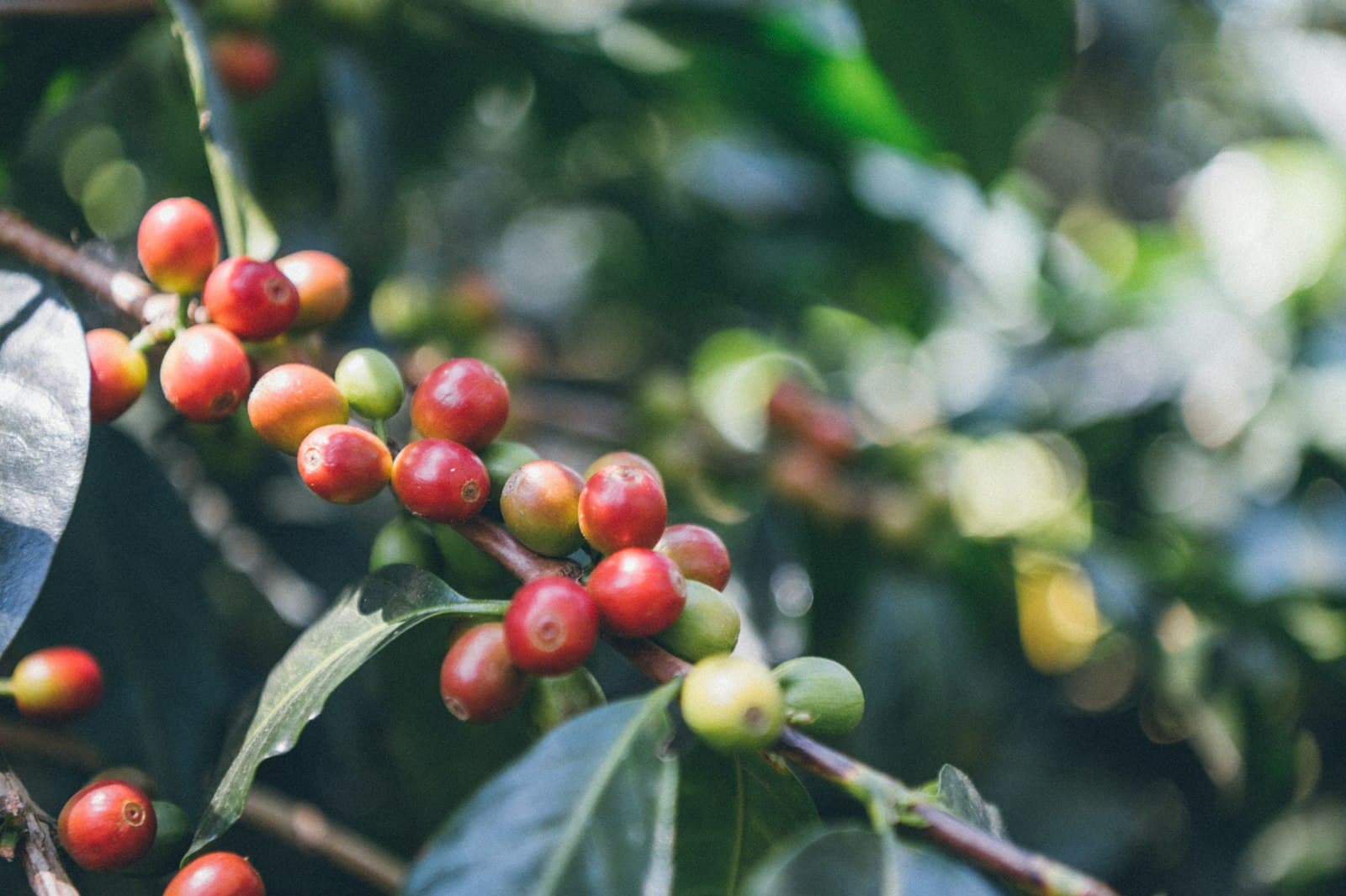
Coffee is a “fruit” — the source of the acid
A coffee bean is, to begin with, the seed of a fruit called the coffee cherry. Just as apples and grapes have acidity, it is only natural that coffee, being a fruit, contains natural acids. What we drink is, so to speak, “a drink made by roasting and extracting the seed of a fruit.” At the green-bean stage it contains various acids led by chlorogenic acid, plus sugars, amino acids and lipids. Through the heat process of roasting, these break down, form and transform, finally appearing as the “acidity” in the cup. In other words, coffee’s acidity is neither a defect nor deterioration but the very nature of the fruit itself.
“Bright acidity” and “sour” are different
Here is the most important point. The “acidity” praised in specialty and the “sourness” generally disliked look alike but are different things. Good acidity is what brightens the mouth, draws saliva, and suggests fruit or wine — a lively quality expressed as “brightness” or “juiciness.” Bad sourness, on the other hand, is a stabbing sharpness like biting a lemon, or a pungent unpleasantness suggestive of spoilage. In many cases the latter is born from a bean’s defect or from a failure of extraction (especially under-extraction). In other words, many people who say “I dislike acidity” may in fact dislike not “good acidity” but “sourness from a brewing mistake.”
Acidity is not necessarily “sourness.” The acidity rated highly in professional cupping is a bright, sweet acid derived from malic and citric acids. Even at the same pH (the numeric value of acidity), the balance with sugar and other components can make it feel like a “refreshing acid” or “merely sour.” It is not the number but the overall harmony that decides the taste.
The main acids in coffee
Coffee contains dozens of acids, but the ones that affect taste are limited. Each has its own character, and as the blend changes with origin and roast, a diverse range of acidity is born. Let us look at the representative organic acids.
- Citric acid: a bright, sharp acid abundant in citrus fruits. Suggesting orange or lemon, it is pronounced in high-grown African coffees
- Malic acid: a mellow acid with sweetness, like apple or pear. The center of the “fruitiness” of fine coffees
- Acetic acid: in small amounts it lends fermentative complexity (the flavor of wine or natural processing); in excess it produces a pungent defect
- Phosphoric acid: a distinctive, sparkling acid often seen in Kenyan beans. Inorganic, it is one cause of brightness
- Lactic acid: a mellowness or creaminess like dairy. Strengthened by lactic-fermentation processing
- Chlorogenic acid (CGA): the most abundant acid in green beans. It is itself astringent and bitter-leaning, and breaks down in roasting (below)
Especially important is chlorogenic acid (CGA). It makes up several percent of the green bean’s dry weight and is known as coffee’s main antioxidant (a polyphenol). As roasting proceeds, CGA breaks down, transforming into quinic acid and caffeic acid. This becomes one cause of dark roast’s “bitterness.” In other words, a light roast retains much CGA and bright acid, while in a dark roast they have changed form into bitterness — acidity and bitterness are on a seesaw over the axis of roasting.
Acidity changes with origin and variety
The amount and quality of acidity are first largely decided by the origin’s terroir. As a premise, the higher the altitude and the larger the day-night temperature swing, the more acid (especially citric and malic) accumulates in the bean, making for a bright, sharp acidity. Conversely, low-grown origins with a gentle climate have mild acid and a body-leaning taste. Processing matters too: washed (wet) processing tends toward a clean, standout acid, and natural (dry) processing toward a rounded, complex acid from fermentation. The relationship between an origin’s geography and taste is explained in detail in The Coffee Belt and Terroir.
- Bright / strong acid: Kenya (sparkle of phosphoric and citric acid), Ethiopia (citrus, berry), high-grown Colombia, Central American high-grown. Often high-altitude and washed
- Mild / low acid: Brazil (nuts, chocolate), Sumatra (earthy and heavy), India, low-grown. Body- and richness-leaning
- Fermentative complexity: natural and anaerobic-processed beans. A mellow, deep acid like wine or tropical fruit
What happens to acid in roasting
The biggest axis for controlling acidity is roast level. The principle is simple: “the deeper the roast, the less acid and the more bitterness.” In a light roast, the origin’s citric and malic acids remain as they are, and a bright, fruity acidity comes to the fore. As roasting proceeds, these acids break down with heat, and at the same time chlorogenic acid transforms into bitter compounds. That acidity is barely felt in a dark roast is the result of this chemical change. So the basic strategy is to choose a light roast if you “want acidity,” and a medium-dark to dark roast if you “want to suppress acidity.” Keeping the map of roast levels in hand makes controlling acid much easier.
If you dislike acidity and are choosing beans, use as a guide: (1) medium-dark to dark roast, (2) low-grown origins (Brazil, Sumatra, etc.), (3) a medium-dark of a gentle washed rather than a natural. Conversely, if you “want to enjoy more gorgeous acidity,” a light roast of a high-grown origin (Ethiopia, Kenya) is the shortcut.
Controlling acid through extraction
Even with the same bean, how the acidity comes out changes greatly with how you brew. The key is “extraction (yield).” Coffee’s components dissolve in the order acidity → sweetness → bitterness. When extraction is insufficient (under-extraction), only the early-emerging acidity stands out, and you get a “merely sour” cup with no sweetness aboard. Conversely, extract properly and sweetness and richness join behind the acid, so the acid is felt pleasantly as “brightness.” In other words, most of “too sour” is solved not by reducing the acid but by advancing extraction to draw out sweetness. Raise the water temperature, grind a little finer, and lengthen the extraction time — this is the royal road to rounding off sourness.
- Raise the water temperature (90–93°C): components dissolve well, and sweetness and richness ride behind the acid
- Grind finer: contact area increases, extraction advances, and under-extracted sourness decreases
- Lengthen the extraction time: total extraction rises, and acid, sweet and bitter come into balance
- Rethink the ratio: too thin and only the acid stands out. Increasing the dose to raise concentration is also effective
Mistaking “sour = over-extracted” and lowering the water temperature or shortening the time is counterproductive. The true nature of a stabbing sourness is usually “under-extraction (insufficient extraction).” First raise the water temperature and grind a notch finer, testing in the direction of *advancing* extraction. For details see TDS and yield.
Acidity and the stomach — is “sour = bad for the stomach” true?
It is often said that “coffee’s acidity burdens the stomach,” but this is half right and half a misunderstanding. Coffee’s pH is around 5, and it is indeed mildly acidic. However, the cause of an upset stomach or discomfort is often said to be less the “acidity” felt by taste than the stimulation of gastric-acid secretion by caffeine, chlorogenic acid and other components. In fact, one cannot simply say that a low-acid dark roast is gentler on the stomach than a bright-acid light roast. For those concerned about the stomach, cold brew, a relatively mellow medium-dark, or decaf become options. Remember that the sourness of the taste and the effect on the stomach are not necessarily equal.
Training to “taste” acidity
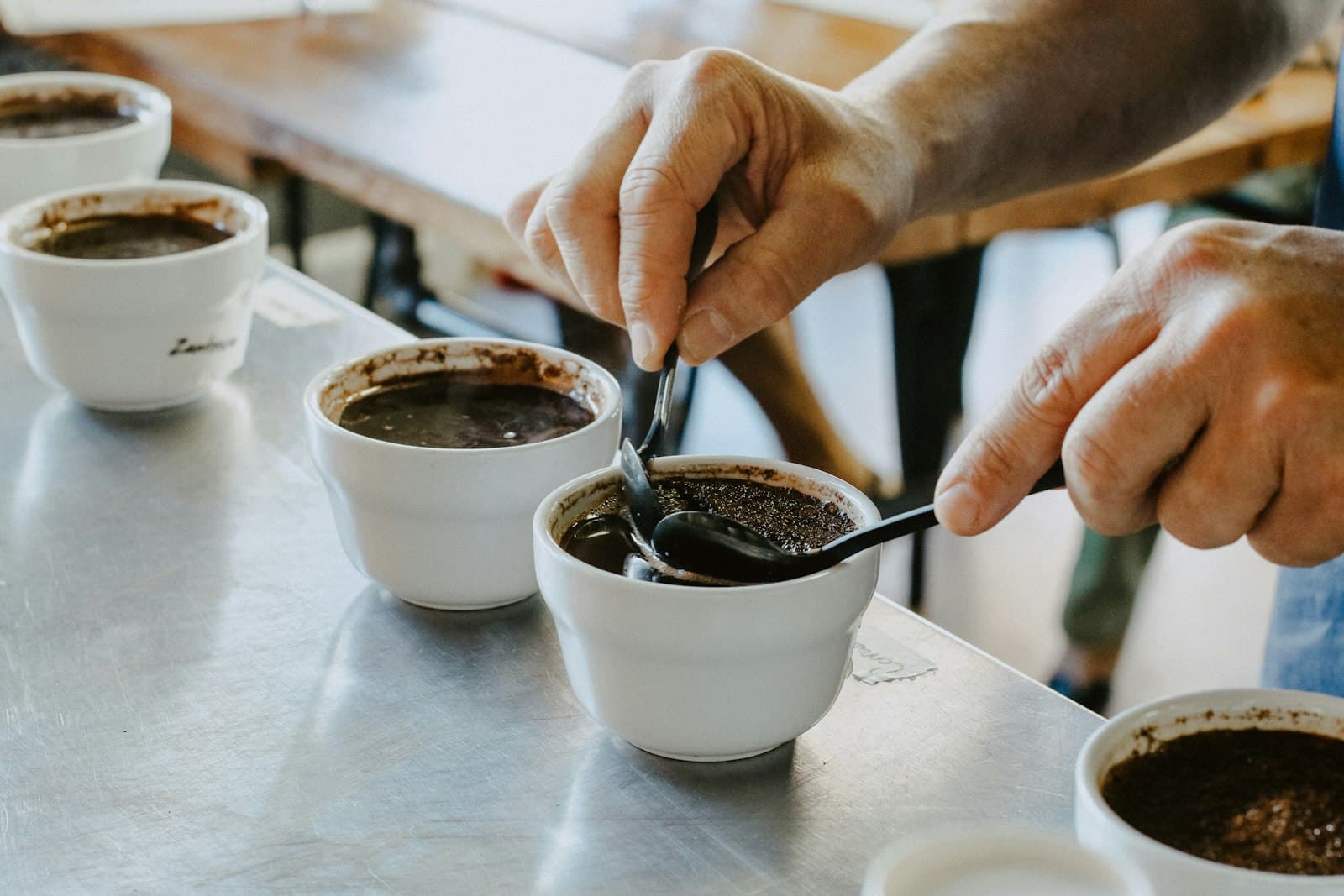
The shortest route to being able to enjoy acidity is deliberate practice at “tasting.” First, try drinking the coffee after letting it cool a little. While hot, bitterness is easy to notice; as it cools, acidity and sweetness become easier to discern. Spread a mouthful across the whole tongue, and put into words the place where you feel the acid (the sides of the tongue react readily) and its quality — is it citrus, apple, or berry? As you get used to it, comparing a light and a dark roast, an African and a Latin American, brings the difference in acid into three dimensions. The articles on finding your taste and cupping also help put flavor into words.
- Drink after cooling a little: as temperature drops, acidity and sweetness stand out, making quality easier to judge
- Put “what kind of acid” into words: liken it to a fruit — citrus, apple, berry, wine
- Compare: feel the difference in acid between light vs. dark, and Africa vs. Latin America
- View it together with sweetness: good acidity always comes with sweetness. If only the acid stands out, rethink the extraction
FAQ
Is coffee sour because it has oxidized or gone stale?
You need to distinguish two “sournesses.” One is the bean’s inherent “bright acidity,” which is a virtue of a fresh, fine bean. The other is a “deteriorated sourness” from lipids oxidizing after time has passed since roasting, which is an unpleasant defect. The latter occurs with old beans, or beans exposed to air, light and moisture after opening. If it is sour and stabbing even when freshly brewed, it is often not deterioration but “under-extraction.” On bean freshness, see freshness from roasting.
How do I choose a low-acid coffee?
Use three conditions as a guide and you won’t miss: (1) a medium-dark to dark roast, (2) a low-grown origin such as Brazil or Sumatra (Mandheling), (3) a gentle washed-type processing. If the label has words like “chocolate,” “nuts” or “roast,” it leans low-acid; if it has “citrus,” “berry,” “floral” or “juicy,” it is a bean with bright acid. If you’re unsure in the shop, the sure move is to ask, “Which is a low-acid, rich-bodied bean?”
Why is a light roast sour, and how do I make it easier to drink?
A light roast retains much of the origin’s citric and malic acid without breaking it down, so acidity comes to the fore. This is not a defect but the character of a light roast; if you feel it is “too sour,” reviewing the extraction is effective. Raise the water temperature to 90–93°C, grind a little finer, and extract thoroughly, and sweetness rides behind the acid to make it easier to drink. If you still dislike it, the right answer is to choose a medium roast or above without forcing it.
Why does acidity bother me more in iced coffee?
Because as temperature drops, people feel acidity more strongly and bitterness more weakly. An acid that was pleasant hot can stand out and feel “sour” when chilled. If you make it iced, either choose a medium-dark to dark roast with inherently mild acidity, or brew it strong and dilute with ice (the “flash-chill” method) to make the balance of acidity and concentration easier. If you prize mellowness, cold brew is also well suited.
Do “fruity” and “strong acidity” mean the same thing?
They overlap, but they are not the same. “Fruity” refers to the whole positive flavor in which acidity, plus a fruit-like aroma and sweetness, are in harmony. “Strong acidity,” on the other hand, is a state where the amount of acid is high, and without accompanying sweetness or aroma it can become “merely sour.” The ideal is “fruity,” with acid, sweet and aroma all present. Good acidity is not strong on its own but united with sweetness and a sense of fruit.
My stomach is weak — can I get along with coffee’s acidity?
With some ingenuity you can fully enjoy it. To ease the stimulation on the stomach, effective moves are: (1) a medium-dark to dark roast, (2) cold brew (low-acid, low-stimulation), (3) drink after a meal rather than on an empty stomach, (4) don’t drink too much at once. The “sourness” of the taste and the burden on the stomach do not necessarily match, and other components such as caffeine are involved. If the stimulation especially bothers you, consider decaf or reducing the amount. If discomfort persists, consult a doctor.
Coffee’s acidity is not a defect to avoid but a character to savor. What divides “sour” from “bright” is the quality of the bean, the roast, and how you brew. Once you properly experience good acidity, the world of coffee expands astonishingly. In your next cup, turn a little attention to the acid not as an “enemy” but as a “gift of the fruit,” and taste it. Beyond that brightness, the mountains and sun of the origin should come into view.
Was this article helpful?
Choose & compare
Related links
More articles
The Coffee Variety Family Tree — Reading the “Genealogy” That Begins with Typica and Bourbon
BeansThe Coffee Belt and Terroir — Why Coffee Grows Only in the “Equatorial Band,” and Why Each Origin Tastes Different
BeansPhilippine Coffee Deep-Dive: A Country of Four Species and the Story of the Rare Liberica, "Barako"
BeansEl Salvador Coffee Deep-Dive: The Sanctuary of Bourbon and the Volcanic Land That Created Pacamara