The Science of Roasting — Why a Green Bean Turns Into That Aroma and Color, from the Maillard Reaction to Second Crack
The three phases of drying, Maillard and development; the true nature of the cracks; the link between roast level and taste; and even roast defects, unraveled through chemistry and physics
Put a green (raw) bean in your mouth and it tastes nothing like the coffee we know — grassy, hard, more a dried nut than a bean. That toastiness, the deep color, the complex bitterness and sweetness are all created by a single application of heat called “roasting.” Roasting is cooking: at around 200°C it sets off several hundred chemical reactions at once, turning a nearly flavorless green bean into the “raw material of a drink.” This article traces what happens inside the bean — the three phases of drying, the Maillard reaction and development; the true nature of first and second crack; the link between roast level and taste; and even roast defects — through chemistry and physics. Once you understand roasting, both the roast level on the label and the way acidity shows up look completely different.
Contents · 11
- What roasting is — not “drying” but “cooking”
- The three phases of roasting — drying, Maillard, development
- Phase 1: drying — removing the “weight” of moisture
- Phase 2: the Maillard reaction and browning — the moment aroma is born
- First crack — why the bean goes “pop”
- Phase 3: development and DTR
- Second crack and the realm of the dark roast
- Roast level and taste — the seesaw of acidity, sweetness and bitterness
- Roast defects — the science of “failure”
- Why you “rest” a freshly roasted bean — degassing
- FAQ
Put a green (raw) coffee bean in your mouth and it tastes nothing like the coffee we know. It is grassy, hard — more like a dried nut than a bean. That toasty aroma, the deep color, the complex bitterness and sweetness are all created by a single application of heat called “roasting.” Roasting is cooking: at around 200°C it sets off several hundred chemical reactions at once, turning a nearly flavorless, odorless green bean into the “raw material of a drink.” This article traces what happens inside the bean during roasting — the three phases of drying, the Maillard reaction and development; the true nature of first and second crack; the relationship between roast level and taste; and even “roast defects” — from the viewpoint of chemistry and physics. Once you understand roasting, both the roast level on the label and the way acidity shows up look completely different.
What roasting is — not “drying” but “cooking”
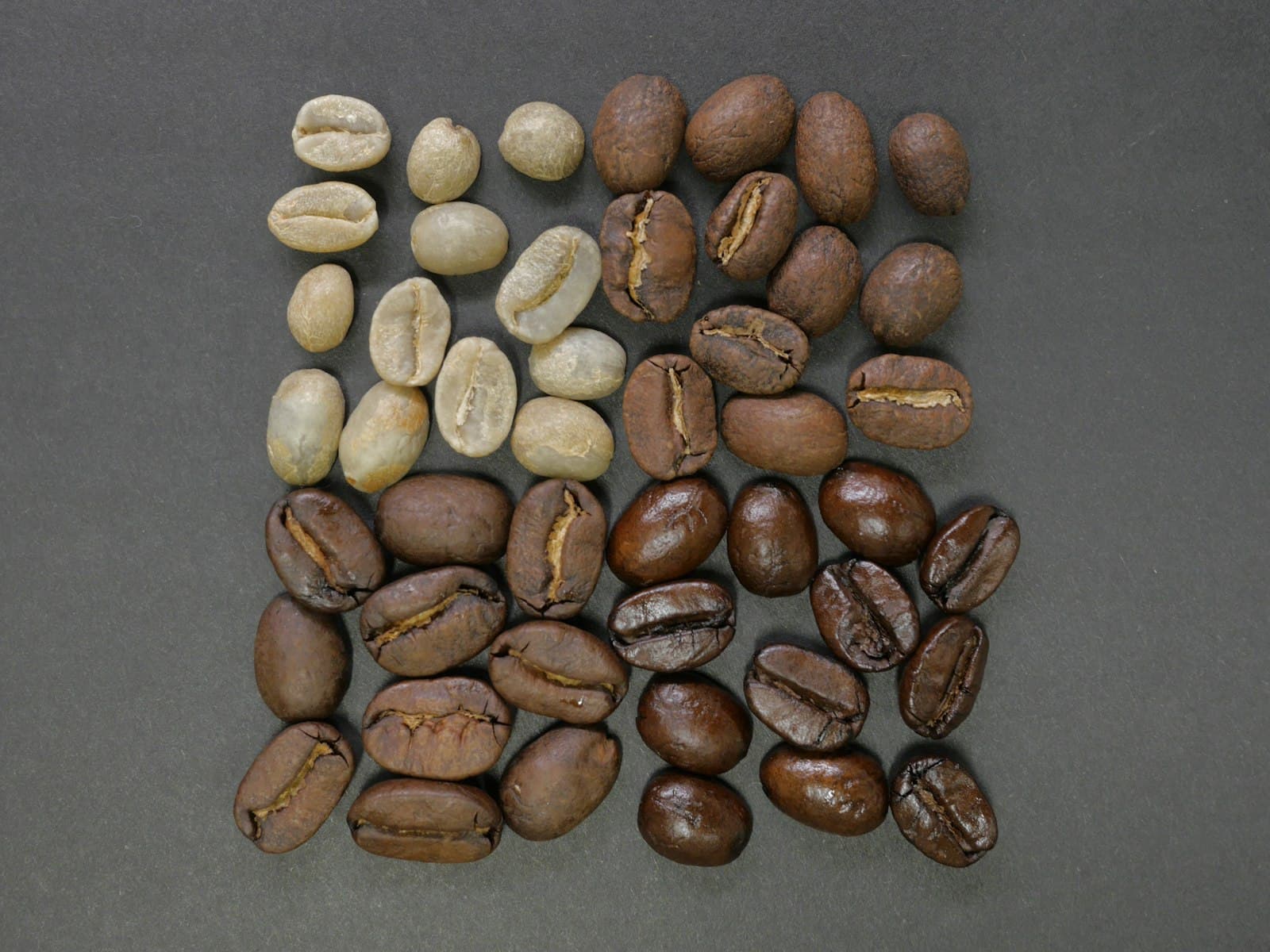
Plenty of people think of roasting as “a step that dries the bean.” It is true that a green bean holds 10–12% moisture and certainly dries out in the first half of the roast. But the essence of roasting is not drying; it is setting off countless chemical reactions inside the bean through heat — in other words, “cooking.” The sucrose, amino acids, chlorogenic acids, lipids and polysaccharides in the green bean break apart, recombine, and turn into entirely new molecules of aroma, color and taste under heat. The aroma compounds born in roasting are said to number 800–1,000 — a complexity rivaling wine and chocolate. Drawing out this world, which never appears in the raw bean, with heat alone, is the craft of roasting.
The three phases of roasting — drying, Maillard, development
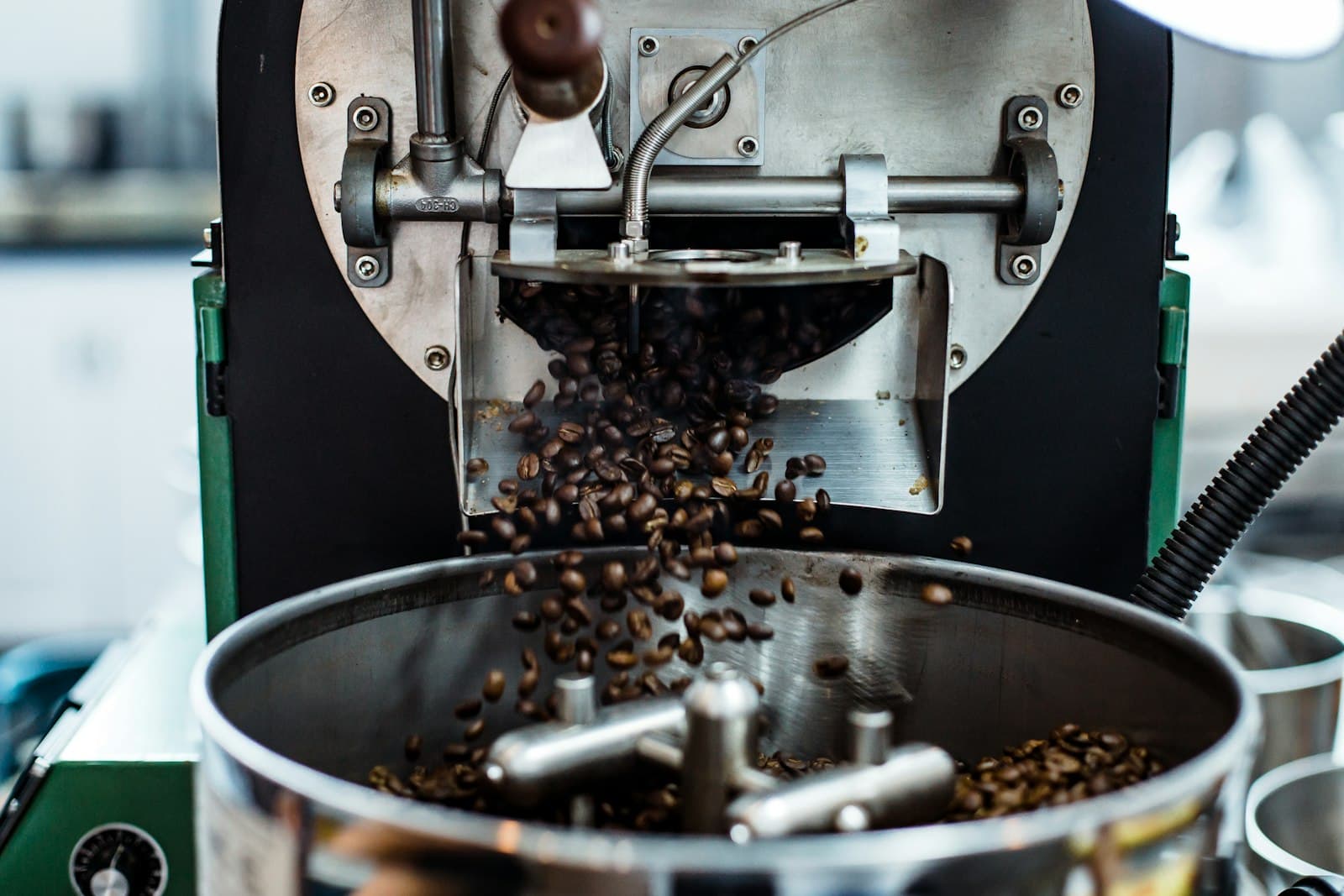
Inside a roaster or a pan, the bean passes through roughly three stages in order. First the “drying phase” that drives off moisture, then the “Maillard phase” where browning and aroma advance all at once, and finally the “development phase” where the skeleton of the taste is decided. By controlling the distribution of these three phases — where to spend time, where to raise the heat — the roaster “designs” the taste from the same bean: shallow or deep, bright or heavy. Let us first grasp the whole picture.
- Drying phase (up to about 150°C): the endothermic time when the bean loses moisture. Color goes from green to yellow. A grassy aroma rises. It occupies the first half of the roast
- Maillard phase (about 150–200°C): amino acids and sugars react and brown. A bread- or toast-like toastiness is born, and the bean goes from yellow to brown
- Development phase (after first crack): the most critical stretch, where the balance of sweetness, acidity and bitterness is decided. How far you extend it decides the roast level
The bean’s temperature during roasting has “landmark” bands that divide the taste. The Maillard reaction gets going in earnest around 150°C, “first crack” happens around 196°C, and “second crack” around 224°C. Roasters rely on a thermometer, a timer, and the bean’s color, sound and aroma precisely to catch these landmarks accurately.
Phase 1: drying — removing the “weight” of moisture
A green bean is about 10–12% moisture by weight. The first half of the roast is the time to evaporate this moisture. Because evaporating water steals a great deal of heat (heat of vaporization), the bean in the drying phase struggles to rise in temperature and becomes the most endothermic (heat-absorbing) stretch of the roast. The bean’s color shifts from a greenish raw-bean hue to gradually taking on yellow. Rush this stage and force the heat too high, and you scorch only the surface while the core stays underdone — a failure (the baking and underdevelopment described later). Removing the “weight” of moisture evenly and unhurriedly is the foundation of a good roast.
Phase 2: the Maillard reaction and browning — the moment aroma is born
Once the moisture has largely left and the bean’s temperature reaches around 150°C, the highlight of the roast — the “Maillard reaction” — gets going in earnest. The Maillard reaction is one in which amino acids (the building blocks of protein) and reducing sugars join under heat to produce brown pigments (melanoidins) and an enormous range of aroma compounds. The browning of toast, the sear on meat, the color and aroma of miso and soy sauce — all are products of the Maillard reaction, and coffee’s “toastiness” is born here too. At the same time, “caramelization,” in which the sugars themselves break down and polymerize, advances, adding sweet aroma, a gentle bitterness and brown color. At this stage the bean deepens rapidly from yellow to brown, and the aroma shifts from grass to nuts, bread and caramel.
- Melanoidins: brown pigments that carry part of the body, bitterness and viscosity. They increase the deeper the roast
- Aroma compounds: hundreds, including furans and pyrazines. The true source of nutty, roasty, chocolatey aromas
- Caramelization: the thermal breakdown of sugar. It produces sweet aroma, a light bitterness and brown color. A different reaction from Maillard, but it advances at the same time
- CO2 (carbon dioxide): generated in large amounts inside the bean as a by-product of the reactions, it becomes the star of the later “degassing”
The “Maillard reaction” and “caramelization” are often confused, but they are different things. Maillard is a reaction of amino acids plus sugar; caramelization is the thermal breakdown of sugar alone. Both produce browning and aroma, but the lead in coffee’s complex toastiness is Maillard. Roasters value the time allotted to this phase as “Maillard time” because how the aroma is built here governs the final depth of flavor.
First crack — why the bean goes “pop”
When the bean’s temperature reaches around 196°C, a dry bursting sound — “pop, pop” — begins. This is “first crack.” Steam and CO2 fill the inside of the bean from the Maillard reaction and caramelization, and their pressure finally breaks through the bean’s cell structure and bursts — the same physical phenomenon as popcorn popping. First crack is a decisive signal for the roaster. From here the bean enters the realm of “drinkable coffee,” and light roasts stop the roast just after to near the end of first crack. The bean swells in volume, the surface wrinkles smooth out, and the color turns a bright brown. This is also where acidity remains at its richest.
Phase 3: development and DTR
The stretch from when first crack begins to when you stop the roast is called “development.” This is the most delicate part of the whole roast, where the final skeleton of the taste — the balance of acidity, sweetness and bitterness, and whether heat has passed properly to the bean’s core — is decided. Roasters manage the share this development time occupies of the whole roast with an index called “DTR (development time ratio).” Generally, if the whole roast is 10 minutes, a DTR of 20–25% (i.e., 2–2.5 minutes from first crack) is the guide; too short and grassiness and a stabbing acidity (underdevelopment) remain, too long and the taste turns flat and dull (baking).
- Short DTR (up to ~15%): bright and gorgeous, but if underdeveloped, grass, unripe acidity and harshness tend to linger
- Standard DTR (20–25%): the go-to range where acidity, sweetness and bitterness balance easily
- Long DTR (30%+): it turns sweet and heavy, but extend it too far and the aroma escapes into a flat, “over-baked” taste
DTR is only a guide, not an absolute correct value. The optimum shifts with the bean’s density (i.e., altitude and variety), how the roaster transfers heat, and the roast level you aim for. Hard, high-grown beans take time for heat to penetrate, while soft lowland beans advance quickly — the same DTR gives a different result with a different bean. The number is a starting point; in the end, reading the bean’s state with your senses is what roasting is.
Second crack and the realm of the dark roast
As development advances and the bean’s temperature reaches around 224°C, a higher, finer “crackle” than first crack — “second crack” — begins. This is the sound of the bean’s fibrous (cellulose) skeleton itself breaking under heat, and from here the bean enters the realm of the dark roast. A feature around second crack is that lipids (oil) seep out onto the bean’s surface and it begins to shine. Full City is the start of second crack, French is mid-second-crack, Italian is just past it — the dark roast is decided by “how far you push” this second crack. The deeper you go, the more acidity is lost, and the bitterness, body and smokiness derived from Maillard and caramel come to the fore. But the realm beyond second crack chars all at once if temperature control slips, with even a risk of ignition, making it the most nerve-wracking stretch as well.
A bean grows lighter with roasting. Because moisture leaves and organic matter breaks down and is lost as gas, the rate of loss (weight-loss / loss ratio) grows larger the deeper the roast. It is around 13% of the green weight for a light roast, and not unusual to exceed 20% for a dark roast. From the same weight of green beans, a dark roast yields fewer roasted beans — that is, a dark roast “shrinks.” This is a useful yardstick both when a roaster builds costs and recipes, and when we weigh beans to brew. The deeper the roast, the more porous, light and brittle the bean, and the more readily it absorbs water — so even at the same grind and the same grams, extraction behaves differently.
Roast level and taste — the seesaw of acidity, sweetness and bitterness
Why does the taste change when the roast level changes? The key is that each component has a different “strength against heat.” Fruity acids (chlorogenic acid and its breakdown products) are relatively weak to heat and break down and diminish the deeper the roast. Meanwhile bitterness, body and melanoidins derived from Maillard and caramel increase the deeper the roast. Sweetness sits in between, often felt most richly around a medium roast. In other words, roast level is a choice of where to stop the “seesaw” of the two axes of acidity and bitterness. Shallow and acidity and aroma lead; deep and bitterness and body lead; and between them is a peak of sweetness — hold this relationship in mind and you can read the taste from the roast level on the label.
- Light roast (light–medium): bright acidity, floral, fruity, black-tea aromas. The bean’s character (terroir) shows most
- Medium roast (high–City): the balanced type of acidity, sweetness and bitterness. The gentle sweetness of nuts, caramel and chocolate
- Medium-dark roast (Full City): sweetness and body grow, and acidity recedes. It also pairs well with milk
- Dark roast (French–Italian): bitterness, weight and smokiness lead. Suited to espresso and café au lait
The reason the same bean becomes a different thing at a different roast level is that this balance of components moves. If you want to taste the bean’s own acidity character, go lighter; if you want firm bitterness and body, go darker — choosing the roast level from your purpose is the shortcut. How to tell roast levels apart and their differences in taste are explained in the roast-level guide.
Roast defects — the science of “failure”
Roasting produces various “defects” when the heat or timing is mistaken. To know the defects is also to understand the conditions of a good roast from the reverse side. Let us list the representative ones. All are born from a mistake in “how heat is delivered” and leave a negative shadow on the taste. If a freshly roasted bean tastes grassy, harsh, flat or smoky to you, the cause may be one of these.
- Underdevelopment: with insufficient development, heat does not reach the core, and grass, unripe acidity and harshness remain
- Baking (over-baking / flattening): roast slowly at low heat and the aroma escapes into a bread-like, flat, lifeless taste
- Tipping: roasting at high heat too rapidly blackens the tips of the beans. Scorched, charcoal-like harshness appears
- Scorching: the bean touches the roaster’s hot surface and its surface burns. A cause of unevenness and a burnt taste
- Quakers: beans harvested while unripe. They do not color even when roasted — a cause of a grassy, sweetness-less cup
Why you “rest” a freshly roasted bean — degassing
A freshly roasted bean is, in fact, not ready to drink right away. This is because the CO2 (carbon dioxide) generated in large amounts inside the bean during roasting keeps escaping for a while after. When you pour hot water while brewing and the grounds puff up — that “dome” is proof CO2 is being released, and a guide to freshness. But right after roasting, when there is too much gas, the CO2 blocks the contact between water and grounds, the components do not extract well, and the taste can turn hard and sharp. So many beans are considered ready to drink after “resting (aging)” for about 2–4 days from roasting. Conversely, let too much time pass and both gas and aroma escape while oxidation advances — so freshness has a window of “not too young, not too old.”
How long from the roast date it is ready, and until when it stays good — this “window of freshness” is explained in detail in when a fresh-roasted bean is ready. If you want to try roasting yourself, see how to start home roasting too. The surest shortcut to understanding roasting with your body is actually to roast.
FAQ
Dark or light — which has more caffeine?
The answer changes depending on whether you measure by weight (grams) or by count (number of beans). Because caffeine barely breaks down under roasting heat, the amount per bean is about the same for light and dark. But a dark roast loses moisture and organic matter and grows lighter, so measuring by the same weight means more beans, and the caffeine ends up slightly higher. Conversely, by the same bean count, the light roast works out slightly higher. Either way the difference is slight, and the actual caffeine in a cup is governed far more by the brewing method and the dose of grounds than by roast level.
Why is it better not to drink a freshly roasted bean right away?
Because a bean right after roasting holds a lot of CO2, and this blocks the contact between water and grounds, making extraction uneven and turning the taste hard and sharp. It is considered ready after resting (aging / degassing) for about 2–4 days from roasting, once the gas has escaped moderately. The puffing of the grounds when you brew (the dome) is proof the gas remains. A rise that is not too strong but moderately domed is the guide to stable extraction. For details, see when a fresh roast is ready.
Can you hear “first crack” and “second crack” at home?
You can. Even with a hand-net, a pan or a home roaster, in a quiet environment the “pop, pop” of first crack is clearly audible. It is a relatively loud, dry sound, like popcorn popping. Second crack is a higher, finer continuous “crackle,” overlapping the timing when oil begins to surface. This sound is one of the best clues for judging roast level. Stop at the end of first crack for a medium roast, and once second crack begins for a medium-dark — you can aim at the roast level by sound.
Can you roast coffee in a home pan or oven?
You can. With a hand-net, a pan, a dedicated home roaster, or even an oven, roasting is possible as long as you can get green beans. But heating evenly is unexpectedly hard, and unevenness, scorching and underdevelopment tend to occur. At first the chaff (silverskin) flies off, so ventilate well and keep the beans constantly moving for even heat. Start with a small amount and even failures become learning. The steps are gathered in how to start home roasting.
Is uneven color in the roasted beans a failure?
Not necessarily a failure, but extreme unevenness signals a problem in the roast. If some beans mixed in are extremely white at the same roast level, those are “quakers” — beans harvested while unripe, which do not color and yield no sweetness. It is common to remove them by hand-picking. On the other hand, if the whole is mottled light and dark, uneven heat (scorching or insufficient agitation) is suspected. Conversely, some spread of color at a light-to-medium roast is natural. The closer to a dark roast, the more the color settles into a uniform blackish brown.
How should I choose a roast level for my taste?
Choosing by “what you want to make the lead” is the recommendation. If you want to enjoy the bean’s own gorgeous acidity, floral and fruity aromas and the origin’s character, go light-to-medium. If you want the gentle sweetness and balance of nuts and chocolate, go medium. If you want firm bitterness and body, a strength that stands up to milk, or something for espresso, go medium-dark to dark. Since the same bean changes impression astonishingly with roast level, the shortcut is to first find your own “stopping point of preference” with a tasting set. The traits of each roast level are gathered in the roast-level guide.
From the grassiness of the green bean to toastiness, sweetness, bitterness and a deep color — roasting is the crossroads of chemistry and craft, using heat to awaken hundreds of aromas asleep inside the bean. Drying removes the freshness, Maillard weaves the aroma, development decides the skeleton of the taste, and the physical phenomenon of crack signals when to stop. The next time you brew a cup, picture the 200°C journey that bean passed through inside the roaster. Knowing roasting, alongside variety and terroir, becomes a key to savoring more deeply the story behind the cup.
Was this article helpful?
Choose & compare
Related links
More articles
The Coffee Variety Family Tree — Reading the “Genealogy” That Begins with Typica and Bourbon
BeansThe Coffee Belt and Terroir — Why Coffee Grows Only in the “Equatorial Band,” and Why Each Origin Tastes Different
BeansThe Science of Coffee Acidity — What Fruitiness Really Is, and How It Differs from “Sour”
BeansTaiwan Coffee Deep-Dive: The Tea-Like Cup Born of Alishan’s High Mountains