The Science of Processing — From a Single Fruit to a Green Bean, How Fermentation and Drying Decide the Taste
Why washed, natural, honey and anaerobic taste so different. Reading processing — the “fourth blueprint” of flavor — through the chemistry of mucilage, microbes and drying
Coffee is a “seed” asleep inside a red fruit. What we grind and brew is the seed — the green bean — pulled from a fruit called a cherry by removing the pulp and drying it. This journey “from fruit to green bean” is called processing. It looks like a plain, behind-the-scenes step, yet processing shapes the taste of a cup enormously. The same variety from the same farm becomes an entirely different coffee depending on whether it is washed or natural. Alongside variety, terroir and roasting, it is the “fourth blueprint” of flavor. This article traces the anatomy of the fruit, the microbiology of fermentation and the chemistry of drying, and unravels why the words “Washed,” “Natural” and “Anaerobic” on a label become differences you can taste.
Contents · 10
- What processing is — extracting the “seed” from the “fruit”
- Washed — pursuing cleanliness
- Natural (dry process) — the oldest method, drying the whole fruit
- Honey / pulped natural — a middle-ground design
- The science of fermentation — microbes build the flavor
- Anaerobic (oxygen-free fermentation) — when processing became a “recipe”
- Drying — the stage that decides the “finish” of processing
- How processing affects taste — as one blueprint
- How processing relates to terroir, variety and roasting
- Frequently asked questions
Coffee is a “seed” asleep inside a red fruit. What we grind and brew is the seed — the green bean — pulled from a fruit called a cherry by removing the pulp and drying it. This journey “from fruit to green bean” is called processing. It looks like a plain, unremarkable, behind-the-scenes step, yet processing shapes the taste of a cup enormously. The same variety from the same farm becomes an entirely different coffee depending on whether it is washed or natural. Alongside variety, terroir and roasting, it is the “fourth blueprint” of flavor. This article traces the anatomy of the fruit, the microbiology of fermentation and the chemistry of drying, and unravels why the words “Washed,” “Natural” and “Anaerobic” on a label become differences you can taste.
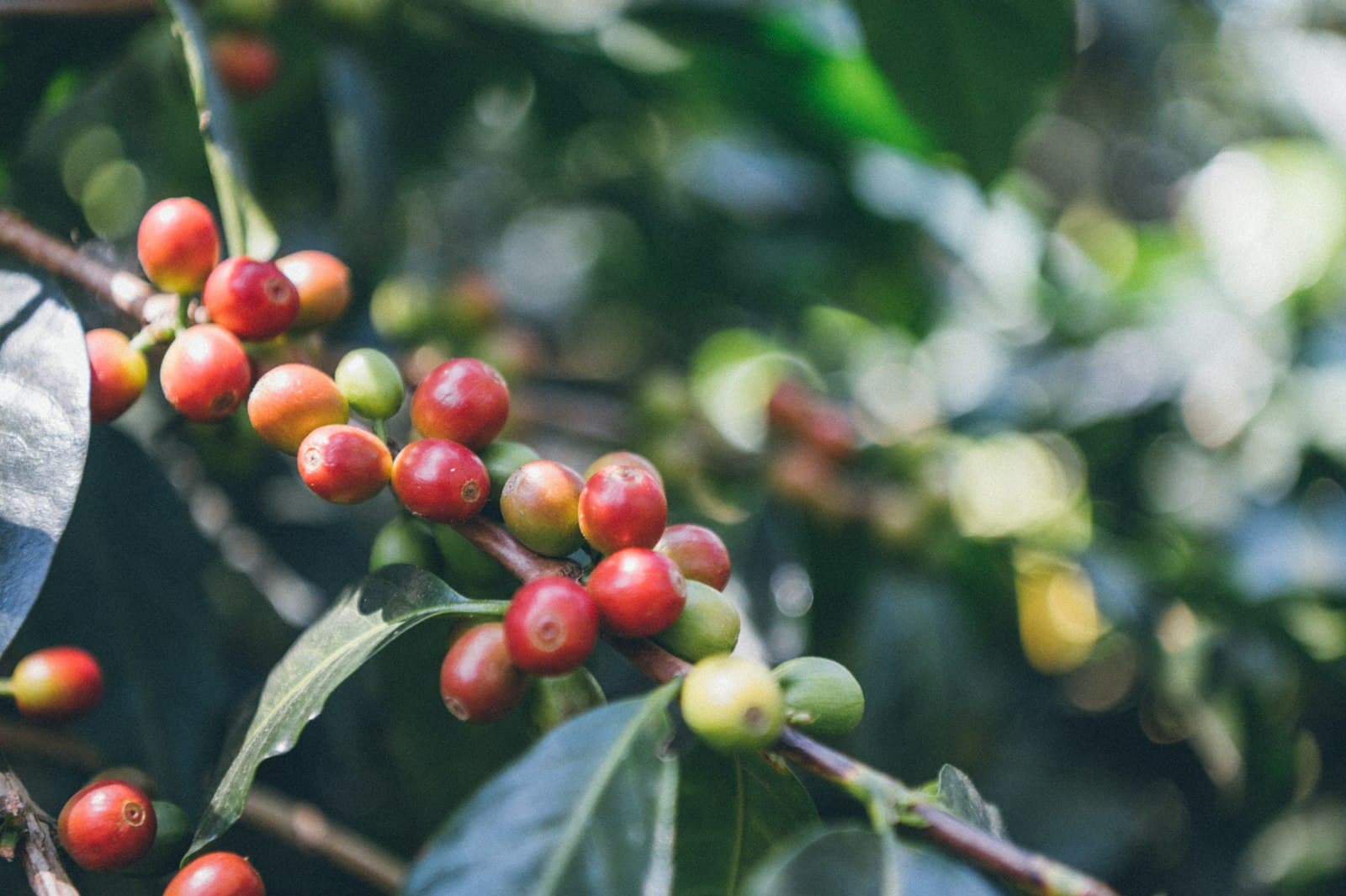
What processing is — extracting the “seed” from the “fruit”
The fruit that grows on the coffee tree is called a “coffee cherry,” and when ripe it colors red like a cherry (yellow or pink, depending on the variety). Bite into it and you find faintly sweet pulp, and inside that, the seeds — two green beans facing each other. Processing is the series of tasks that removes the surplus layers from this fruit and extracts the seed inside in a dry state. Left alone, fruit rots, ferments and molds. That is precisely why how you dry the seed without harming it — while dressing it in the flavor you intend — is where a processor shows their skill. First, let us look at the structure of the cherry, from the outside in.
- Skin (outer skin): the outermost peel of the fruit, the part that colors red or yellow
- Pulp: the sweet flesh just inside the skin
- Mucilage: the sticky, sugar-rich layer wrapping the seed. The star of processing
- Parchment (endocarp): the hard shell enclosing the seed. It protects the seed during drying
- Silver skin: the thin membrane inside the parchment. It flakes off as “chaff” during roasting
- Green bean: the innermost seed. Extracting this is the goal of processing
Why does processing change the taste? The keys are “mucilage” and “fermentation.” The mucilage wrapping the seed is packed with sugars and acids, and whether you remove it, leave it, or ferment it changes both the compounds that soak into the seed and how the subsequent drying proceeds. Rinse the pulp away early and you get cleanliness; dry the whole fruit and you get abundant fruitiness — processing is the step that decides what “memory of flavor” to leave in the seed.
Washed — pursuing cleanliness
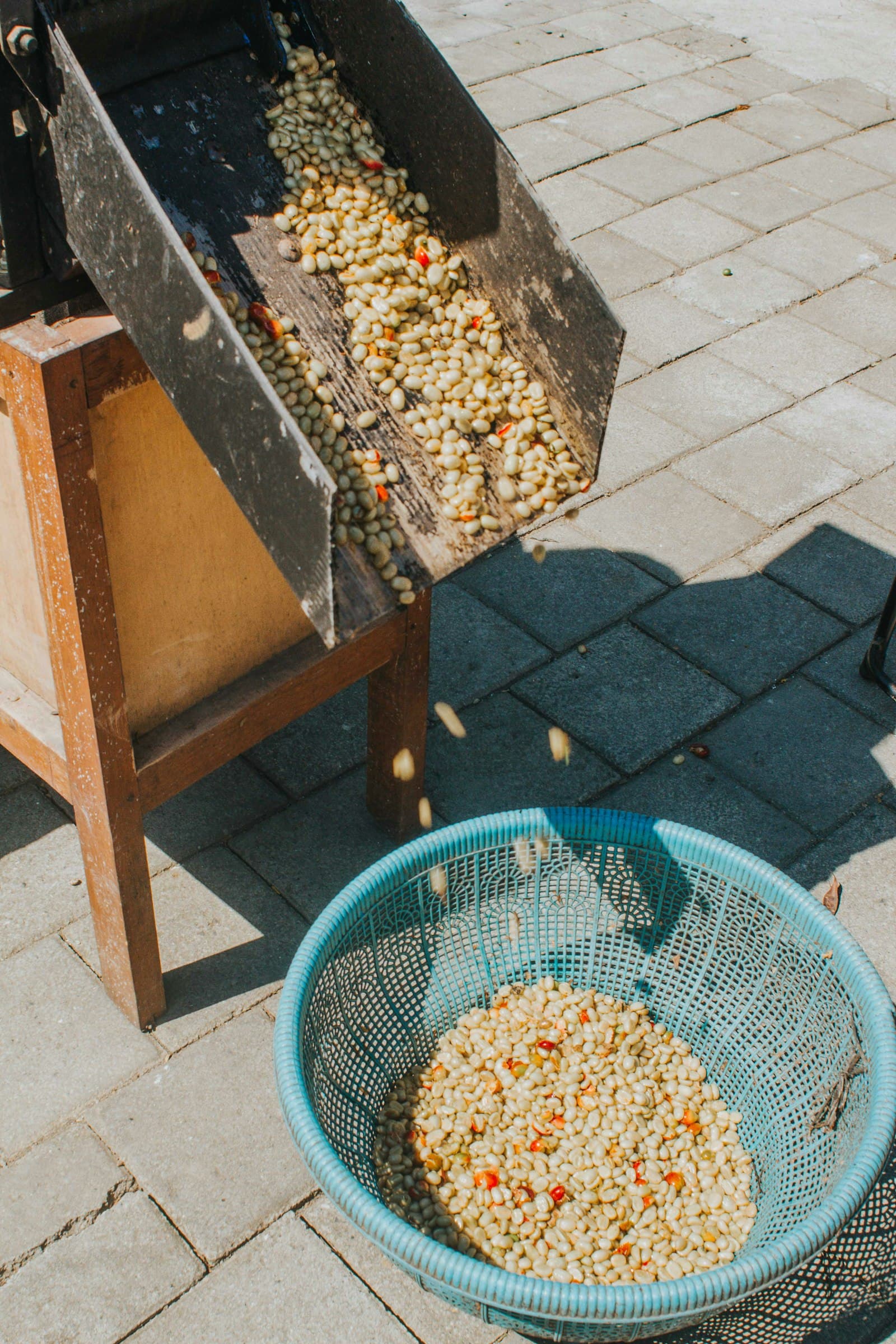
The washed process “rinses off the pulp and mucilage with the power of water, then dries.” First the harvested cherries go through a pulper, stripping off the skin and pulp. The seeds are still coated in slippery mucilage. This is soaked in a fermentation tank for around a night, where microbes break down and loosen the mucilage, and then it is rinsed clean in water channels. Drying the seed in this parchment-only state is the washed process. Because the fruit’s influence is cut off early, the bean’s own character — that is, the individuality of variety and land (terroir) — tends to come through directly, which is its greatest feature. Clean, transparent flavor, bright and sharp acidity, and low muddiness are its hallmarks, widely used in Ethiopia Yirgacheffe, Kenya, Rwanda, and Central American highlands.
- Flavor tendency: clean and transparent. Bright, sharp acidity, low muddiness
- Suited to: high-quality beans whose variety and terroir you want to show honestly
- Requires: a pulper, fermentation tanks, and plenty of clean water
- Difficulty: managing water and drainage (environmental load), and judging fermentation
The washed process is often called the one where “you see the bean’s bare face.” If you want to compare differences of land and variety, comparing washed against washed makes the gap easiest to read. For a deeper look at the washed-versus-natural difference, see natural and washed processing.
Natural (dry process) — the oldest method, drying the whole fruit
The natural (dry) process sun-dries the harvested cherries whole, and once they are bone-dry, hulls them to extract the seed. Using almost no water, it is humankind’s oldest processing method, long practiced in Ethiopia — coffee’s birthplace — and water-scarce Yemen. As the fruit slowly dries with the seed still inside, the sugars and aroma compounds of the pulp seep gradually into the seed, and fermentation advances too. The result is gorgeous fruitiness reminiscent of berries and tropical fruit, sweet wine-like aromas, and a thick, syrupy body. On the other hand, drying the whole fruit invites unevenness and defects (over-fermentation, mold), and managing an even dry is difficult. It was once seen as “sloppy handling of cheap beans,” but a carefully made natural is now one of the stars of specialty coffee.
- Flavor tendency: gorgeous fruitiness, sweet wine-like aromas, thick body
- Suited to: beans meant to put fruitiness and impact up front, and water-scarce origins
- Requires: wide drying grounds (patios or African beds), weather and labor
- Difficulty: even drying, and risk management of defects like over-fermentation and mold
Honey / pulped natural — a middle-ground design
Aiming for “the best of both” washed and natural is the honey process (also called pulped natural). A pulper removes the skin and pulp, but the mucilage is not rinsed off — it is deliberately left on the seed for drying. As this mucilage dries it acts like sugar, producing a balanced flavor midway between the cleanliness of washed and the sweetness and fruitiness of natural. The name “honey” comes from the seed turning sticky like honey during drying; no actual honey is used. Depending on how much mucilage is left, it is graded white, yellow, red and black — the more that is left (the closer to black), the richer and more natural-leaning; the less, the cleaner and more washed-leaning. It is a process Costa Rica and El Salvador excel at.
- White honey: almost no mucilage left. The cleanest, most washed-leaning
- Yellow honey: a small amount left. A balance of light sweetness and cleanliness
- Red honey: more left. Sweetness and body increase
- Black honey: nearly all left and dried slowly. The richest, most natural-leaning
The honey process and the recently talked-about anaerobic fermentation are covered separately in depth in honey process and anaerobic processing. Grasp processing as a continuous gradient of “how much fruit to leave on,” and the words on the label suddenly look far more three-dimensional.
The science of fermentation — microbes build the flavor
At the heart of processing lies “fermentation.” Fermentation is the phenomenon in which microbes such as yeasts and lactic acid bacteria eat the sugars in the mucilage and, through their metabolism, produce acids, alcohols and esters (aroma compounds). The same principle behind bread, yogurt and wine is happening around the coffee seed. In the washed process, fermentation is used mainly to “break down the mucilage so it comes off easily,” but the acids and aroma precursors born at the same time support the clean brightness of the final cup. In natural and honey, fermentation advances slowly while drying with the fruit or mucilage still on, producing that fruitiness and wine-like aroma. Temperature, time, presence of oxygen, kinds of microbes — change any one of these and the flavor born changes too. Fermentation is the domain a processor sweats over most, and where the most experimentation has been happening in recent years.
Anaerobic (oxygen-free fermentation) — when processing became a “recipe”
Pushing the control of fermentation to its limit is “anaerobic (oxygen-free) fermentation,” which has been enlivening specialty coffee in recent years. Anaerobic means “fermentation in the absence of oxygen.” Cherries or seeds are packed into a sealed tank, oxygen is shut out, and fermentation happens in an environment filled with the carbon dioxide it generates. Different microbes than under oxygen take the lead, producing distinctive flavors that don’t normally appear — cinnamon, spice, ripe tropical fruit, complex aromas like fermented foods. Closely resembling wine-making’s “carbonic maceration,” the fine management of temperature and time has made processing controllable almost like a “recipe.” The character is intense, but overdo it and the origin’s own individuality can be buried under fermented aromas. It is the frontier of processing, wrapped in the question of “how far to intervene.”
Anaerobic beans tend, for better or worse, to make the “individuality of fermentation” the star. If you want to taste the delicate differences of origin and terroir, go washed; if you want to experience the surprising flavors processing can create, go anaerobic — choosing by purpose is the way. For details, see honey process and anaerobic processing.
Drying — the stage that decides the “finish” of processing
Whichever processing method you take, drying always comes last. It is the step that lowers the seed’s moisture to around 10–12%, suitable for storage, and get it wrong and all the careful handling before it is ruined. There are mainly three drying methods: patio drying spread on the ground, African beds (raised beds) with air passing over a mesh, and mechanical drying. The condition for good drying is “slow and even.” Rush it and only the surface dries while moisture stays inside, degrading the taste later. Too slow and mold or over-fermentation breed defects. Natural in particular takes time because the whole fruit is dried, requiring patient handwork — turning the beans over and over many times a day to dry them evenly. Drying is plain, but it is the final finish of processing, deciding the bean’s storability and the stability of the final flavor.
Even from the same farm, the time drying takes differs this much by processing method. Washed is shortest because only the parchment-state seed is dried; honey takes longer for the mucilage left on; natural is longest, drying the whole fruit slowly. This “length of drying time” is exactly what governs how much the seed is influenced by the fruit’s compounds and by fermentation. The longer it spends with the fruit, the deeper the fruitiness — and at the same time, the higher the risk of defects. The days shown here are only rough guides depending on climate and altitude: shorter in dry highlands, longer in humid lowlands.
How processing affects taste — as one blueprint
As we have seen, processing strongly steers the “cleanliness, sweetness, fruitiness and body” of a cup. Washed is clean with bright acidity; natural is fruit-rich, sweet and full-bodied; honey sits between them; anaerobic adds fermentation-derived character — the same bean becomes a different coffee when processing changes. What matters here is that processing does not decide the taste alone; a cup comes together only when it combines with variety, terroir and roasting. Variety decides the “ceiling” of aroma, terroir how far it opens, processing the “direction” of sweetness and fruitiness, and roasting which of these becomes the star. Processing is one of the four drawings that design the taste.
- Washed: clean, transparent, bright acidity. The bare face of bean and terroir
- Natural: fruitiness, sweetness, thick body, wine-like aroma
- Honey: between the two. Balanced sweetness and cleanliness
- Anaerobic: strong fermentation-derived character. Spice, tropical notes, complex aromas
If a label reads “Washed / Natural / Honey / Anaerobic,” that is a hint to the direction of the taste. If different processes of the same origin sit side by side, it is a perfect chance to compare. The lighter the roast level, the more honestly the processing character shows, so to taste processing differences, a light-to-medium roast is recommended.
How processing relates to terroir, variety and roasting
Processing can both “amplify” and “mask” terroir and variety. A restrained washed process transparently mirrors the delicate acidity and aromas born of altitude and soil — that is, terroir. A strong anaerobic, conversely, pushes the individuality of fermentation ahead of the origin’s. Neither is good or bad; it is a means of expression chosen by “what you want to show about this bean.” And the fruitiness and sweetness processing leaves behind change their impression by how roasting handles them last, reaching the cup finally through extraction. Variety → terroir → processing → roasting → extraction: processing decides the direction of taste right in the middle of this long relay — that is the fascination of the step.
Frequently asked questions
Which tastes better, washed or natural?
It is not superiority but a “difference of direction.” If you want clean transparency and to taste the bean’s own character and terroir head-on, go washed. If you love gorgeous fruitiness like berries and tropical fruit, sweet wine-like aromas and a thick body, go natural. Choosing by whether you prefer a crisp cup or a cup of strong character is the way. Since even the same variety from the same farm changes greatly with processing, exploring your preference with a tasting set is the quickest route.
What does “anaerobic” mean?
It refers to fermentation under “anaerobic = oxygen-free” conditions. Cherries or seeds are packed into a sealed tank, oxygen is shut out, and they ferment in an environment filled with carbon dioxide. Different microbes than under oxygen work, producing distinctive flavors that don’t appear in normal processing — like cinnamon, spice, and ripe tropical fruit. Resembling wine-making’s carbonic maceration, it is an experimental process that has grown popular in specialty coffee in recent years.
Is honey actually used in the honey process?
No honey is used at all. The name “honey” comes from the seed turning sticky like honey during drying when the mucilage is left on. Depending on how much mucilage is left, it is called white, yellow, red or black — the more left, the sweeter and more full-bodied (natural-leaning) the taste; the less, the cleaner (washed-leaning). You may indeed sense a honey-like sweetness in the cup, but that is a flavor created by the sugar-rich mucilage.
Where on the label can I find the processing method?
On many specialty coffees it is listed in the “Process” field alongside origin and variety. Notations like “Washed,” “Natural,” “Honey” and “Anaerobic” are it. There are also origin-specific names like pulped natural and wet-hull (the Sumatran style). Inexpensive beans with no notation are often given standard washed or natural handling. Reading labels in general is also covered in how to read a roaster’s label.
If processing changes the taste, do origin and variety not matter?
No — all of them matter. Processing decides the “direction” of taste, but the “kinds” of aroma and acidity that are its raw material are decided by variety, and how far they open by terroir (altitude, climate, soil). Processing is only a means of expression for “how to show” the material that variety and terroir have prepared. Even excellent processing has limits if the base bean is mediocre, and even a wonderful bean is ruined by sloppy processing. A cup’s taste is decided only when variety, terroir, processing and roasting all come together.
How can I try processing differences at home?
Processing from green cherry isn’t realistic at home, so “comparing beans of different processes” is recommended. Ideally a set with washed and natural (or honey) of the same origin and variety. Matching the roast level to light-to-medium makes the processing-derived differences show most honestly. Match the brew recipe too, and pay attention to differences in cleanliness, sweetness, fruitiness and body. Once the differences become clear, the “Process” field on the label suddenly gets interesting.
Drying a single seed inside a red fruit without harming it, while dressing it in the flavor you intend — processing is the first “flavor-making” done on the farm. Wash with water for cleanliness, dry the whole fruit for gorgeousness, leave the mucilage for balance, cut off the oxygen for complexity. This step, which draws countless expressions from the same bean, is one of the blueprints of taste alongside variety, terroir and roasting. Next time you brew a cup, imagine how that bean, back when it was a fruit, was dried on the farm. The single word “Process” on the label will surely look different.
Was this article helpful?
Origins in this article
Choose & compare
Related links
More articles
The Coffee Variety Family Tree — Reading the “Genealogy” That Begins with Typica and Bourbon
BeansThe Coffee Belt and Terroir — Why Coffee Grows Only in the “Equatorial Band,” and Why Each Origin Tastes Different
BeansThe Science of Coffee Acidity — What Fruitiness Really Is, and How It Differs from “Sour”
BeansEl Salvador Coffee Deep-Dive: The Sanctuary of Bourbon and the Volcanic Land That Created Pacamara