Vietnam Coffee Deep Dive: The World’s #2 Robusta Powerhouse and the Phin’s Condensed-Milk Cup
Cà phê sữa đá, the phin, egg coffee, and the truth about “weasel coffee”
The rich sweetness of condensed milk and the powerful bitterness of robusta — plus a small metal filter called the phin. Vietnam is the world’s second-largest coffee producer and the largest robusta source. From cà phê sữa đá to Hanoi’s egg coffee and Da Lat’s highland Arabica, we dissect a coffee culture that evolved on its own since French colonial times.
Contents · 9
Condensed milk pooled at the bottom of the glass, dark coffee dripping onto it one drop at a time, and a heap of ice — Vietnamese coffee evolved like nowhere else in the world. Vietnam is the second-largest producer after Brazil and the largest source of robusta. It is a culture that catches the powerful bitterness and body of robusta — the opposite of specialty’s “bright acidity” — with the sweetness of condensed milk. Why this taste exists, dissected through production, equipment and how it is drunk.
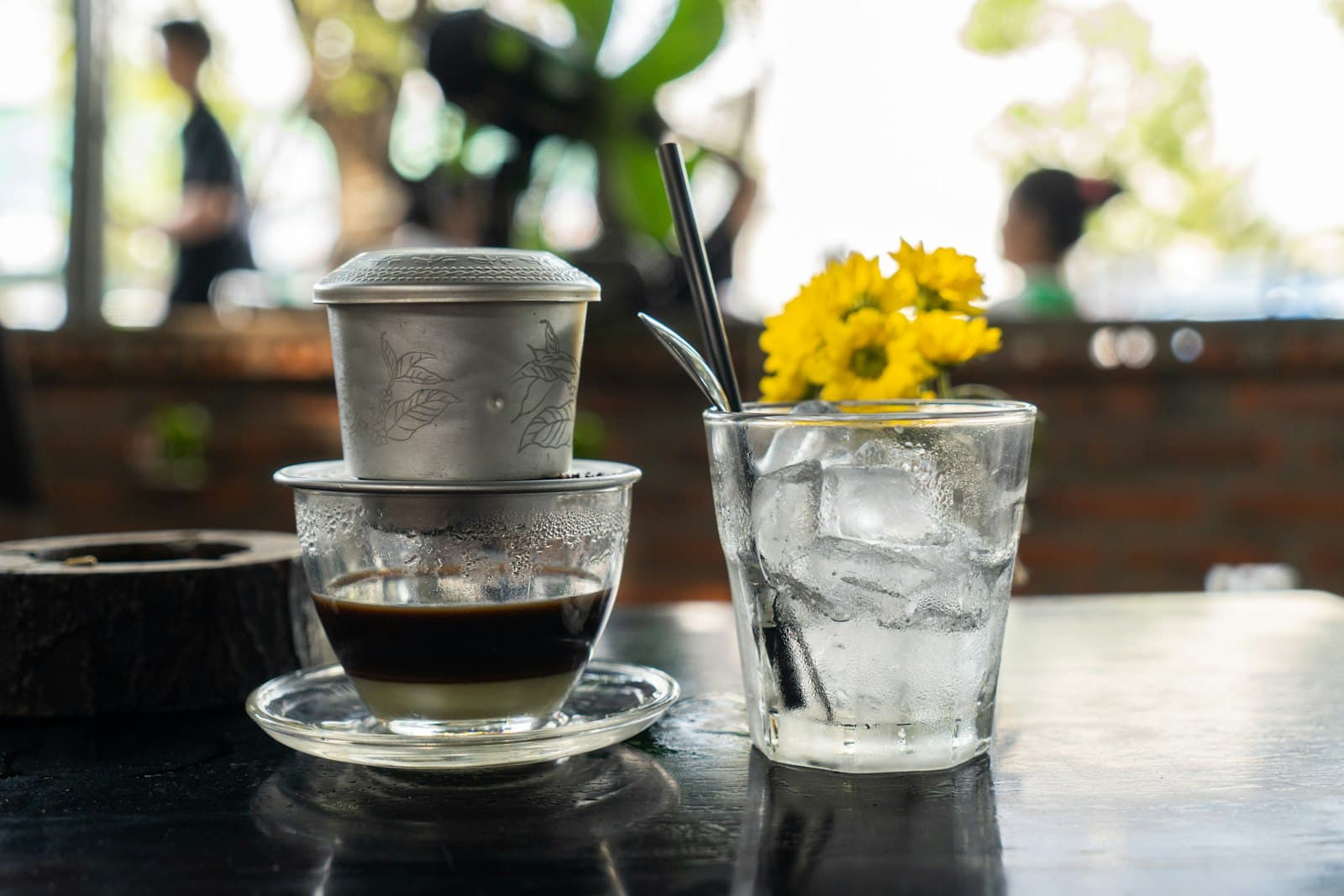
Why Vietnam is special
- The world’s 2nd-largest producer: a scale second only to Brazil, and the largest source of robusta
- Robusta-centric: about 90% of output is robusta — a global supply base for instant and canned coffee
- A French-rooted, original culture: introduced in the 19th-century colonial era, then evolved with condensed milk
- The phin: a metal filter that drips one strong cup at a time, common in homes and cafés alike
- Highland Arabica too: Da Lat (Lam Dong) grows a bright, mild Arabica
Vietnam became a coffee giant relatively recently. Output expanded rapidly after the 1986 Đổi Mới (renovation) reforms, and around 2000 it leapt to second in the world. By mass-producing stable-supply robusta, it now underpins the world’s instant coffee and espresso blends.
The character of a robusta powerhouse
The key to understanding Vietnam is “robusta.” If Arabica is acidity and aroma, robusta is bitterness and body — and about twice the caffeine. It grows even in the lowlands, resists disease and yields heavily; this volume-friendly species suited Vietnam’s climate perfectly. And what was chosen to make powerful, bitter robusta delicious was the rich sweetness of condensed milk.
- Bitterness and body: dark chocolate, nuts, woody notes. Very little acidity
- Heavy body: a richness that lingers; satisfying even in a small amount
- High caffeine: about twice Arabica — it works for the morning cup
- Pairs with condensed milk: wrapping strong bitterness in sweetness, a sensible match
Flavor profile
- Robusta (the mainstay): bitter chocolate, roast, nuts, earthiness. Dark and heavy
- Da Lat Arabica: brighter and milder, with chocolate and nuts plus gentle fruit
- Traditional roast: mostly dark, sometimes a distinctive method roasting with butter and sugar
- Overall: “strong and powerful” over “clean” — enjoyed as one with condensed milk and ice
The phin — Vietnamese drip
The icon of Vietnamese coffee is the small metal filter called the “phin.” Set it on a cup or glass, add medium-to-coarse grounds, pour hot water, place the weight on top, and let it drip one drop at a time. Because it strains through a metal mesh rather than paper, the cup keeps its oils and body — intensely rich. It brews one serving slowly: an instrument to enjoy, fuss and all.
Vietnam’s signature coffees
Cà phê sữa đá (iced condensed-milk coffee)
Vietnam’s signature cup. Put sweetened condensed milk in the bottom of a glass, drip strong coffee straight in with the phin and stir, then add plenty of ice. True to the name — “cà phê (coffee) + sữa (milk) + đá (ice).” It began when condensed milk, which keeps well, was used in an era when fresh milk was hard to get, and it is now a national staple. Hot condensed-milk coffee is “cà phê sữa nóng.”
Egg coffee (cà phê trứng)
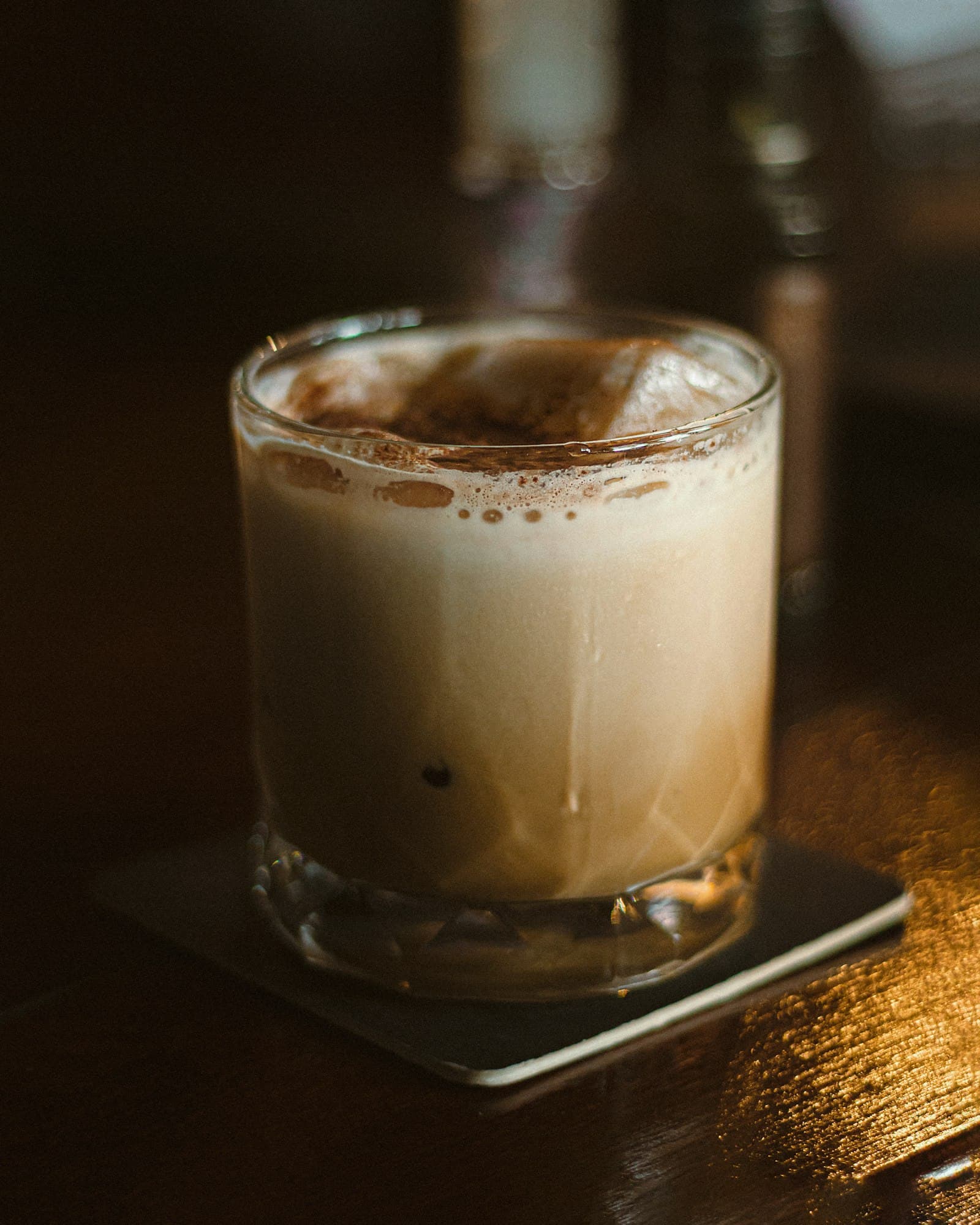
A Hanoi specialty. Egg yolk and sweetened condensed milk are whipped fluffy and floated over strong coffee — a dessert-like cup almost like tiramisu. Said to have been born in the 1940s amid a milk shortage, it is now a staple Hanoi experience. The egg’s richness and sweetness harmonize beautifully with the coffee’s slight bitterness.
Coconut coffee and salt coffee
Recently popular are “coconut coffee,” blended with a coconut-milk smoothie, and “salt coffee (cà phê muối),” said to originate in Huế. The salt lifts the coffee’s sweetness and bitterness for a mellow finish. New ways of drinking keep emerging in Vietnam.
Major regions
- Dak Lak (Buon Ma Thuot): the “coffee capital,” the largest robusta region
- Lam Dong (Da Lat): highlands around 1,400m — Vietnam’s foremost Arabica region
- Gia Lai / Dak Nong: major robusta regions of the Central Highlands (Tây Nguyên)
- Kon Tum: an emerging highland region also taking up Arabica
A caution about “weasel coffee”
You will spot “weasel coffee (cà phê chồn)” as a Vietnamese souvenir. It is a premium coffee made from beans eaten and excreted by civets (or weasels) — the same lineage as Indonesia’s kopi luwak.
Much of the “weasel coffee” on the market is said to be not the real thing but an imitation flavored to taste “weasel-like.” The genuine article is extremely rare and expensive. Caged, farmed production also raises animal-welfare concerns. If you buy it as a souvenir, check whether it is flavor-free and genuine and understand its background — and don’t over-expect.
Recommended brewing — with a phin
With a dedicated phin you can make an authentic cup at home. Dark-roast Vietnamese beans (robusta-based) plus sweetened condensed milk is all you need. The knack is to brew it strong and combine with condensed milk and ice.
A strong phin guide (20g grounds : 120ml water)
Beans 20g / Water 120g
- Put 1–2 tablespoons of sweetened condensed milk in the glass
- Add medium-to-coarse grounds to the phin and lightly bloom with hot water
- Pour the water, set the weight, and let it drip over a few minutes
- Stir well with the condensed milk and pour over a glass full of ice for cà phê sữa đá
Frequently asked questions
Why is Vietnamese coffee so strong and bitter?
Because the main ingredient is robusta, strong in bitterness and body, and it is dark-roasted and brewed strong. This is not a flaw but by design — a sensible style premised on cutting the strong bitterness with the sweetness of condensed milk and ice.
Can I make it without a phin?
You can get close. Drip dark-roast Vietnamese beans strong (or use strong espresso/moka pot), then combine with sweetened condensed milk and ice for a cà phê sữa đá style. The phin’s “drop-by-drop experience” and richness are best left to the dedicated tool, but you can enjoy plenty with the gear you have first.
Vietnamese coffee is an original culture that turned robusta — a “supporting player” — into the star. The sweetness of condensed milk, the phin’s single drop, the egg cream: each was born from the ingenuity of “how to make something delicious with what you have.” There is a richness here on a different yardstick from specialty. Next time you drink a cà phê sữa đá, savor the story of the world’s #2 producer behind it.
Was this article helpful?
Choose & compare
Related links
More articles
The Coffee Variety Family Tree — Reading the “Genealogy” That Begins with Typica and Bourbon
BeansThe Coffee Belt and Terroir — Why Coffee Grows Only in the “Equatorial Band,” and Why Each Origin Tastes Different
BeansThe Science of Coffee Acidity — What Fruitiness Really Is, and How It Differs from “Sour”
BeansTaiwan Coffee Deep-Dive: The Tea-Like Cup Born of Alishan’s High Mountains