Skip to content
Colombia coffee
3PROD. RANK · No.03Colombia

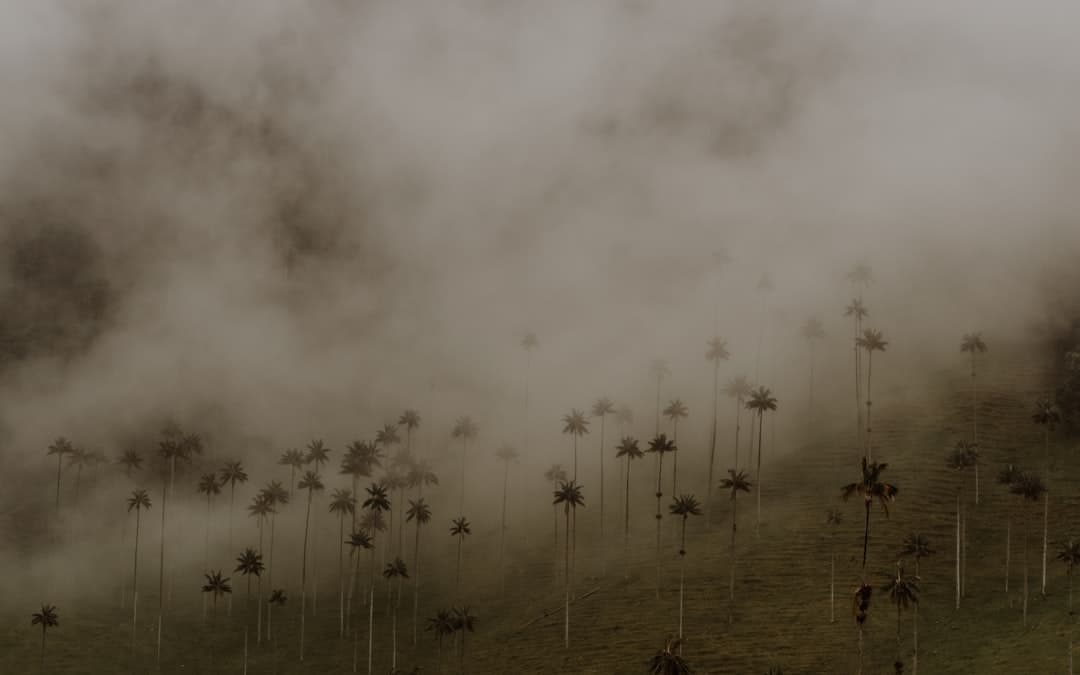
Photo by Miguel Ángel Pinto on Unsplash

South America · ORIGIN No.03

コロンビア

Harvested year-round with reliably consistent quality.

arabicawashed
Log a tasting
§ 01
KEY FIGURES

Key figures

Production rank
World No.3
South America
Annual production
13.0M bags
60kg / bag
Recommended roast
Medium
medium
Certifications
fair_trade, rainforest_alliance
Certified
§ 02
OVERVIEW

Overview

Harvested year-round with reliably consistent quality. The FNC (National Federation of Coffee Growers) oversees quality control.

§ 03
HISTORY · TERROIR · CULTURE

History & culture

Colombia is unusual: the world’s #3–4 producer by volume, yet a country that keeps world-class quality at the specialty end rather than only the commodity end. The high Andes, two harvests a year, and the growers’ federation Federación Nacional de Cafeteros make volume and quality possible at once.

The Andes and the "coffee axis"

Colombian coffee concentrates along the Andes in the north–south "Eje Cafetero" — Huila, Tolima, Cauca, Nariño and neighbors. Altitudes of 1,400–2,200m, volcanic soils and a stable equatorial climate provide near-ideal growing conditions. Because the country straddles the equator, harvest timing differs by region — April–May in the north (Sierra Nevada de Santa Marta), September–December in the south (Nariño, Huila) — so fresh lots reach the market all year round, one of Colombia’s signatures.

A production base of smallholders

Colombian coffee rests on roughly 550,000 small family farms. The average plot is just 1–2 hectares, and hand-picking is the norm. For more than 80 years the FNC has organized these smallholders, providing quality assurance, education and minimum price guarantees. That individual Colombian farm lots now trade as "micro lots" in the specialty market is an extension of this organized smallholder system.

Caturra, Castillo, Typica — varietal range

Colombia grows several varieties in parallel: Bourbon-line Caturra, the disease-resistant Castillo, traditional Typica, and the newer Cenicafé 1. Caturra leans balanced and sweet; Castillo is hardy and nuttier; Typica delicate with classic acidity — flavor shifts markedly with the variety. That a single word, "Colombia," contains this gradient of tastes is exactly why it never gets boring on repeat.

§ 04
FLAVOR PROFILE

Flavor profile

Production world shareNo. 3
Max altitude max altitude2,300 m
Growing regions growing regions6 regions

Computed from all of Colombia’s regions. Max altitude references the SCA-recommended 1,500–2,200m.

FloralFruityAcidityChocolateNuttySpiceBodySweetness
§ 05
FOOD PAIRING

Food pairing

Macaron
echoes the bright aromatics
Wagashi
complements the delicate sweetness
Earl Grey scone
layers the floral notes
Lemon cake
bright acidity pops
Fruit tart
citrus flavor shines
Yogurt
clean and crisp
§ 06
GROWING REGIONS · 6

Growing regions

§ 07
BREW GUIDE

Recommended brewing

Paper drip
91℃ · Medium-fine
Temp
91
Ratio
1:15
Time
3 min 30 sec
Grind
Medium-fine

Brings out caramel sweetness and bright acidity in fine balance. Brew slowly and carefully.

Espresso
93℃ · Fine
Temp
93
Ratio
1:2
Time
27 sec
Grind
Fine

One of the few origins that stands alone as a single-origin espresso — an exquisite balance of sweetness and body.

§ 08
RELATED READING

Reading about Colombia

§ 09
WHERE TO BUY

Find Colombia coffee

Check stock and prices on each retailer. Links marked “PR” are affiliate links; a purchase may earn this site revenue.

§ 10
ROASTERS

Roasters carrying this origin

§ 11
SUBSCRIPTIONS

Subscriptions delivering this origin

Subscription
§ 12
SIMILAR ORIGINS

Similar origins

§ 13
KINDRED REGIONS

Kindred-flavor regions

Starting from flavors common to all of Colombia’s regions, here are 3 similar regions from other countries.