Rwanda Coffee Deep Dive: The Tea-Like, Floral Cup of the “Land of a Thousand Hills”
Recovery from genocide, the washing-station revolution, and the delicacy of Red Bourbon
A tea-like lightness, the scent of orange blossom, delicate fruit — Rwanda is East Africa’s rising star. The highlands of the “land of a thousand hills,” the quality-driving Red Bourbon variety, and the washing-station revolution that led the recovery from tragedy. We dissect how this small, landlocked country became a specialty regular in barely two decades.
Contents · 11
- Why Rwanda is special
- Flavor profile — a tea-like delicacy
- The geography of a “thousand hills”
- History — recovery from tragedy
- The washing station (CWS) as a model
- The potato defect — a regional challenge
- Varieties — the Red Bourbon lineage
- Major regions
- Recommended brewing
- Tips for buying Rwanda next time
- Frequently asked questions
Bring the cup to your nose and there it is — a tea-like lightness and the scent of orange blossom. Take a sip and delicate fruit and a silky texture spread across the palate. Rwandan coffee has a refined, clear character, different from Kenya’s power and Ethiopia’s flamboyance. How did a small, landlocked country in central Africa become a specialty regular in about two decades? We dissect it through four lenses — geography, variety, history and processing.
Why Rwanda is special
- “Land of a thousand hills”: most of the country sits above 1,500m — ideal for coffee
- Red Bourbon dominates: the well-regarded Bourbon family makes up most of the crop
- Concentrated washing-station model: smallholder cherries are gathered at stations to lift quality
- Recovery from tragedy: after the 1994 genocide, coffee led the country’s rebuilding
- Africa’s first COE: in 2008 Rwanda became the first African country to host the Cup of Excellence
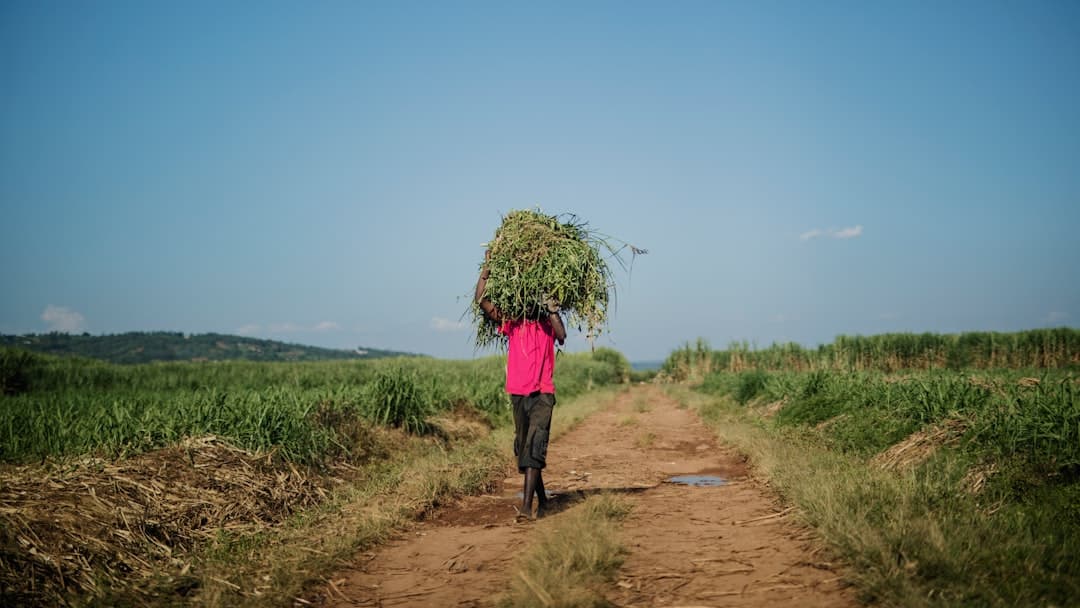
Rwanda has almost no large estates; over 400,000 smallholders grow coffee on a few hundred trees in their yards. They bring ripe cherries to a local washing station (CWS — Coffee Washing Station), where sorting, processing and drying are handled intensively. This system lifted smallholder beans to a world-class level.
Flavor profile — a tea-like delicacy
The Rwandan archetype is a refined style: a clean, tea-like texture layered with floral aromatics and delicate fruit. Its appeal is an ordered beauty — neither as fierce in acidity as Kenya nor as wild as Ethiopia.
- Tea-like: a light, smooth texture reminiscent of black tea
- Orange blossom / floral: an elegant aroma like citrus flowers
- Stone fruit: a sweet fruitiness like peach and apricot
- Blackcurrant / citrus: bright acidity and fruit from its Bourbon lineage
- Silky body: not too light, with a silk-like mouthfeel and sweet finish
Even within East Africa, it helps to remember Kenya as “powerful acidity and fruit,” Ethiopia as “flamboyant florals,” and Rwanda as “delicate and tea-like.” Tasting the three side by side reveals the depth of East Africa.
The geography of a “thousand hills”
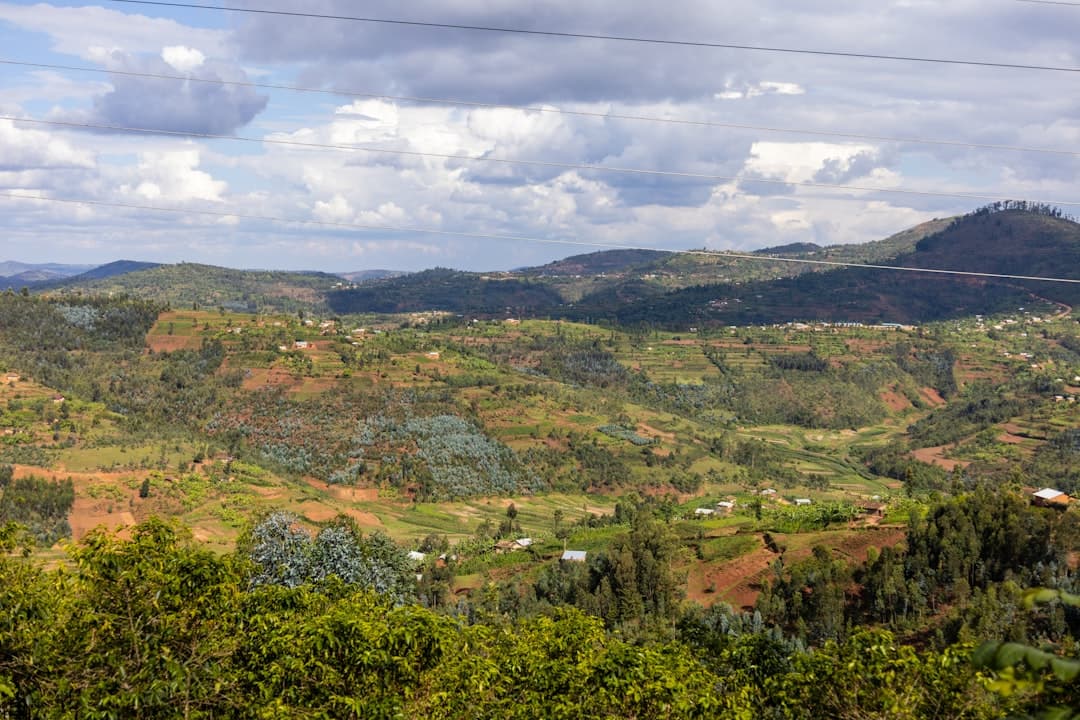
Rwanda is a small landlocked country about half the size of Kyushu, yet almost all of it lies at 1,500–2,000m. The stable climate of equatorial highlands, fertile volcanic and granite-derived soils, and the cooling effect of Lake Kivu in the west grow dense, slowly matured coffee. The nickname itself — “land of a thousand hills” (Pays des mille collines) — tells the story of its growing suitability.
History — recovery from tragedy
Coffee was introduced in the early 20th century by missionaries during German rule, and under Belgian colonial rule it became a semi-compulsory cash crop. Back then the focus was on volume, with low-quality “ordinary” coffee at the center. The turning point came, ironically, after the national tragedy of the 1994 genocide.
In the 2000s, the government and international support (the PEARL/SPREAD projects, among others) pushed a shift to high-value “fully washed” specialty coffee. Washing stations were built one after another, and quality rose dramatically. Coffee generated foreign currency and jobs and became an industry symbolizing reconciliation and the rebuilding of local economies. In 2008 Rwanda hosted Africa’s first Cup of Excellence, and its name spread worldwide at once.
The washing station (CWS) as a model
The CWS is essential to Rwanda’s quality. Because smallholders do not own processing equipment individually, they bring their ripe cherries to a nearby CWS, where density sorting, depulping, fermentation, washing and drying are all carefully managed in one place. Lots are traced by station (CWS), so you can know “which hill, which station” a coffee comes from. It closely resembles Kenya’s “factory” model.
The potato defect — a regional challenge
Rwanda (and neighboring Burundi) has a regional flaw called the “potato defect” — a phenomenon where some beans give off a smell like raw potato skin, attributed to a bacterium associated with the antestia bug.
What makes the potato defect tricky is that it appears sporadically on individual beans, not across the whole lot. Producing countries suppress it with thorough hand-sorting and pest control. At home, if you find a single bean that clearly smells different, removing it gives peace of mind. It is more accurate to see it as a “quality-control item” than a flaw of Rwanda as such.
Varieties — the Red Bourbon lineage
Almost all Rwandan coffee is in the Bourbon family. Centered on the well-regarded Red Bourbon, its selections and derivatives are what get grown.
- Red Bourbon: Rwanda’s mainstay. A high-quality variety with sweetness, complexity and bright acidity
- Jackson / Mibirizi: long-established Bourbon-family local selections
- BM139 and others: some selected lines chosen for yield and resistance are also grown
Major regions
Huye (Southern Province)
A southern highland region. The “Rwandan-ness” of a delicate, floral, tea-like texture is expressed here best — a celebrated growing area.
Nyamasheke (Western Province, Lake Kivu)
A western region facing Lake Kivu. Many cups here have strong fruit and complex depth; it is one of the country’s largest growing areas.
North and East
High-quality lots are increasing in the volcanic-soil north and elsewhere. As CWS infrastructure spreads, regional character grows clearer year by year.
Recommended brewing
To make the most of its delicate, floral character, paper drip that extracts cleanly (V60 and the like) is the royal road. A light to light-medium roast and a slightly higher water temperature suit it.
Basic V60 ratio (1:16)
Beans 15g / Water 240g
- Roast: light to light-medium to bring out the floral, tea-like texture
- Water temp: a slightly higher 92–94°C to draw out delicate aromatics and bright acidity
- Brewing: clean paper drip such as V60; the key is not to introduce harshness
- Iced: a flash-chilled iced cup makes the tea-like clarity and fruit stand out
Tips for buying Rwanda next time
- Choose lots that name the region (Huye / Nyamasheke) or the CWS (station)
- The variety is basically labeled “Bourbon” — that is the mark of Rwandan character
- Pick a light to light-medium roast to make the most of the floral, tea-like texture
- Start with 100g; tasting against Kenya or Ethiopia reveals the East African differences
Frequently asked questions
How does Rwanda differ from Kenya and Ethiopia?
Even within East Africa, where Kenya is “powerful acidity and fruit” and Ethiopia is “flamboyant florals,” Rwanda is “delicate and tea-like.” Its signatures are an orange-blossom aroma, a silk-like mouthfeel and an ordered refinement. Tasting the three side by side makes the difference clear.
Should I worry about the “potato defect”?
It is a phenomenon specific to Rwanda and neighboring Burundi where some beans give off a raw-potato-skin smell. Because it appears sporadically rather than across a whole lot, producing countries suppress it with hand-sorting. You will rarely meet it at specialty grade, but if you find a bean that smells different, removing it gives peace of mind.
What is a CWS (washing station) name good for?
In Rwanda smallholder cherries are gathered at a local CWS for processing, so lots can be traced by station. The more a bean names its CWS or a region like Huye or Nyamasheke, the clearer its quality control and the more repeatable its taste — a reliable clue when choosing beans.
Rwandan coffee is itself the story of a country that built a place in the world through “quality” after overcoming tragedy. Behind that delicate, tea-like cup are the steady efforts of hundreds of thousands of smallholders and their CWS. Next time you look for a flamboyant light roast, remember Rwanda as an option.
Was this article helpful?
Choose & compare
Related links
More articles
The Coffee Variety Family Tree — Reading the “Genealogy” That Begins with Typica and Bourbon
BeansThe Coffee Belt and Terroir — Why Coffee Grows Only in the “Equatorial Band,” and Why Each Origin Tastes Different
BeansThe Science of Coffee Acidity — What Fruitiness Really Is, and How It Differs from “Sour”
BeansKenya Coffee Deep-Dive: The Source of That Powerful Acidity and “Tomato” Complexity