Making Blends at Home: 3 Basic Recipes and How to Build Them
Blending you can do at home, making single origins "play in concert"
Learning path · Intermediate/Chapter 7
One of the 7 chapters in this level. Tap the button on the right when you finish reading to log your progress.
Blending is not a roaster's exclusive right. Just mixing 2–3 single origins you have at home makes "a taste of your own." We introduce the pros' "base + accent" approach and three recipes you can try right away.
Contents · 10
- Why blend: three reasons
- The basic structure: base + accent
- Beans for the base / beans for the accent
- Recipe 1: "Mocha Java" style — the classic combination
- Recipe 2: "Morning Breakfast" style — an easy-drinking daily cup
- Recipe 3: "Dessert Blend" — a sweet cup to enjoy after a meal
- How to make a blend: 4 steps
- Common failures and how to avoid them
- Tips for getting better at blending
- Frequently asked questions
You may drink the "blends" roasters sell, but surprisingly few people have made a blend themselves. In fact home blending has a low barrier, is hard to get wrong, and above all is fun. It is a way to enjoy coffee especially recommended for anyone who finds that "drinking the same bean every day gets boring, but buying several means I cannot use them up." We introduce the basic approach and three recipes anyone can try right away.
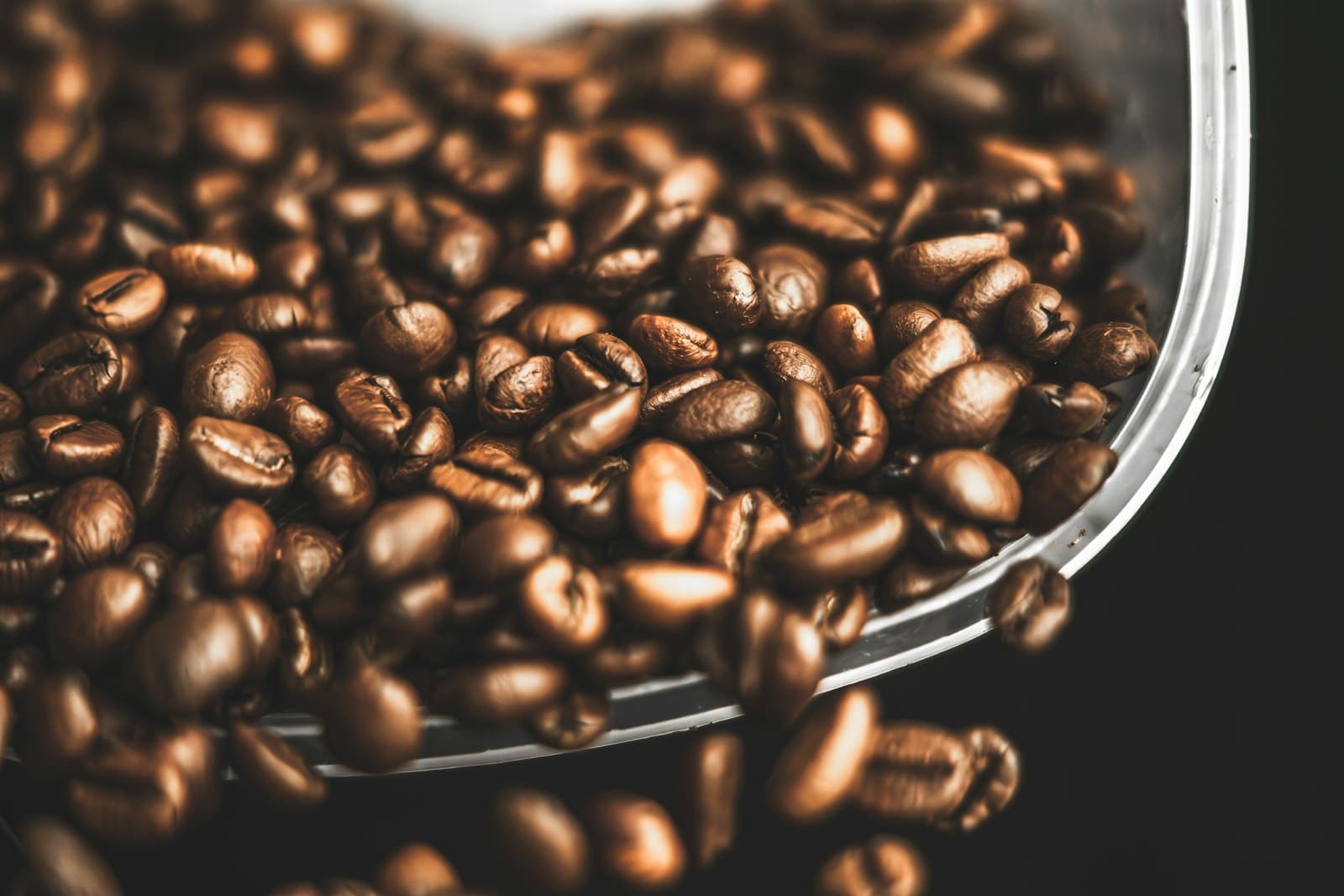
Why blend: three reasons
- 1. Take the "edge" off the taste — combine strongly characterful beans to make a mellow balance
- 2. Make a stable taste — a single origin swings with the roast date and processing lot, but mixing several stabilizes it
- 3. Optimize cost — mix a little of an expensive bean with more of a cheap one for a per-cup price you can drink daily
Professional blending has "pre-blending (mixing before roasting)" and "post-blending (mixing after roasting)." At home, post-blending is realistic — you just mix already-roasted beans.
The basic structure: base + accent
A pro blend is, in most cases, structured like this.
- Base (60–80%): builds the foundation and body of the taste. A moderate, low-quirk bean
- Accent (20–40%): adds character, aroma, acidity. A distinctive bean
- (optional) Spice (5–15%): add a little of a dark-roast or distinctively processed bean for depth
In cooking terms this is the relationship of "main ingredient + sauce + spice." Just the base is dull, just the accent is too sharp — it is an approach completed by combining the two.
Beans for the base / beans for the accent
For the base (the foundation beans)
- Brazil (Cerrado, Mogiana): nut, chocolate, low acidity, medium body
- Colombia (Antioquia, Tolima): the balanced type, moderate acidity
- Guatemala (Antigua): the balanced type, a faint sweetness
- Honduras (Marcala): mild, good value
For the accent (beans that add character)
- Ethiopia natural: berry, wine, a showy quality
- Ethiopia washed (Yirgacheffe): floral, tea-like
- Kenya: blackcurrant, a concentrated quality, bright acidity
- Sumatra Mandheling: earthy, spice, a heavy body
- Panama Geisha (a little): jasmine, stone fruit
When mixing beans of different roast levels, a little dark roast (10–20%) over a light-to-medium base is the hard-to-fail configuration. Conversely, mixing a little light roast into a dark-roast-centered blend tends to leave only the acidity floating, which feels off.
Recipe 1: "Mocha Java" style — the classic combination
Loved since the 19th century, "Mocha Java" is one of the world's oldest blends. It combines the fruity Yemen (Mocha) with the powerful Indonesia (Java / Mandheling). To recreate it at home:
- Base 60%: Sumatra Mandheling (medium-dark roast)
- Accent 40%: Ethiopia natural (medium roast)
- Roast level: medium to medium-dark
- Flavor direction: a thick body + the showy aroma of berries
- Brewing: French press, AeroPress and nel drip suit it well
Mocha Java style (Mandheling 6 : Ethiopia natural 4)
Beans 6g / Water 4g
Recipe 2: "Morning Breakfast" style — an easy-drinking daily cup
A gently balanced blend that goes with anything on the breakfast table. A configuration that pairs with everything from toast and pancakes to a Japanese breakfast.
- Base 70%: Brazil Cerrado or Colombia (medium roast)
- Accent 30%: Guatemala Antigua or Honduras (medium roast)
- Roast level: medium
- Flavor direction: nut, chocolate, moderate acidity, easy for anyone to drink
- Brewing: paper drip, coffee makers in general
Breakfast (Brazil 7 : Guatemala 3)
Beans 7g / Water 3g
Recipe 3: "Dessert Blend" — a sweet cup to enjoy after a meal
A rich, deep blend to pair with sweet desserts like chocolate cake and tiramisu. It is also ideal as a base for espresso or café au lait.
- Base 50%: Brazil natural (dark roast)
- Accent 30%: Guatemala Huehuetenango (medium-dark roast)
- Spice 20%: Sumatra Mandheling (dark roast)
- Roast level: medium-dark to dark
- Flavor direction: dark chocolate, caramel, spice, a heavy body
- Brewing: espresso, moka pot, nel drip
Dessert blend (Brazil 5 : Guatemala 3 : Mandheling 2)
Beans 5g / Water 5g
How to make a blend: 4 steps
- 1. Weigh each bean separately on a digital scale (e.g. base 18g + accent 12g)
- 2. Put them in a container and shake lightly to mix
- 3. Load into the grinder and grind (set the particle size to the base bean)
- 4. Brew as usual
Weighing and mixing each time prevents degradation better than blending a large batch in advance and storing it. It may feel "tedious" at first, but once used to it, it takes a minute.
Common failures and how to avoid them
"The character vanished after mixing"
The accent-bean ratio may be too low, or you may be mixing beans of similar character. Keep the accent at 20% or more and choose a bean with a clearly different direction from the base.
"The taste went muddy / they are clashing"
The roast-level gap may be too large, or you may be mixing beans with opposite directions of character — like a half-and-half of light-roast Ethiopia and dark-roast Mandheling. At first it is safer to match the roast level and try one side in a small amount.
"It tasted better on its own"
Honestly, this happens a lot. A blend does not aim to be "tastier than a single," but to "make a different taste a single cannot." If you feel it is not to your liking, try changing the ratio one step at a time.
Tips for getting better at blending
- Keep records: note which bean at what %, along with your impressions
- Do not mix many kinds at once: start with two, and up to three once used to it
- Change the ratio in 10% steps to test (e.g. 70:30 → 60:40 → 50:50)
- Keep the same recipe for a week to check the taste's stability
- Refer to roasters' blends: imitate ones that list the component beans and ratios
Frequently asked questions
How many kinds should I start a blend with?
Start with two. The minimal "base + accent" makes the change in taste easiest to grasp. Once used to it, add a third bean — a dark roast or something spice-like — at 5–15% for depth. Mixing four or more at once tends to make it hard to tell what is doing what.
Can I mix a large batch in advance and store it?
Not recommended. Beans degrade the more they meet air, even before grinding, so weighing and mixing fresh each time before brewing keeps them fresher than a pre-mixed batch. Weighing takes about a minute once you are used to it. If you must batch it, keep it to a few days and store it airtight.
Is it OK to mix beans of different roast levels?
It is, but there is a knack. Adding 10–20% of a dark roast over a light-to-medium base is hard to get wrong. Conversely, mixing a little light roast into a dark-roast-centered blend tends to leave only the acidity floating, which feels off. Match the roast level first and introduce a gap once used to it.
The fun of home blending is in "defining your own preference." Combine the beans you have on hand and make your home's "house blend." When you serve a guest and they ask "what blend is this?", it is already your recipe. The enjoyment of loving coffee deepens a notch.
Learning path · Intermediate Chapter 7 — Up next
On to the next level: AdvancedWas this article helpful?
Choose & compare
More articles
5 Steps to Put Your Taste Into Words
How-toCold Brew vs Iced Coffee: What Is the Difference
BeansThe Science of Coffee Aroma — The Story of the “800 Molecules” Rising From a Single Cup
BeansPanama Coffee Deep Dive — The Volcanic Highlands That Bore Geisha, and the Story of the World’s Highest Price