The Science of Sweetness and Body — Why a Cup With Zero Sugar Tastes “Sweet”
The sugars in green coffee mostly vanish in roasting, yet good coffee is unmistakably sweet — decoding the duet of aroma and taste that creates the perception of sweetness, the compounds behind body and mouthfeel, and how to draw sweetness out at home
When we sip a good coffee, we sense “sweetness” even though we added no sugar. Strangely, though, most of the sugars in the green bean are broken down by the heat of roasting, and barely any sugar remains in the cup. So what is that sweetness? The key lies not in the tongue but in the nose — aroma compounds reminiscent of caramel and brown sugar summon “memories of sweetness” in the brain. This article traces how sweetness is perceived, how polysaccharides, melanoidins and oils create richness and mouthfeel (body), how roast level relates to sweetness, and how to draw maximum sweetness out of a home brew — the next chapter in our foundations series after bitterness, acidity and aroma.
Contents · 8
- The sugars in green coffee mostly vanish in roasting
- The true nature of sweetness: a duet of aroma and taste
- What is body? The science of mouthfeel
- How roast level transforms sweetness and body
- Sweetness is decided in the field — ripe harvests and processing
- Drawing sweetness out at home
- How professionals measure it — “sweetness” in cupping
- Frequently asked questions
Among all the words used to describe coffee, one of the highest compliments is “sweet.” In the specialty coffee world, people find honey, brown sugar and ripe-fruit sweetness in a black cup with no sugar added. But think about it calmly and it is strange: look at the composition of brewed coffee and almost no sugar remains in the cup. So why do we so clearly sense “sweetness”? Following bitterness, acidity and aroma, this article traces the science of sweetness and body — richness and mouthfeel — as a foundation of flavor. By the end, you should be able to choose a “sweet coffee” yourself, and brew one too.
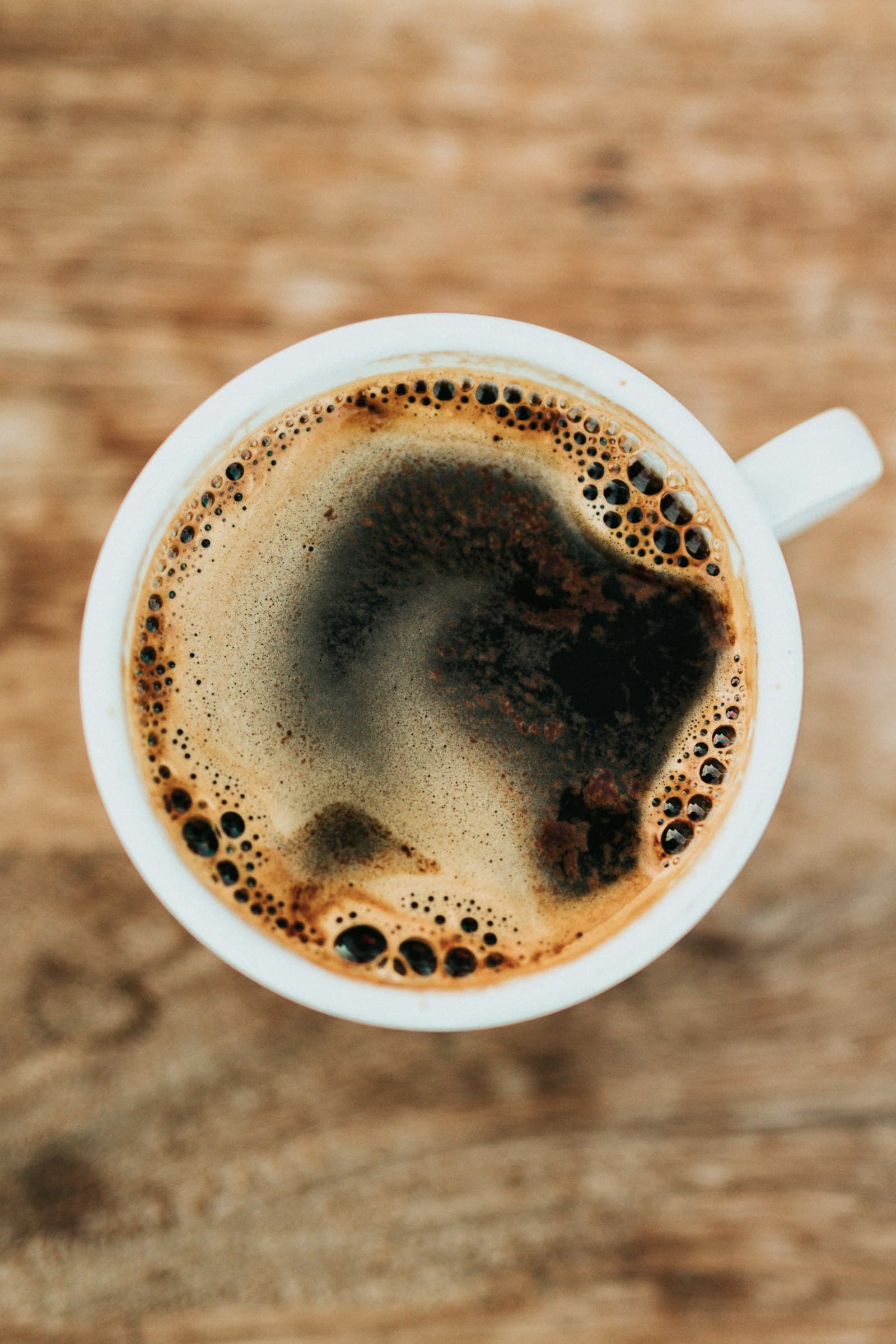
The sugars in green coffee mostly vanish in roasting
Start with the founding fact. Green coffee beans do contain sugar. Arabica green beans hold roughly 6–9% sucrose by dry weight — about twice as much as robusta. This sugar is the “capital” behind the sweetness and aroma of high-quality coffee. But once the heat of roasting is applied, sucrose is consumed one after another as raw material for caramelization and the Maillard reaction, and by a medium roast most of it has broken down. In other words, a cup extracted from roasted beans does not retain enough sugar for us to clearly taste as “sweet.” And yet good coffee is sweet. This contradiction is the doorway into the science of sweetness.
Arabica contains roughly twice the sucrose of robusta — one reason behind the character difference summed up as “arabica is sweet and fragrant, robusta is strong and bitter.” Because sugars transform during roasting into sweet aroma compounds and brown pigments, the more sugar in the raw material, the richer the cup’s “impression of sweetness.” More in Arabica vs. Robusta.
The true nature of sweetness: a duet of aroma and taste
So where does that sweetness come from? The biggest player is aroma. Caramelization and Maillard reactions during roasting generate a wealth of “sweet-smelling” molecules, furanones chief among them. Caramel, honey, vanilla, brown sugar — when we catch these aromas at the back of the nose (the retronasal route), the brain checks them against past eating experiences and rules: “this is something sweet.” Even with the tongue’s sweetness receptors barely firing, aroma manufactures the perception of sweetness. Try pinching your nose while drinking coffee and the impression of sweetness all but disappears — proof you can feel for yourself. The principle from The Science of Aroma — that aroma carries 80% of flavor — operates nowhere more dramatically than in sweetness.
The other player is the balance among tastes themselves. The perception of sweetness shifts greatly with its relationship to acidity and bitterness. A moderate, bright acidity evokes the sweetness of fruit and lifts the impression of sweetness, while excessive bitterness or astringency masks it. Picture a perfectly ripe peach or strawberry — their sweetness stands out precisely because lively acidity lives alongside it. When cuppers say “a sweet coffee has good acidity too,” it is no coincidence: when sweetness, acidity and bitterness are in harmony, our brain hands down the total verdict that a cup is “sweet, and delicious.”
What is body? The science of mouthfeel
Standing beside sweetness at the foundation of flavor is “body.” Body is the weight, thickness and texture of coffee in the mouth. It is the same concept as “light-bodied” and “full-bodied” in wine — not taste or aroma, but tactile information sensed by the tongue and palate. Some coffees are light as tea; others are thick and syrupy. The difference comes from the liquid’s viscosity and the amount of material lingering in the mouth. The Japanese word “koku” (richness) is, strictly speaking, a composite impression that adds toastiness and length of finish to body — but at its core is this physical texture.
Four kinds of components create body. First, polysaccharides: cell-wall materials from the bean such as galactomannan and arabinogalactan dissolve into the water and lend the liquid viscosity. Second, melanoidins: brown macromolecules born of the Maillard reaction that carry both coffee’s color and its richness. Third, oils: the lipids in coffee emulsify into mellowness — but paper filters capture most of them, while metal filters and cloth let them pass. Brew the same bean through different paper filters or nel drip and the texture transforms — this is why. Fourth, fines: ultra-fine particles suspended in the liquid read to the tongue as “thickness.”
- Polysaccharides: from the bean’s cell walls. They raise the liquid’s viscosity — the lead actor of body
- Melanoidins: products of the Maillard reaction. Macromolecules behind color, richness and finish
- Coffee oils: carriers of mellowness and flavor. Filter choice changes how much passes through dramatically
- Fines: micro-particles suspended in the cup. They add thickness to texture (too many turns muddy)
How roast level transforms sweetness and body
Sweetness and body change shape dramatically with roast level. In light roasts, sugar breakdown is still under way and acidity leads; sweetness appears in delicate fruit-and-honey registers. Move to medium and caramelization reaches its peak — sweet aroma compounds are at their richest, and the balance of acidity, bitterness and sweetness comes together. This is the band where most people sense the “peak of sweetness.” Push deeper and caramelization enters its “burnt” phase: sweet aromatics give way to roast and smoke. Meanwhile melanoidins and extracted solids increase, so body grows heavy and grounded. Hence the broad trade-off — “sweetness at medium, body at dark” — and where a roaster aims within it is where their craft shows. Read with The Science of Roasting for the chemistry behind this transformation.
This chart shows perceived sweetness by roast level, relative to a medium roast at 100. It naturally varies with the bean’s potential and brew parameters, but the mountain shape — sweetness drops off when too light or too dark, peaking around medium — holds for most beans. What matters: this is not a ranking of deliciousness. The sweetness hiding behind a dark roast’s bitter caramel and the fruit sweetness of a light roast each have their own appeal. Use it as a yardstick for discovering which sweetness you love. See also the roast levels guide.
Sweetness is decided in the field — ripe harvests and processing
The ceiling of a cup’s sweetness is set even before roasting — in the fields of origin. As coffee cherries ripen fully, their sugar content climbs, and those sugars are stored into the seed (the coffee bean). Picking only the deep-red, fully ripe cherries is the great precondition of sweet coffee. Processing method also shapes the impression of sweetness: naturals dried with the fruit on, and honey process lots dried with the mucilage left, are said to lodge more fruit-derived sweetness in the bean — the signature “sweetness-first” processes. Among varieties, Bourbon, Geisha and Pacamara rate highly for sweetness, and higher-altitude farms tend to ripen slowly, accumulating more sugar.
How to read a label when hunting “sweet coffee”: (1) roast level around medium, (2) natural or honey processing, (3) lots advertising “ripe-cherry harvest” or “hand-picked,” (4) flavor notes like “brown sugar,” “honey,” “caramel.” When all four line up, your odds of meeting sweetness are high. See also how to read a roaster’s label.
Drawing sweetness out at home
Even with the same bean, how you brew changes how sweetness expresses itself. The key is extraction balance. Under-extract and the acids that dissolve first dominate — sour and thin. Over-extract and the late-arriving bitterness and astringency bury the sweetness. Sweetness blooms fully in the middle band of proper extraction — the “delicious extraction zone” from The Science of Extraction. Nudge the four levers — grind, temperature, time and ratio — bit by bit, hunting the valley of sweetness between “sour” and “bitter.” That is the most reliable method available at home.
- Set the ratio first: start from about 1:15 beans to water. Once strength stabilizes, sweetness comes into view
- Fine-tune with grind: if sour, one notch finer; if bitter, one notch coarser. Sweetness lives in between
- Start water at 92–94°C: too hot pushes bitterness forward; too cool pushes acidity forward
- Bloom with care: wetting all the grounds evenly reduces uneven extraction and sharpens the outline of sweetness
- Wait for drinking temperature: the perception of sweetness rises sharply around 60–70°C, slightly cooled
Before you reach for sugar because “it won’t turn sweet,” suspect the beans’ freshness. Beans long past their roast date have lost their sweet aromatics to evaporation, and no brewing can recover that sweetness. The same goes for pre-ground coffee that has sat around. Sweetness is also an index of freshness — buy freshly roasted beans and grind just before brewing. That basic habit alone transforms your odds of finding sugarless sweetness.
How professionals measure it — “sweetness” in cupping
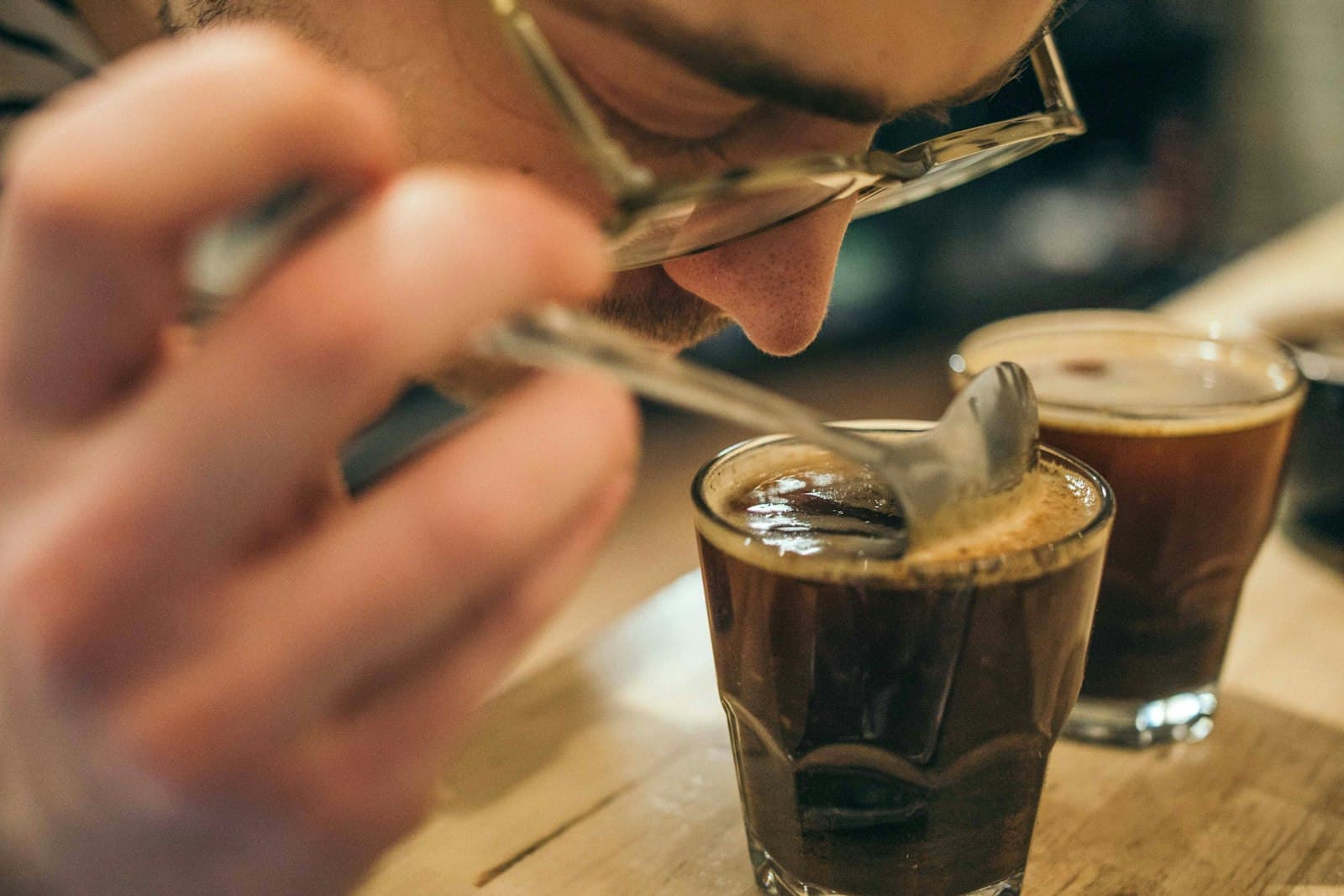
In specialty coffee quality evaluation, sweetness and body are independent scoring categories. In SCA-style cupping, “sweetness” and “mouthfeel (body)” are each scored, forming part of the standard where 80 points or more earns the name specialty. From one slurp, professional cuppers put words to the quality of sweetness (brown-sugar-like? fruity? honeyed?) and the texture of body (silky, creamy, syrupy). What is interesting is that sweetness is also the flip side of “freedom from defects” — unripe or defective beans introduce astringency that shaves away sweetness, so sweet coffees tend to be clean coffees too. Read the cupping guide and you can stand at the entrance of this evaluation at home.
Frequently asked questions
Where does coffee’s sweetness come from?
Mainly not from sugar itself but from the “sweet aromas” generated by caramelization and the Maillard reaction during roasting. When we catch aromatics reminiscent of caramel, honey or brown sugar at the back of the nose, the brain checks them against past eating experiences and constructs the perception of “sweet.” Most of the sucrose in green beans breaks down under roasting heat, leaving barely any sugar in the cup. In addition, balance with moderate acidity and freedom from astringency (cleanliness) strongly boost the impression of sweetness.
Why does coffee taste sweet with no sugar added?
Because aroma manufactures the perception of sweetness. When the brain senses aromas tied to memories of “sweet foods” — caramel, vanilla — it perceives the whole flavor as sweeter even when little sugar is present. This is the same mechanism by which flavored sparkling water can taste faintly sweet. Pinch your nose while drinking coffee and the impression of sweetness all but vanishes — a quick proof of how much of sweetness is carried by aroma.
Are “body” and “richness (koku)” the same thing?
They largely overlap but differ slightly in scope. Body is the tactile concept — the weight, thickness and texture of coffee in the mouth — determined by the amounts of polysaccharides, melanoidins, oils and fines. The Japanese word “koku,” on the other hand, usually points to a broader total impression that adds toastiness, length of finish and complexity on top of body. That is why a phrase like “light in body yet rich in koku” can make sense.
Which roast level is easiest to taste sweetness in?
For most beans, medium roasts (around Medium–High to City) are the peak band of sweetness. In this range caramelization is at its height, sweet aroma compounds are at their richest, and acidity and bitterness reach balance. In light roasts acidity leads and sweetness reads as delicate fruit; in dark roasts sweet aromatics are replaced by roast notes, leaving sweetness lurking behind bitter caramel. None of these is “correct” — explore for the peak that matches your taste.
Does body really change between paper and metal filters?
Distinctly. Paper filters capture most of the coffee oils and fines, yielding a clean, light texture. Metal filters pass oils and micro-particles, producing a mellow, thicker body. Nel (cloth) sits in between, prized for its unique smoothness. Brew the same bean with the same recipe, changing only the filter, and the concept of body becomes clear in a single sip — well worth trying.
My coffee never turns sweet, no matter how I brew. What is wrong?
First check freshness. Beans more than a month past roast, or long-since-ground coffee, have lost their sweet aromatics and cannot brew sweet. Next, extraction balance: if it tastes sour it is under-extracted, so grind finer; if bitter, over-extracted, so grind coarser — search for the sweetness band in between. If neither helps, the bean itself likely lacks the potential; switching to a medium-roast natural or honey-process specialty lot with a reputation for sweetness is the fastest fix.
Sweetness and body lack the flash of acidity or bitterness, but they are the quiet foundation that carries a cup’s satisfaction. Tasting sweetness in a liquid with zero sugar — that is the end of a long journey in which sugars stored in ripe cherries at origin were transformed by the roaster’s fire into aroma, and revived as sweetness inside your brain, bound to memory. With your next cup, let it cool slightly to drinking temperature, hold it in your mouth, and study the texture — the thickness, the mellowness, and that brown-sugar finish rising through the nose. There you will find a sweetness with far more depth than sugar: a sweetness that belongs to coffee alone.
Was this article helpful?
Choose & compare
Related links
References
More articles
The Science of Coffee Aroma — The Story of the “800 Molecules” Rising From a Single Cup
BeansThe Science of Caffeine — Why a Single Cup Wakes You: How It Works, Its Half-Life, and How to Get Along With It
BeansPanama Coffee Deep Dive — The Volcanic Highlands That Bore Geisha, and the Story of the World’s Highest Price
BeansNicaragua — Central America’s Quiet Powerhouse, Past Volcanoes and Revolution