Nicaragua — Central America’s Quiet Powerhouse, Past Volcanoes and Revolution
Civil war, hurricanes and the coffee crisis — beyond every hardship, Central America’s largest country now cultivates a paradise of large-bean varieties like Pacamara and Maracaturra. The story of Jinotega and Matagalpa
Nicaragua holds the largest territory in Central America, yet tends to hide in the shadow of Costa Rica and Guatemala. In its northern highlands, though, sweet and mild coffees recalling chocolate and brown sugar are quietly raised by smallholder families. Civil war, Hurricane Mitch, the collapse of coffee prices — this country weathered every storm of modern history, and since the 2000s its coffee has risen again to command a presence on the Cup of Excellence stage. From its face as the celebrated home of large-bean varieties like Pacamara and Maracaturra, to the distinct personalities of Jinotega and Matagalpa, to the deep ties between smallholders and fair trade — the full portrait of a quiet powerhouse.
Contents · 8
- A land of volcanoes and lakes — coffee grows in the northern highlands
- From arrival to crisis — a modern history walked with coffee
- The two great origins — Jinotega and Matagalpa
- Pacamara and Maracaturra — a paradise of large-bean varieties
- The flavor blueprint — roasting and brewing
- A nation of smallholders — deep ties to fair trade
- How to enjoy Nicaragua
- Frequently asked questions
Hear “Nicaraguan coffee,” and even many coffee lovers cannot summon a concrete flavor to mind. Next to neighboring Costa Rica and Guatemala, it remains stubbornly low-profile. But that is not because this country’s coffee is lesser — it is because its history has been so turbulent. Revolution and civil war, hurricanes, price collapses — having come through all of it, Nicaragua now counts among the most compelling specialty origins in Central America. This article traces the character of the coffee raised in this land of volcanoes and lakes, and the story behind it.
A land of volcanoes and lakes — coffee grows in the northern highlands
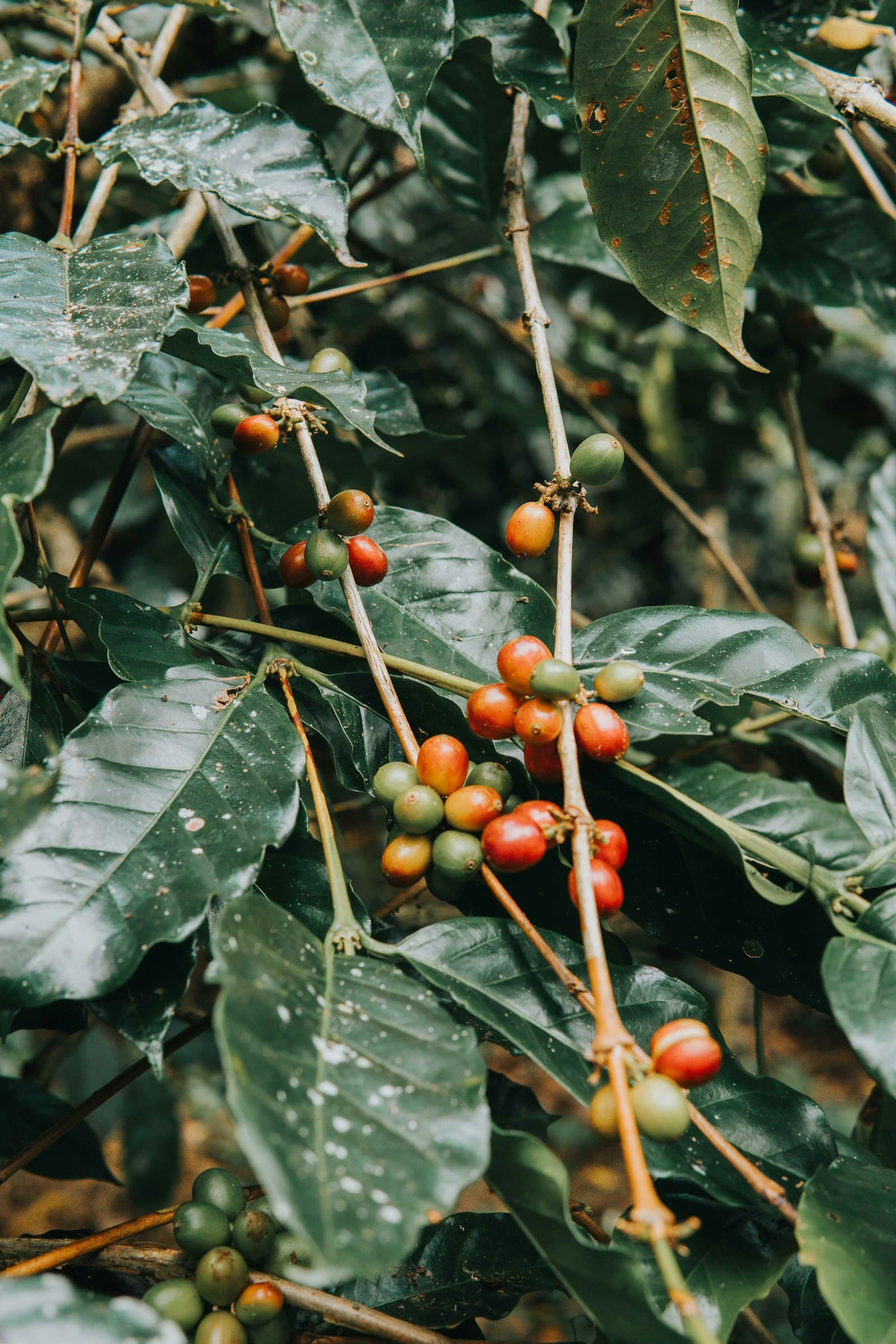
Nicaragua holds the largest territory of Central America’s seven countries. Volcanoes file along its Pacific coast, and Lake Nicaragua — Central America’s largest — lies across its middle. The main stage for coffee is the north-central highlands, mountain country above 1,000m that escapes the lowland heat. Fertile volcanic soil, sharply divided wet and dry seasons, and a position near the center of the coffee belt: the conditions read straight from a textbook of great origins. National production runs around 2.3 million bags (60kg) a year — roughly 13th in the world. Hardly a small producer; that its name recognition lags is the shadow of its history.
From arrival to crisis — a modern history walked with coffee
Coffee reached Nicaragua in the mid-19th century, in the 1850s. Cultivation began on the Pacific hillsides, and in the late 1800s, as the government passed laws encouraging planting, coffee swiftly grew into the country’s export backbone. It was in this era that farms spread through the northern highlands of Matagalpa and Jinotega. By the 20th century coffee had become the economy itself — and precisely for that reason, the nation’s turmoil became coffee’s ordeal.
The Sandinista revolution of 1979 and the civil war of the 1980s that followed brought farm dereliction and an exodus of labor. Peace had barely arrived when, in 1998, Hurricane Mitch destroyed farmland and infrastructure with unprecedented rains. Then came the final blow: the collapse of international coffee prices from the late 1990s into the early 2000s — the “coffee crisis.” With prices below the cost of production, many farmers abandoned their fields. The structural fragility of the world market described in The Economics of Coffee — Nicaragua lived it in its harshest form.
The turning point out of the depths was the quality competition “Cup of Excellence (CoE).” Nicaragua joined the host countries in 2002, and success stories emerged of unknown smallholders’ lots fetching high prices at international auction. The path of “competing on quality, not volume” is what rebuilt Nicaraguan coffee after the crisis.
The two great origins — Jinotega and Matagalpa
The center of Nicaragua’s coffee map is two northern highland departments. First, Jinotega, the largest producer. Farms file across mountains at 1,000–1,700m, and this single department carries a substantial share of the national crop. The flavor runs sweet and gentle — chocolate and brown sugar — harmony over flash. Its poised washed-process lots are prized by roasters worldwide as a base for espresso blends.
The other giant is Matagalpa, held to be the birthplace of Nicaraguan coffee. Across hills at 1,000–1,500m grow balanced coffees where caramel, nuts and light chocolate meet a citrus brightness. More farms now work naturals alongside washed lots, making it an origin where the shifting expressions of processing method can be tasted side by side. A historic origin with a young experimental streak — that is Matagalpa today.
- Jinotega: the largest producer. 1,000–1,700m. Sweet, gentle chocolate/brown-sugar profile
- Matagalpa: the birthplace. 1,000–1,500m. Balanced caramel/nut with a citrus edge
- Nueva Segovia: the northern up-and-comer. A high-altitude origin producing top CoE lots, rising fast
Pacamara and Maracaturra — a paradise of large-bean varieties
No portrait of Nicaragua is complete without its large-bean varieties. First among them is Pacamara, a cross bred in neighboring El Salvador. In a bean fully half again the usual size live complex notes of flowers, tropical fruit and herbs — a perennial top finisher in Nicaragua’s CoE. The other is Maracaturra, a cross of Maragogipe and Caturra said to have been born in Nicaragua, whose grand beans carry showy aromatics and a silky texture that have raised its international standing fast. “For large-bean varieties, drink Nicaragua” — in the specialty world, that reputation is quietly settling into place.
Pacamara and Maracaturra are produced in small volumes — finding one as a single origin is a stroke of luck. Look for “Pacamara” or “Maracaturra” on the bag label. Keep the variety family tree in your head and label-reading becomes twice the fun.
The flavor blueprint — roasting and brewing
Nicaragua’s mainstay varieties — Caturra, Bourbon and kin — yield a profile with little rough edge: an excellent balance of sweetness and richness. The recommended roast is medium, where the chocolate-caramel sweetness rises at its richest, joined by moderate body and calm acidity. Hand drip is a given; a French press that keeps the oils suits it too. Roasted darker it forms a sturdy backbone for espresso and café au lait — its adaptability as a “daily cup” is top-class. This is not an origin that startles; it is one you find your hand reaching for again. Such quiet depth is Nicaragua’s true worth.
A nation of smallholders — deep ties to fair trade
Nicaraguan coffee is carried by smallholder families farming a few hectares each. Most belong to cooperatives, pooling their harvest, processing and export negotiations. This structure meshes perfectly with fair trade and organic certification, and Nicaragua has become one of the world’s leading suppliers of fair-trade coffee. Pick up a fair-trade Central American coffee at the store and the origin is, not rarely, Nicaragua. Behind one cup stand families who kept their fields through war and crisis — drink Nicaragua with that in mind, and it tastes different again.
How to enjoy Nicaragua
In Japan’s specialty coffee shops too, Nicaraguan beans are steadily taking a place among the standards. Start with a washed, medium-roast lot from Jinotega or Matagalpa to learn the country’s “baseline.” Then try a Pacamara or Maracaturra for the flamboyant upgrade. The full origin picture is on the Nicaragua origin page. Taste it beside its Central American neighbors — Honduras and El Salvador — and you get origin-hopping’s great pleasure: the subtle differences among countries strung along the same mountain chain.
Frequently asked questions
What does Nicaraguan coffee taste like?
The baseline is a sweet, gentle profile recalling chocolate, caramel and brown sugar. Acidity is moderate and rounded, body is comfortable, and the whole leans mild and balanced. It is not a coffee that startles with flash; its virtue is a harmony you never tire of daily. Meanwhile, lots of the large-bean varieties Pacamara and Maracaturra show a completely different face — showy florals and tropical fruit aromatics.
How do Jinotega and Matagalpa differ?
Jinotega is Nicaragua’s largest producing region, sending sweet, calm chocolate and brown-sugar coffees down from highlands at 1,000–1,700m. Matagalpa, held to be the birthplace of Nicaraguan coffee, is the balanced type — caramel and nuts crossed with citrus brightness. Their broad directions are similar, but remember it this way: Jinotega sits a little higher and more poised; Matagalpa carries more experimental lots, naturals included — and choosing gets easier.
What kind of variety is Pacamara?
Pacamara is a cross developed in El Salvador between Pacas (a Bourbon mutation) and Maragogipe (a large-bean mutation). Its signatures are beans about 1.5 times the usual size and a complex, showy flavor where flowers, tropical fruit and herbs overlap. It is especially esteemed in Nicaragua, a perennial among the top lots of the Cup of Excellence. Production is small and the variety rare — if you spot one at a shop, do try it.
Why is so much Nicaraguan coffee fair trade?
Because production is structured around small family farms, most of them organized into cooperatives. Fair-trade certification is typically acquired at the cooperative level, which fit Nicaragua’s structure precisely. International initiatives to support villages exhausted by war, hurricanes and the coffee crisis were also active from the 1990s onward, accelerating certification’s spread. The result: Nicaragua stands among the world’s leading fair-trade coffee suppliers.
What roast level and brew method do you recommend?
The baseline is medium roast × hand drip. Chocolate and caramel sweetness comes out at its richest, in step with the calm acidity. For more richness, extract oils and all with a French press. Its clean adaptability also makes it excellent, roasted darker, as a base for espresso or café au lait. For the large-bean Pacamara types, a slightly lighter medium roast × paper drip shows off the showy aromatics best.
What is the Cup of Excellence (CoE)?
An international competition held yearly in each producing country to crown its finest coffees. Only lots that survive national rounds and rigorous cupping by international judges earn the “Cup of Excellence” title and go to international auction. Nicaragua became a host country in 2002, and the CoE has served as the gateway through which unknown smallholders win world recognition and strong prices. A farm name with CoE honors is a trustworthy signpost when choosing beans.
Neither the gunfire of revolution, nor the rains of hurricanes, nor the collapse of the market could erase coffee trees from Nicaragua’s fields. With every hardship, this country steered harder from volume toward quality — and today it shines quietly and surely as a paradise of large-bean varieties. No loud slogans; the honest sweetness in the cup says everything. Nicaragua is that kind of quiet powerhouse. Next time you spot the name on a shelf, pour yourself a cup of this country’s story.
Was this article helpful?
Origins in this article
Choose & compare
Related links
References
More articles
The Science of Coffee Aroma — The Story of the “800 Molecules” Rising From a Single Cup
BeansThe Science of Processing — From a Single Fruit to a Green Bean, How Fermentation and Drying Decide the Taste
BeansThe Coffee Variety Family Tree — Reading the “Genealogy” That Begins with Typica and Bourbon
BeansThe Coffee Belt and Terroir — Why Coffee Grows Only in the “Equatorial Band,” and Why Each Origin Tastes Different